
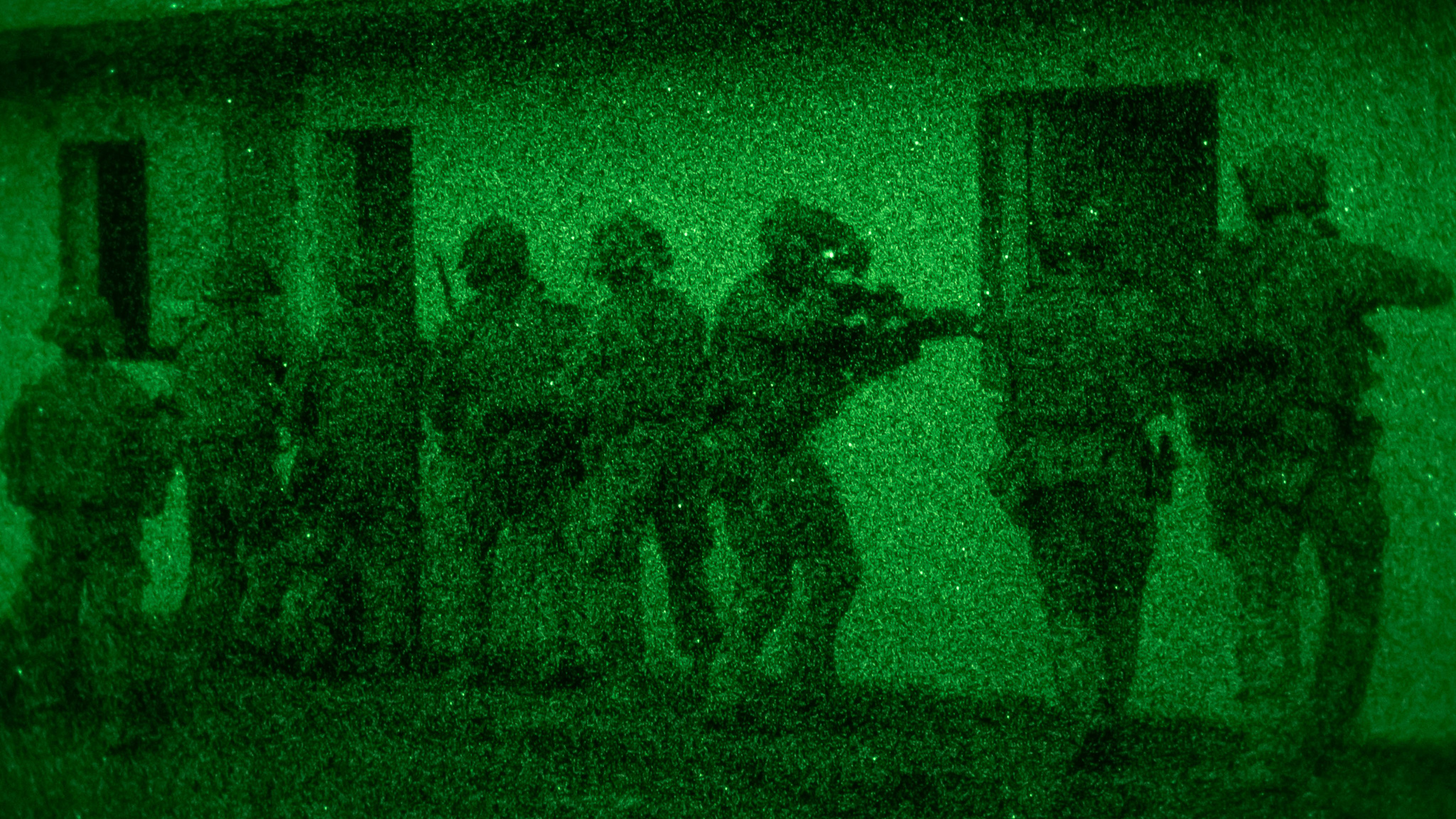
U.S. Special Operations Command (SOCOM) consists of about 70,000 special operations forces (SOF) personnel trained to conduct crucial missions that ensure U.S. national security, shape environments, and counter malign influence worldwide. Often operating in the shadows, around 6,000 SOF operators are deployed in support of dozens of operations across 80 different countries at any given time.
SOF personnel make up 3 percent of Department of Defense forces, but the demand for SOF has increased 35 percent between 2023 and 2025, demonstrating how vital our SOF assets are in today’s conflict-ridden world.
That demand exacts a toll on SOF elements. Intensive training, rigorous deployment schedules, and toxic exposures faced at home and overseas put SOF personnel at increased risk of musculoskeletal injury, post traumatic stress disorder (PTSD), chronic pain, and traumatic brain injury (TBI). Each of these can have compounding second- and third-order impacts throughout the body.
The Special Operations Association of America’s (SOAA) Chief of Veteran Health Innovation and Partnerships Dr. Ryan Ziegler says that some groups, including the Department of Veterans Affairs (VA), are already at work to understand and treat the complex interplay of symptoms at work on SOF personnel’s neuroendocrine, cognitive, musculoskeletal, gastrointestinal, and vestibular systems.
“The SOF community has been asking for answers related to the unique health issues we face and the peer-reviewed research at Palo Alto VA gives me great hope that we can keep our community healthier, stronger, and more lethal than ever before,” Ziegler said.
TBI
Mainly as a result of heavy weapons use, exposure to breaching charges, and blunt force impacts to the head, SOF personnel have a greater likelihood of sustaining a TBI than conventional forces personnel.
The impacts of TBI vary based on which parts of the brain are impacted and how severely, as well as the degree and number of injuries a service member sustains. TBI can lead to depression, sleep disturbance, memory difficulties, issues with concentration, mood swings, difficulty making decisions, and anxiety.
TBI can also impact hormone production. Pituitary dysfunction resulting from brain injury can lead to decreased production of testosterone, which when severe is known as hypogonadism.
Testosterone deficiency can lead to sleep troubles, vasomotor instability, osteopenia, decline in cognitive skills, mood changes, gynecomastia, and increased central body fat. It may also “be a risk factor for cardiovascular disease.”
Toxic Exposures
SOF personnel are subject to toxic exposures at home and overseas. One insidious culprit of those exposures is through meals on base and in the field.
A Moms Across America and Children’s Health Defense Military Chapter and Centner Academy study tested 16 samples from 16 military cafeterias and 24 Meals, Ready-to-Eat (MREs). They found that 100 percent of tested items contained pesticides produced in China and other foreign countries. 96 percent contained “harmful levels of glyphosate,” a weed killer that may be linked to brain disorders, obesity, attention deficit hyperactivity disorder, and lymphoma and other cancers.
The military foods sampled also contained five veterinary drugs that are “banned in most countries or are not approved for human use,” four of five of which are manufactured in China.
One, hydroxy-dimethylazole, is banned in the U.S., Canada, and European Union countries.
The study detected heavy metals in 100 percent of samples, with arsenic levels 430 percent higher than tolerable quantities, cadmium 928 percent higher than EPA guidelines for drinking water, and aluminum levels 17,300 percent higher than EPA drinker water guideline levels. Arsenic impacts “nearly all organ systems,” particularly the skin, while cadmium, a carcinogen, impacts the kidneys, respiratory, and skeletal systems. Aluminum toxicity impacts the nervous, pulmonary, cardiac, reproductive, gastrointestinal, skeletal and hematological systems.
Perfluorooctane sulfonic acid (PFOS) levels detected in military beef stew were about 30 times greater than the EPA drinking water standard. PFOS exposure can cause increased cholesterol, and complications with the liver and immune system regulation.
Suppressors
Though weapon suppressors are meant to increase safety for SOF personnel by reducing the sounds and signatures of their firearms, devices do so by blowing back toxic particulates into a service member’s face.
The Human Exposure Workshop Safety Co. (HUXWRX) has patented technology that allows their suppressors to cut down on noxious gas blowback.
HUXWRX Chief Science Officer and consultant Dr. Chris Palmer told SOAA that “traditional suppressors expose SOF operators not only to lead, but to much more dangerous “Class II Asphyxianttes” like Hydrogen Cyanide, Ammonia and Carbon Mononide Monoxide in greater doses when not using HUXWRX FLOW-Through(TM) technology.”
Palmer explained how “increased back pressure ‘injects’ these right into the face of the operator and reduces their ability to utilize oxygen optimally by lowering their aerobic capacity ‘on the X,’ pushing them towards anaerobic metabolism and the creation of lactic acid, and greater fatigue. Longer-term, these chemicals are clearly demonstrated to have effects on cognitive performance, sexual reproduction, and increased inflammatory effects at much lower doses than we see during SOF small arms training.”
Weapon ranges
In 2012, U.S. Army Special Operations Command (USASOC) found high levels of lead exposure in soldiers training at the U.S. Army John F. Kennedy Special Warfare Center. In 2017, system-wide changes were instituted at military ranges after a 2016 investigation found airborne levels five times higher than Occupational Safety and Health Administration exposure limits.
Despite improvements, lead exposure remains a particular concern at indoor ranges, outdoor ranges, and in Military Operations in Urban Terrain (MOUT) facilities. Dr. Ziegler also notes that it is unclear whether foreign ranges where SOF personnel train are subject to the same rigorous testing and mitigation efforts as domestic ranges.
The effects of repeated exposure to lead include hypertension, memory loss, neuropathy, depression, impotence, infertility, miscarriage, and cardiovascular disease.
Post-Traumatic Stress Disorder and Moral Injury
Though some believe that SOF have greater tolerance of stress than conventional forces due to their higher incidents of deployments and exposure to trauma, a 2012 study in the Journal of Special Operations Medicine found that 16-20 percent of SOF respondents “met scoring threshold for positive screening [for Post-Traumatic Stress Disorder (PTSD)], almost double those of conventional Army units.”
Service members’ risk for acquiring PTSD is thought to be greater with combat exposure and more frequent deployments. PTSD can impact emotional health, energy levels, pain, and physical and social function.
Moral injury, a lesser known consequence of combat operations, results when a service member sees, participates in, or fails to stop behaviors that they feel transgress and violate deeply held moral values. It can result in “feelings of anger, guilt, shame, disorientation, and disgust,” according to the Joint Special Operations University (JSOU).
PTSD and moral injury are distinct, but can occur concurrently, with JSOU calling moral injury a precursor to PTSD.
Musculoskeletal Injuries
Over half of the SOF operator population experiences a sports-related injury each year, most commonly in the lumbar spine, shoulder, or knee. Half of these injuries are assessed as being acute, while the remainder are chronic.
Among the physical injuries associated with SOF service is damage to the cervical spine (CS). In a study of 1,090 reported CS injuries, 91 percent took place during military activities in which the SOF service member was wearing their helmet and attached gear. 28.5 percent included whiplash, and 23.1 percent included parachute opening shock or landing.
86 percent of SOF personnel experienced CS pain over the prior 11 months, but only 50 percent sought treatment. Those service members who had experienced two or more injuries “were typically weaker, had worse range of motion, and worse neck disability.”
Putting It All Together
The combination of psychological, physical, and cognitive impacts on the body can lead to an accumulation of stresses known as allostatic load, which builds up “from the stress response driven by negative feedback loops.” If not mitigated, allostatic load can impede SOF personnel’s ability to recover and deploy as an effective part of a unit.
Allostatic load has been linked with cardiovascular disease, rapid aging, “heightened morbidity and mortality rates,” psychological disorders, physical and musculoskeletal dysfunction, anxiety, depression, lower resilience, and reduction in sleep quality.
Efforts to Assist
The VA maintains Intensive Evaluation and Treatment Programs (IETPs) to help understand and treat the intertwined symptoms that SOF service members and veterans may face as a result of multiple TBI.
The IETPs are located in five Polytrauma Resources Centers (PRCs) around the country, in Richmond, Virginia, Palo Alto, California, San Antonio, Texas, Tampa, Florida, and Minneapolis, Minnesota.
The Palo Alto VA IETP involves three weeks of “evaluations by physical medicine and rehabilitation (PM&R), physicians, nursing, physical, occupational, speech, and recreation therapies as well as neuropsychology, rehabilitation psychology, and headache psychology.” It may call in additional specialists, including “orthopedics, urology, podiatry, and endocrinology.”
Ziegler highlighted that the holistic approach of the IETP is the most effective approach he has seen in treating the results of the heavy allostatic load SOF operators carry.
Ziegler said that the IETP’s “focused path” is “absolutely the gold standard of medical care.” Having seen the system firsthand, Ziegler says that “SOAA stands behind IETP’s unique and profound approach to curative medicine for the special operations community.”
A September 2026 study in the Lancet tracks 222 SOF veterans who sought treatment for TBI and a variety of mental and physical health symptoms at the Palo Alto IETP between 2021 and 2025. Using an “integrative and transdiagnostic approach,” the study examined the breadth of symptoms SOF personnel face, and how they may be related to a host of military exposures.
The “most comprehensive and integrative examination of behavioral, biological, and physiological sequelae in U.S. active-duty and treatment-seeking SOF personnel,” the study’s findings “present a comprehensive illustration of the breadth of sequelae in active-duty treatment-seeking SOF personnel and can preliminarily inform current approaches to clinical practices for SOF and potentially other populations with similar exposures.”
Ziegler says that the VA’s continued devotion to researching effective treatments “is critically important for the special operations community to continue operating as the most dominant and lethal force on the planet.”