
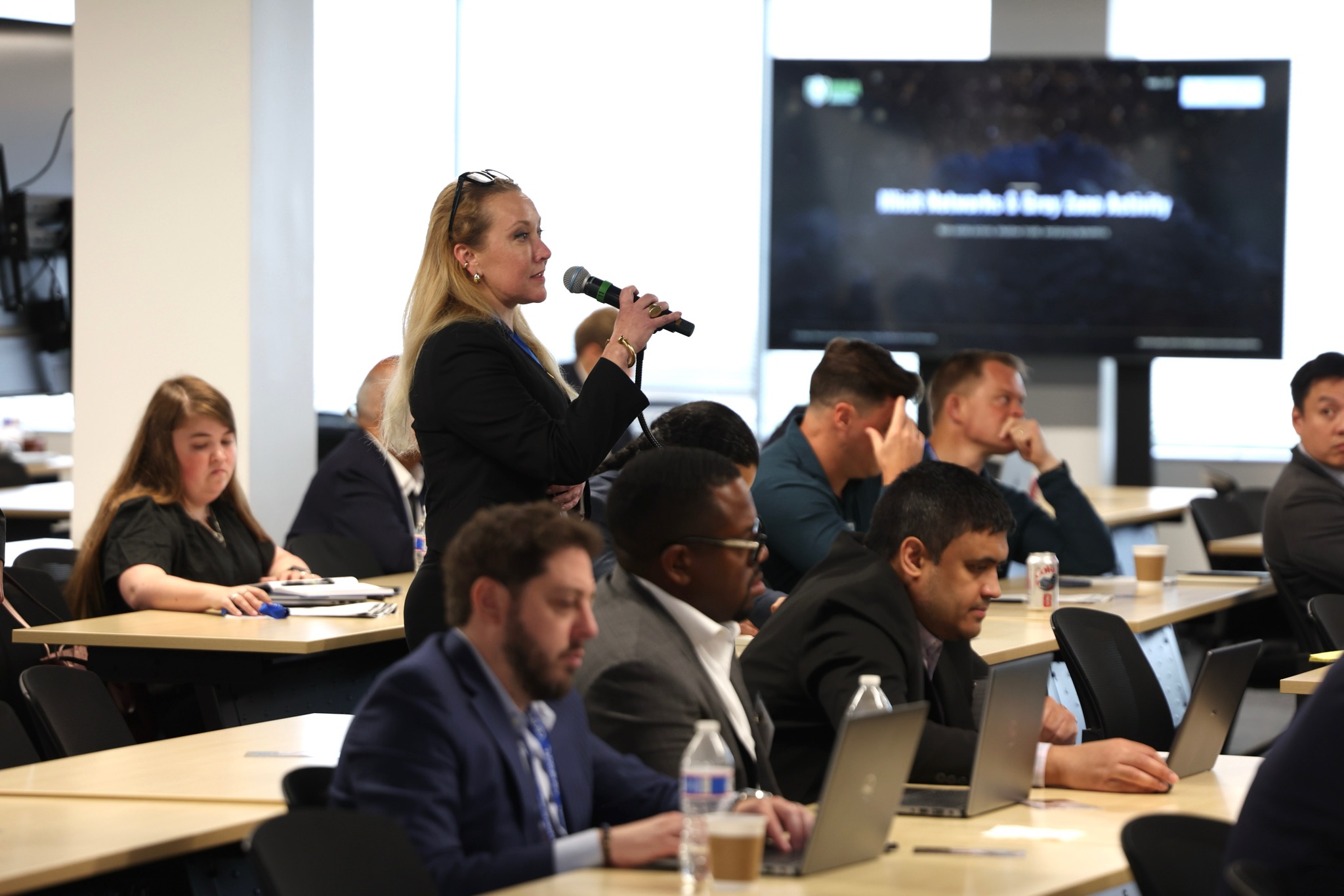
On Wednesday, SOAA and the Irregular Warfare Initiative (IWI) concluded our annual conference in Reston, Virginia. For two days, we hosted expert-filled panels on critical mineral resourcing and a table-top exercise that allowed participants to put their practical experience to the test in a mock contested environment.
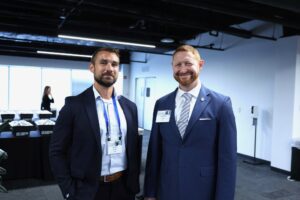
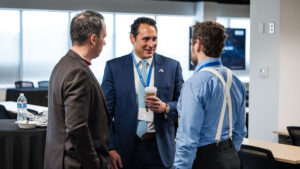
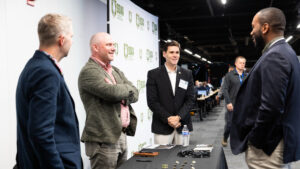
We were honored to host over 250 attendees and speakers from the intelligence, government, academic, nonprofit, entrepreneurial, and military sectors in addition to a plethora of experts with hands-on experience in the industries working to resolve our shortage of critical minerals.
The importance of these conversations was amplified by the timely issuance of an executive order on July 20 intended to increase domestic sourcing of the critical minerals needed for national security. The order will remove barriers to qualifying domestic critical mineral resourcing entities, create supply chain maps for critical minerals, and limit critical mineral waivers granted to ”covered nations,” which include the Democratic People’s Republic of North Korea, the People’s Republic of China, the Russian Federation, and the Islamic Republic of Iran.
Presenting the Issues
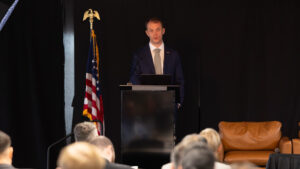
During opening remarks on Tuesday, SOAA Vice President Doug Livermore, Chief of the Irregular Warfare Division in the Office of the Under Secretary of War for Intelligence and Security, explained that “critical minerals and rare earth elements are not merely economic commodities or inputs into production lines,” but represent “national security vulnerabilities and are vital in the theater of irregular warfare and strategic competition.”
To resolve those vulnerabilities, Livermore urged attendees to break from their institutional silos, explaining that a solution to the issues at hand “requires a private-public partnership.”
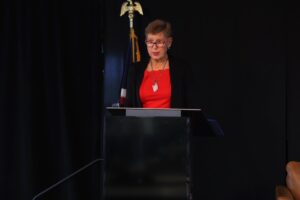
Keynote speaker Maura Burns, former Chief Operating Officer at the Central Intelligence Agency, distilled the complications in our current environment.
Burns explained that competition between foreign militaries and intelligence services has been replaced by competition “across supply chains.” She noted that China’s dominance of current supply chains “did not happen quickly or overnight.” Rather, it “was deliberately built over decades using state funding, low-interest loans, and relaxed environmental standards to flood the global market and eliminate Western competition.”
She argued that China “has weaponized supply chains,” using “strategic export controls as a foreign policy tool, which directly threatens U.S. national security by disrupting military manufacturing, inflating defense budgets, and weaponizing…dependencies to slow Western high-tech development.” According to Burns, “vulnerabilities in the…supply chains threaten all 16 U.S. critical infrastructure sectors, ranging from chemical manufacturing, to fiber optic communications, to nuclear fuel and the electrical grid.”
Burns noted that during her 37-year CIA career, she “learned that resilience isn’t built during a crisis,” but rather “years beforehand through smart decisions, trusted partnerships, and a willingness to confront uncomfortable risks and speaking truth to power before they become emergencies.”
When it comes to critical mineral insecurity, Burns said that “the government cannot solve this alone, nor can industry, nor can academia. The complexity is simply too great. Our competitive advantage comes from collaboration.”
Burns said that she believes “we’re entering one of the most important periods for American innovation in decades. We must get this right. We have all the right ingredients. We have extraordinary, extraordinary talent here in the U.S. We have remarkable technology. We have strong allies and an industrial base capable of adapting. Our challenge isn’t alignment. So, if we want to remain competitive, resilience must become part of how we think, not simply how we respond.”
Working Together on Solutions
During our first day of panels, we discussed the issues in our current system. Our experts deconstructed the supply chain, talked about constraints and state-level competition for scarce resources, discussed the illicit networks and gray zone activity that impact our access to needed minerals, and dissected the role of private industry in working in contested environments to achieve our national security needs.
On our second conference day, we offered emerging solutions. Panelists talked about how extraction and processing are being revised for the future, offered information and innovating to secure the supply chain, and highlighted methods of cooperation and system-building that can help create a more resilient structure to obtain adequate critical minerals in future.
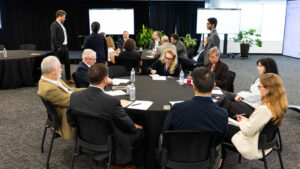
A subset of our attendees broke away during day two to take part in a tabletop exercise, where they were tasked to use their expertise to solve a critical minerals crisis in a fictional future African nation.
At the end of our second day, we hosted a fireside chat about the priorities, strategic shortcomings, and possible points of advantage as we all separate to help solve the problem in our own ecosystems, and spotlighted innovative individual solutions to supply chain vulnerabilities.
SOAA’s Role and Stake in Critical Mineral Security
At the outset of the conference, SOAA CFO Austin Higgins spoke to SOAA’s particular role and voice in the critical mineral resourcing ecosystem. Higgins explained that “nearly every piece of equipment in an operator’s hand downrange starts as raw ore somewhere in the ground.” He noted with alarm that “we cannot build the platforms that keep our operators alive without buying the raw material from the very countries we’re competing against.”
To further SOAA’s efforts to bring solutions that protect our warfighters, we are developing a proprietary open-source intelligence tool that will help the organization track the status and locations of the 20 most critical minerals for national security.
“We want to solve this challenge. We can’t wait three decades. We need to act now. This is why SOAA is in the room today,” Higgins explained.
SOAA is proud to be part of the solution and grateful to IWI for their support in hosting this impactful conference. We are excited to see how our attendees take the connections and information gained this week back to their own institutions to further our whole-of-government response to securing necessary resources for our present and future defense needs.