
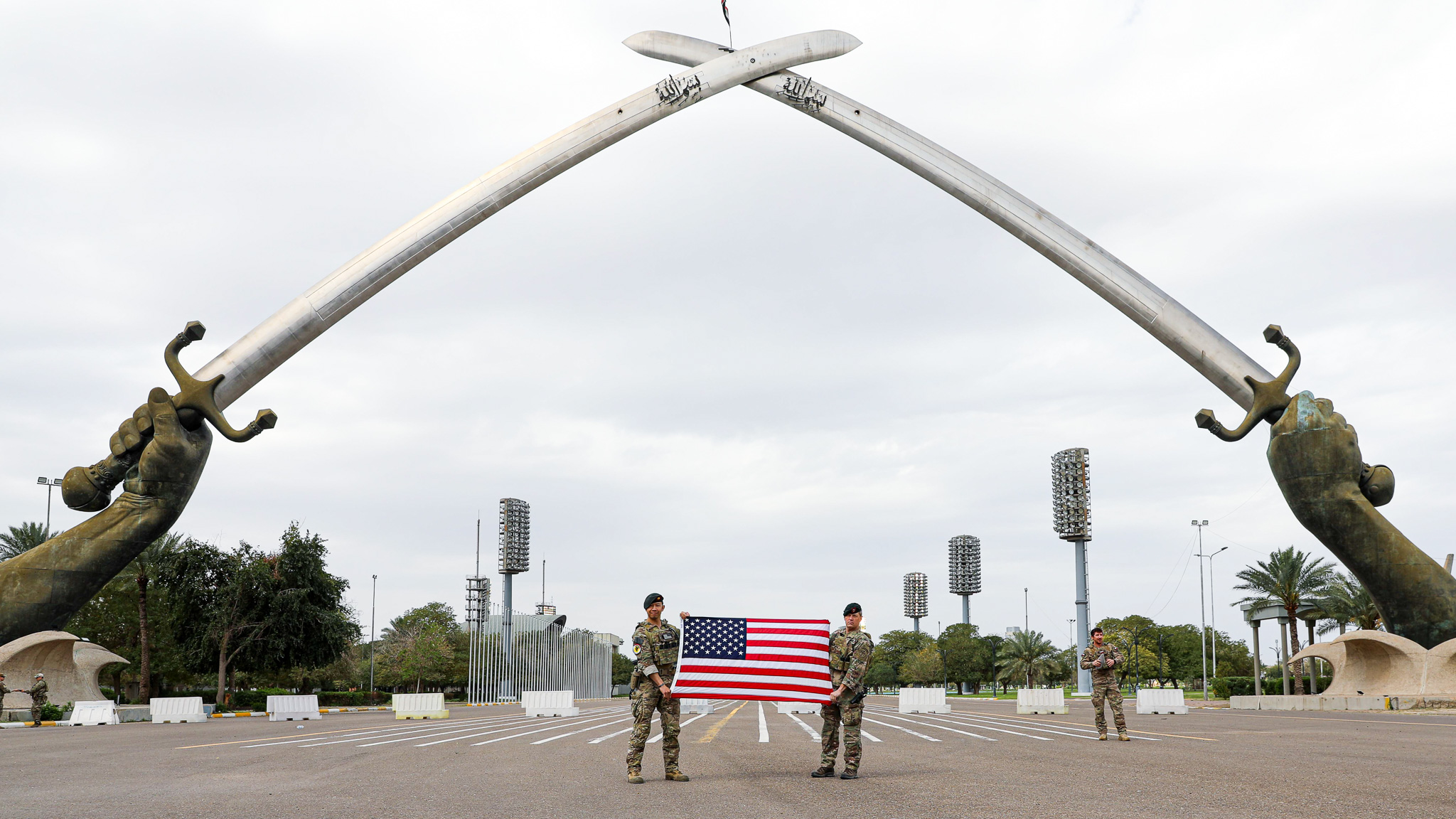
For decades, the formula for special operations veterans leaving service has followed a predictable and painful pattern: elite warriors who thrived in structure, mission, and brotherhood find themselves unmoored in a civilian world that doesn’t speak their language, understand their injuries, or know how to use their skills.
Brian Thomsen has lived that reality and decided to do something about it.
A 30-year Green Beret, Duke MBA graduate, neuroscience researcher, and current CEO, Thomsen is one of the founding architects and first participants of Project Valkyrie, the Special Operations Association of America’s (SOAA) new transition program.
Now, Thomsen is helping to refine and develop Project Valkyrie for future cohorts. He took a break from the busy life of a reservist, CEO, and university professor to talk about his 30-year military career and his deep belief in Project Valkyrie.
When SF and Brain Research Collide
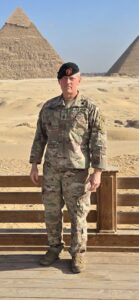
When he went through the Special Forces Qualifications Course ten years after joining the U.S. Army, Thomsen was placed into a Combatant Commanders In-extremis Force (CIF) unit. “Singularly focused” on his mission, Thomsen would deploy for four months at a time on kinetic direct action missions, returning home for a four-month period of rest and train-up before redeploying again.
When he became a single parent, that hard-charging lifestyle had to shift. Thomsen left the 3rd Special Forces Group’s (SFG) direct action company and helped to stand up the SFG’s new Special Forces (SF) battalion. This shift led him to apply and be accepted to Duke University’s MBA program and eventually transition to the Army National Guard.
While studying at Duke, Thomsen developed a close connection with a senior professor who had developed the first psychological profile for SF operators. The science demonstrated that operators share incredible similarities in their physiology, behavioral patterns, and ability to self-motivate, a fact Thomsen saw in real time when he began working with assessment and selection for the 19th SFG in the National Guard.
The combination of real-life experience and academic research led Thomsen to wonder whether the similarities between operators could be identified through high-resolution brain imagery. If so, he wondered if imagery could also help identify when operators experience neurophysiologic damage from cumulative concussive injuries and exposure to the overpressure special operations forces (SOF) members experience. Thomsen believes that finding and remedying that neurologic damage could help SOF veterans who currently manage brain trauma through self-medication.
While a senior SOF instructor at the Joint Special Operations University, Thomsen has proposed scanning the brains of SF candidate selectees to not only seek out brain-level similarities between candidates, but to track baseline structure so that damages across various training regimens and deployments can be visualized and quickly mitigated.
His work towards understanding operators’ brains would soon put Thomsen on a collision course with a group of likeminded advocates at SOAA.
Bringing Valkyrie to Life
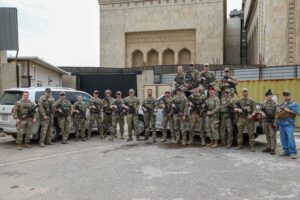
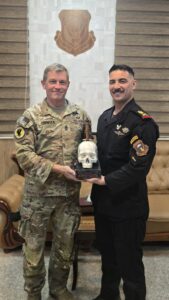
As Thomsen prepared for a deployment to Baghdad in early 2025, he began to share his thoughts about neurological mapping with a SOAA volunteer he crossed paths with while overseas to support Americans stranded in Gaza after Hamas’ Oct. 7 terror attacks.
The friendship that developed between the two formed a burgeoning concept for a program that would benefit SOF veterans by providing a combination of behavioral medicine and business expertise. While Thomsen was deployed, the program took shape as volunteers sourced the funding and personalities who would be instrumental in developing Project Valkyrie, SOAA’s premiere transition initiative that combines health optimization pathways with a unique incubator for leadership and career success.
Several months after he returned home, Thomsen made his way to Roseville, California to be part of the first cadre of Project Valkyrie participants. As each of the four initial candidates began receiving functional medicine support from Jeffrey Topo, PA-C, and adaptive physical therapy from Navy veteran Josh Pelzl, each was given a position as an executive of a portfolio company linked into the Project Valkyrie network.
Within his first month as CEO of human-centric AI support platform OpsHub, Thomsen had acquired enough accounts receivable for the organization to operate in the black. While continuing to lead OpsHub, Thomsen is using his MBA and a host of international business expertise to support other Valkyrie entities and develop a plan for programming for follow-on candidates.
FDA-Approved Trial for Psilocybin
The most immense change during Thomsen’s participation in Project Valkyrie involved taking a leap of faith to improve his own mental health. Several months after starting the Valkyrie program, Thomsen received a coveted spot in the nation’s first FDA-approved whole mushroom psilocybin trial, which took place in Arizona at the Scottsdale Research Institute under the supervision of Dr. Sue Sisley. As someone who had never utilized psychedelics, Thomsen was initially very wary of participating. But as he examined some of his own behavioral traits and past mental health battles, Thomsen decided that the program could prove beneficial.
His first period of struggle came in 2012. When Thomsen left active duty, his Operational Detachment Alpha (ODA) was forced to replace him directly prior to their deployment. When Thomsen’s replacement was killed overseas, Thomsen battled with survivor’s guilt and what he would later understand as moral and potential undiagnosed concussive injuries. The combination overwhelmed him, leading Thomsen to spend “half of Christmas Day in 2016 on top of a mountain in Boone, North Carolina with a gun in my mouth.” In the end, it was only the thought of ruining Christmas for his children that kept Thomsen from pulling the trigger.
Counseling support from outside the military helped Thomsen manage his guilt, but as time wore on, he found that his quick temper grew worse. He found himself going “from stressor straight to rage” so quickly that he considered getting a stellate ganglion block to suppress those responses while deployed in Baghdad.
During intake for the psilocybin trial, Thomsen began to face the life journey that had led him to develop an unhealthy rage response, and hoped that his psilocybin experience could bring him clarity about how to resolve his difficulties.
The trial involved a “hero dose” of psilocybin administered orally. Participants were dosed in a comfortable room with beds for participants, clinical equipment, euphones, and singing bowls. Participants wore sleep masks and were given headphones preloaded with “melodious, harmonic, rhythmic electronic” music that Thomsen said “drove” the visual hallucinations that came as he lay on an adjustable bed while the psilocybin kicked in.
In the eight- to ten-hour experience, Thomsen says that he achieved a level of introspection and recognition of his value and place in the world that it had taken a year of counseling to achieve. He explained that he was “able to see within [him]self” and “within [his] own thought processes and how things were connected,” including “where rage was coming from and how to slow that down and disconnect from the stressors that would induce rage.”
While many of his fellow trial participants spent the following day resting from the “neurologically taxing” experience, Thomsen took off for Sedona. He spent the day running through trails with “a pen and paper stuck in the hem of [his] Ranger panties” so he could take notes about his experience and discern ways to further his growth.
Project Valkyrie in the Future
Thomsen’s participation in Project Valkyrie has helped to shape the program for the next cadre of candidates. Thomsen says that the next cohort in the transition program can expect a period of self-assessment on their mental and psychological health as they find functional medicine and adaptive physical therapy support through the Phoenix Program.
Some future candidates may also receive scholarships for a Southeastern University MBA program to prepare them to enter the business world armed with the advantage of a graduate education.
Project Valkyrie will specifically lean into the SOF skillsets of dealing “with people that are outside your culture and…speaking different languages” to prepare candidates for a business world where “you’ll need to leverage your board of directors, speak the language that board speaks, and recognize the business culture.”
“I’ve seen businesses that are run by former operators that run things like a team room or an SF company,” Thomsen said. “It can work for a short time…but it goes to hell when you have to bring in people that are outside the community.”
“You’ve got to absorb and adapt to the environment that you’re in, and use your skill set and actually embed yourself,” Thomsen said.