
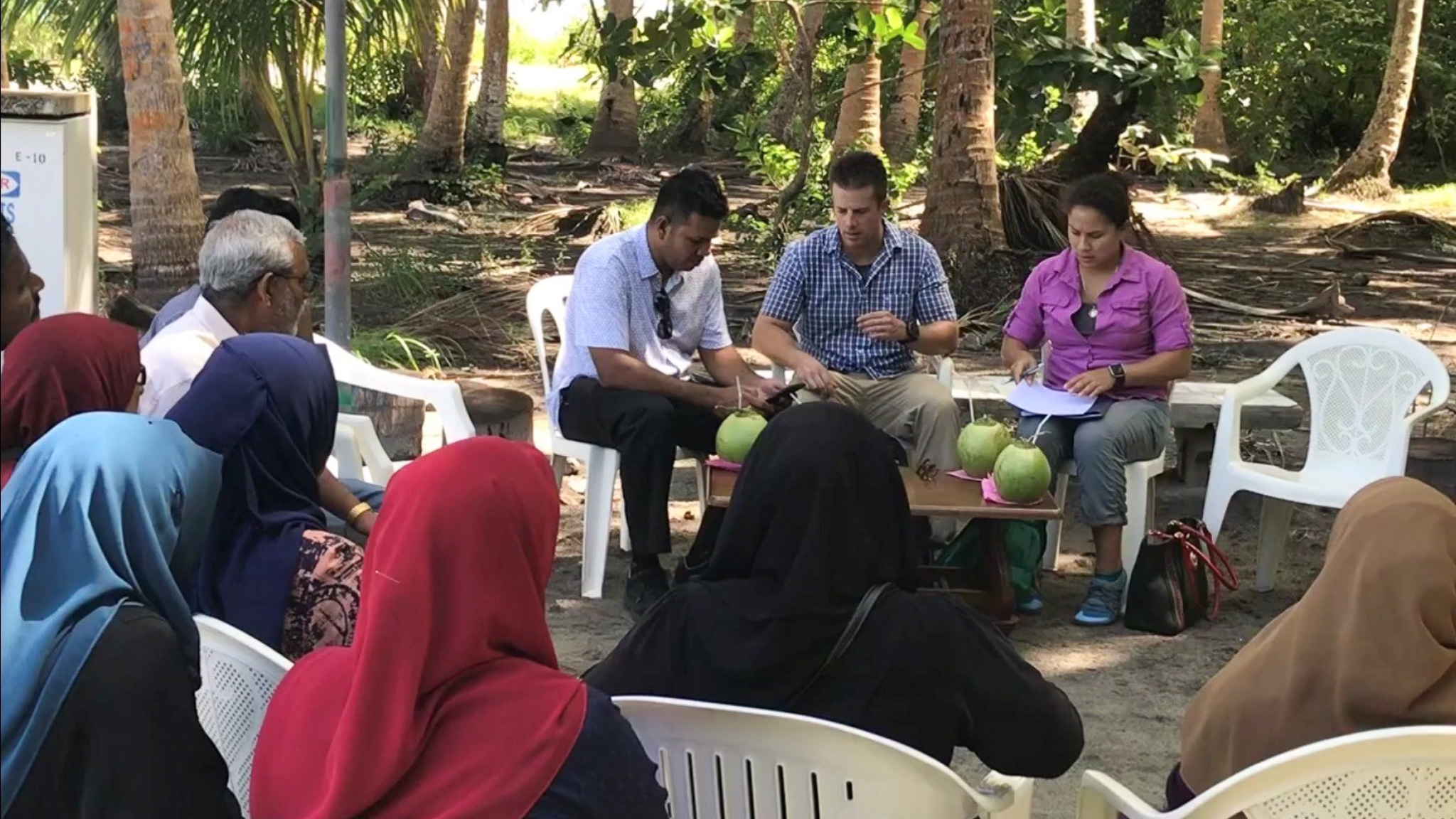
Seth Peterson had spent 13 years in the conventional Army when he decided to transition into special operations as an E-7. Looking back on his career, he tells the Special Operations Association of America (SOAA) why he wanted a change, and how the special operations community took care of his family when his wife faced an ailment later in his career.
A Conventional Career
Beginning in 2003, Peterson went through three Iraq deployments, but he never understood the purpose for his service. He explained, “You get so fed up asking ‘why am I doing what I’m doing,’ literally just going out and trying not to get blown up, going back to my hooch, and then rinse and repeat.”
During his time overseas, Peterson “got to see a lot of why I didn’t want to do that stuff anymore, why I really wanted to be a part of something that has real impact,” Peterson explained. “Until you get high up there in the ranks, you don’t fully understand the big picture of why the military does what it does.”
After getting stop-lossed in 2006, Peterson left the Army. He returned after getting married. He went through an Afghanistan deployment before being “voluntold” to take an assignment with Recruiting Command.
Though he was not initially thrilled about recruiting, it gave Peterson a “chance to step back” and consider the military from a new angle. “I’m speaking to people who don’t know about the military yet. I’m talking to parents, I’m talking to higher education employees, community leaders…in an area that wasn’t really around a large military presence.” The setting gave Peterson “great insight” into his role as “the face of an organization that’s bigger than just myself, or just my team…Everything you do as a recruiter is a reflection on the Army as a whole.”
Transitioning to Special Operations
Peterson’s mindset shift came at a critical point. Twelve years into his Army career, he was trying to decide what career steps to take next. He knew that he wanted to enter special operations, but had to decide whether Special Forces (SF) or Civil Affairs (CA) was the right fit.
A friend in the CA community helped Peterson make his decision by explaining that CA would give him the ability to “be part of a team that’s maybe more geared towards having an impact on the civilian population and government, and on the communities.” He would be “involved in how the communities are set up, how the government is functioning, [and] building stability within a country.”
As a Sergeant First Class, Peterson needed a waiver when he made his transition. After going through training and learning Korean, he was assigned to Fox Company of the 97th Civil Affairs Battalion, based out of Fort Bragg, North Carolina.
When Peterson arrived, Fox Company was just standing up as a provisional unit, and he was one of five to six personnel in the company. As an E7, he was given the opportunity to immediately assume a leadership role inherent with the rank, while also realizing he “still had so much to learn about Civil Affairs.”
Deploying with Civil Affairs
With his new assignment, Peterson finally found the purpose that had been missing from his time in the conventional Army.
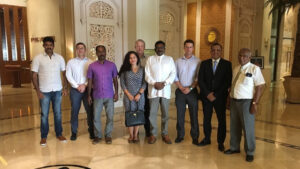
His first deployment with CA was as the Team Sergeant for the Bangladesh mission. Because it was also his team’s first deployment, it came with “a big learning curve.” Peterson was unable to bring his entire team into theater, and the team was not able to work with their SF or Psychological Operations (PSYOPs) counterparts prior to departure. When they hit the ground, the team had to immediately build rapport with their special operations counterparts while simultaneously engaging with Embassy staff and local host nation organizations.
“You think six months is a lot of time, and it’s really not when you consider everything you are tasked to accomplish,” Peterson said.
Though some in the special operations community believe that it could be beneficial to send the same teams back to the same countries for continuity, Peterson said that deploying to new locations gives personnel a “fresh perspective.” He explained that “CA teams need people with the right personality, who pull from previous experience and have synergy, and who can build effective relationships with government and non-governmental organizations.” As “the missions change, there’s so much more to it than just researching the country,” he added.
Every CA deployment builds on previous teams’ hard work, and sets the foundation for future teams’ successes. In Bangladesh, Peterson’s team did their own mission planning while also executing on plans established by prior teams, which forced them to focus on “the big picture” beyond their own deployment.
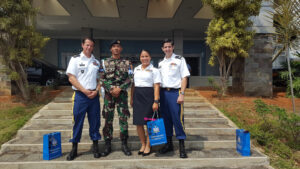
During Peterson’s next deployment, he had the opportunity to lead a Joint Combined Exchange Training (JCET) with the Indonesian military. Without an SF or PSYOPS presence on the JCET, he was able to “showcase CA’s capabilities from start to finish.”
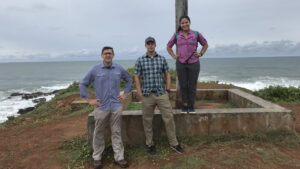
Peterson’s final deployment to Sri Lanka and the Maldives was even more successful than his prior deployments, in part because the mission allowed him to bring the entire team into theater. Because the team was able to complete some training and do a Joint Readiness Training Center rotation with 1st Special Forces Group prior to deployment, the CA team was able to work well with their SF and PSYOPs counterparts before arriving in country, allowing them to move quickly build rapport and accomplish the vital work they were sent to do.
In Bangladesh, Peterson felt that his team had not demonstrated the full array of faces that CA brings to the mission. By the time they arrived in Sri Lanka, however, Peterson’s team “knew what we had to offer” and “everything seemed to work so much better.”
Changing Course
Though Peterson had hoped that his team would continue to build on previous experiences and prepare for an even more productive fourth deployment, life had another plan. As soon as he returned from Sri Lanka, Peterson’s wife began experiencing health difficulties.
“I always knew going into special operations that it was a smaller type of community, that we took care of each other much more because we realized that when you lose one in a smaller group, the impacts are felt much more.” Peterson’s command and teammates immediately supported him as he shifted towards caring for his wife and family.
The leadership of the 97th CA Battalion decided that placing him on another deployment would be bad for Peterson’s mental health so he was sent to Special Forces Command to be the non-commissioned officer-in-charge (NCOIC) of the G32 Readiness Division. His new role gave Peterson an appreciation for “the planning that needs to happen on the back end to justify funding” and showed him the importance “of taking care of everything left of bang.”
Retirement and Beyond
After 21 years of service, Peterson retired from the Army, but not before spending his last 180 days in uniform using the SkillBridge program to go through a corporate fellowship with Hiring Our Heroes.
“It’s kind of funny because it has come full circle,” Peterson said, explaining that he used Hiring Our Heroes’ fellowship program to find his current role as Corporate Citizenship Manager for Military and Veteran Affairs at Fiserv, through which he manages Fiserv’s SkillBridge program for transitioning service members.
In his current role, Peterson often works with SF veterans, some of whom have “unrealistic expectations” of what life after transition might hold. “Sometimes they think that organizations will hire them just because of their special operations background. The key is matching your skills and background to what the organization needs.”
One of the most important facets in helping special operations veterans enter the civilian workforce lies in helping them explain how their skills in the military “will make them excellent corporate leaders.”
Supporting special operations veterans means helping them “flip the narrative” of what they did in the military. “One of the biggest hurdles to get over is to go from a collective achievement to a personal achievement without it feeling like you’re being boastful, like you’re stealing glory,” he explained.
He says that “those individual achievements are what corporate America understands and [what] create your value to the organization. I think it’s especially hard for special operations, because of how close-knit the teams are, and people don’t want to take credit for anything. Especially if you lost somebody.” Peterson does his best to explain that “you can honor the people and still recognize your individual achievements and the skill sets that you have.”
Peterson says that he would “absolutely” recommend a transition to special operations to any military personnel seeking fulfillment in their career, no matter how well-established they may be.
“Our time in service is short, and the experiences and training we gain in the
military shape who we become when we get out,” he said. “They set the stage for our careers after service and how we find our place in civilian life. Even if you’re already established in your
career, it’s never too late to move toward something that gives you purpose and fulfillment.
Without a doubt, special operations was the best decision I ever made while serving.”