
While the media have been debating the U.S. military’s adaptation of artificial intelligence and technological innovation on the battlefield, our warfighters are consistently demonstrating the efficacy of advanced, AI-enabled systems already in our arsenal, which are saving American lives.
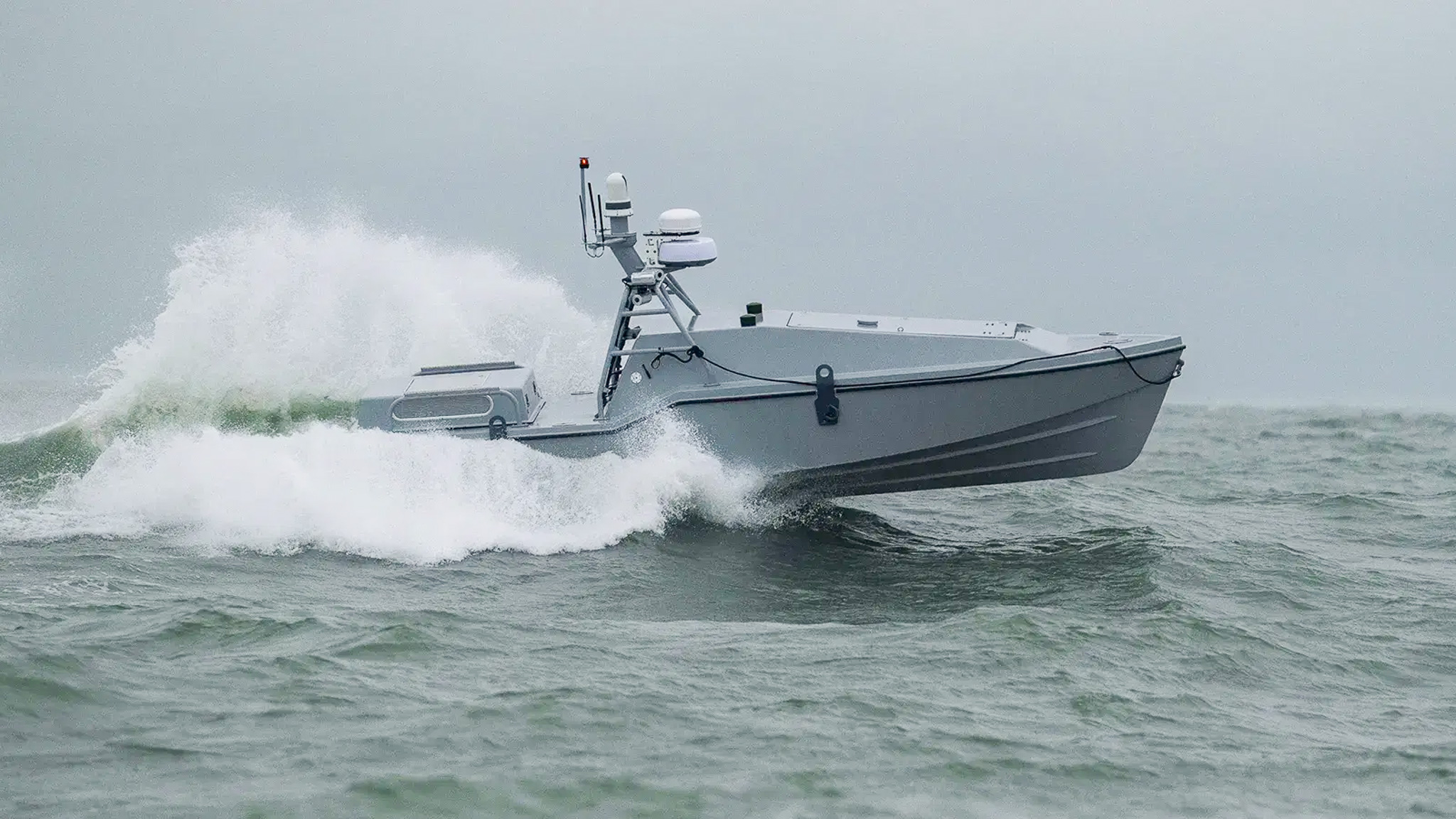
On June 8, American innovation was spotlighted after an Iranian drone hit a U.S. AH-64 Apache attack helicopter as it patrolled the Strait of Hormuz. The two-person crew spent two hours in the coastal waters of Oman before being located by an unmanned boat, a 24-foot Saronic Corsair, and transported to a location where they could be picked up by a rescue helicopter.
U.S. Central Command reported via X that both crew were in stable condition after being retrieved.
Special Operations Association of America (SOAA) Board Director and CNN National Security Analyst Alex Plitsas said that “the unmanned surface vehicle was used after it was determined that a rescue operation involving manned fixed and rotary wing aircraft at the site of the crash would have been too dangerous.”
Plitsas said that “in the past 36 months we have seen a rapid transformation from unmanned systems to AI driven unmanned systems to the cusp of integrated networks of unmanned systems and platforms that will rapidly replace humans in the battle space.”
Task Force 59
The Corsair was first deployed in the region in March. The autonomous vehicle can carry up to 1,000 pounds over 1,000 nautical miles. WIth top speeds exceeding 34 knots, the Corsair can traverse five-foot waves and has “sensors that provide 360-degree passive sensing capabilities for day and night operations.”
The Corsair belongs to U.S. Navy Task Force 59, which initially launched in September 2021 to bring a variety of unmanned systems, powered by AI, to the 5th Fleet’s area of operations, which includes the Strait of Hormuz, the Strait of Bab al Mandeb, and the Suez Canal. By December 2022 Task Force 59 had “operated unmanned surface vessels in regional waters for more than 25,000 hours.”
In January 2024, the task force was relaunched as Task Force 59.1, directed to “charter new ground with manned and unmanned teaming concepts,” taking part in exercises with AI-enabled unmanned assets to “advance lethality at sea.”
Further Strikes Imminent
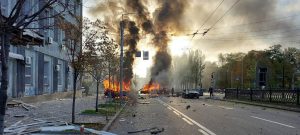
Multiple sources told CNN that the Apache was impacted by an Iranian Shahed drone, though there was no confirmation of whether the collision occurred intentionally. On June 9, Iranian Foreign Minister Seyed Abbas Aragchi said in a statement on X that “foreign forces in proximity to our territory are at constant risk on account of their own human errors, plain accidents, or potentially being caught in crossfire. To reduce risk, the best solution is for foreign forces to exit, as soon as possible, an environment which will never be hospitable to a hostile presence.” Aragchi added that “Iran prefers the language of diplomacy,” but said “we know how to speak other languages too.”
While claiming authority over the Strait of Hormuz, the Islamic Republic of Iran has collected tolls from and attacked some vessels making their way through the contested choke point. The future of the Strait has been a discussion of negotiations between Iranian leaders and President Donald Trump, but the sticking point in ending the conflict has been the regime’s refusal to give up its nuclear ambitions.
Trump ordered retaliatory strikes on Iranian radar sites, air defense systems, and ground control systems on June 9 following the Iranian strike on the U.S. Apache. Though he initially stated retaliatory strikes were complete, Trump announced frustration with Iran’s slow progress towards a negotiated deal on June 10, and began additional strikes hours later. After launching nearly 50 Tomahawk missiles and sending fighter jets to target locations throughout the country,. the president told Fox News’ Trey Yingst that strikes would continue on June 11 if Iran did not sign the president’s agreement. The president threatened to seize Kharg Island as well as other points affiliated with Iran’s oil infrastructure, but cancelled planned attacks after progress towards a peace deal resumed.
As during early days of Operation Epic Fury, it is likely that many of the targets the U.S. struck were identified through artificial intelligence using programs like Maven Smart System, a Pentagon program “that employs computer vision algorithms to analyse satellite imagery and radar to identify strike targets.”
Future Conflict
SOAA has tracked many of the astounding, technologically-enabled military maneuvers the U.S. military has conducted in the past six months. This includes special operations forces’ (SOF) involvement in the capture of Venezuelan dictator Nicolás Maduro and his wife Cilia Flores in Operation Absolute Resolve in January, and the incredible rescue of a downed F-15E Strike Eagle pilot and Weapon Systems Officer by SOF elements in Iran in April.
While these technological assets have enabled the U.S. to exercise dominance in multiple theaters, SOAA acknowledges that those conflicts have not been without casualties. 13 U.S. service members have been killed during the conflict with Iran, and seven crewed aircraft have been lost since the outset of hostilities.