
A destabilizing mix of crises is proliferating across Africa, largely as a result of humanitarian disasters fueled by internal conflict, and the rising presence of terror groups that thrive amidst a lack of order.
In 2026, 11 of the 20 countries that the International Rescue Committee designated as being host to the world’s worst humanitarian crises are within Africa, where in many instances resource scarcity and infighting among powerholders has created seemingly intractable disorder. Six of IRC’s 20 crisis countries are within the Sahel, the ten-country belt across the continent that acts as an ecological barrier between arid deserts to the north and humid savannas to the south .
The Sahel has also become a hotbed for al Qaeda and the Islamic State of Iraq and the Levant (ISIL), though the terror groups are taking hold across the continent with goals of reaching far beyond it to the West. Colin Smith is the coordinator for the United Nations Sanctions and Monitoring Team, which examines the growth of both al Qaeda and ISIL throughout the globe. Smith told the Special Operations Association of America (SOAA) that the monitoring team has “consistently raised concerns about the growing strength of Al-Qaida, ISIL and their affiliates in Africa.” Smith explained that “history shows that terrorist safe havens are consistently used as a foundation or base to project an external threat.”
According to Smith, “ISIL’s focus on parts of Africa has increased, as shown by the number of attacks there as well as the volume (and targeting) of their propaganda.” As a display of the importance Africa holds within ISIL leadership, Smith said that the leader of the group’s Al-Furqan office, which covers West Africa, “has been reported to have assumed a more prominent role” in the organization.
Smith added that Jama’at Nusrat al-Islam wal-Muslimin (JNIM) is spreading throughout West Africa and the Sahel. In competition with ISIL, JNIM is “adding another layer of violence to an area already afflicted by it.”
While Smith says that “Al-Qaida and ISIL in Africa may currently pose a threat that is mostly regional,” he believes that “unchecked, in time that threat will grow and will manifest itself on our shores. Their ambition is not constrained by geography, and their ideology aims to span the globe.”
After Smith provided comments for SOAA, the dangers he highlighted were illustrated starkly when JNIM launched an unprecedented attack on multiple strategic cities on April 25 in coordination with local separatist forces in Mali, one of IRC’s designated watch list countries in the Sahel. Government forces, said to be aided by Russian mercenaries, were reportedly able to regain control of the territory from enemy forces, estimated to be 1,000 fighters with a correspondingly large amount of weaponry.
Special Operations Forces Can Respond
SOAA believes that special operations forces (SOF) are uniquely equipped to provide an agile, low-profile response to many of the global terror threats and conflict-fueled humanitarian crises emanating from the U.S. Africa Command (AFRICOM) area of operations.
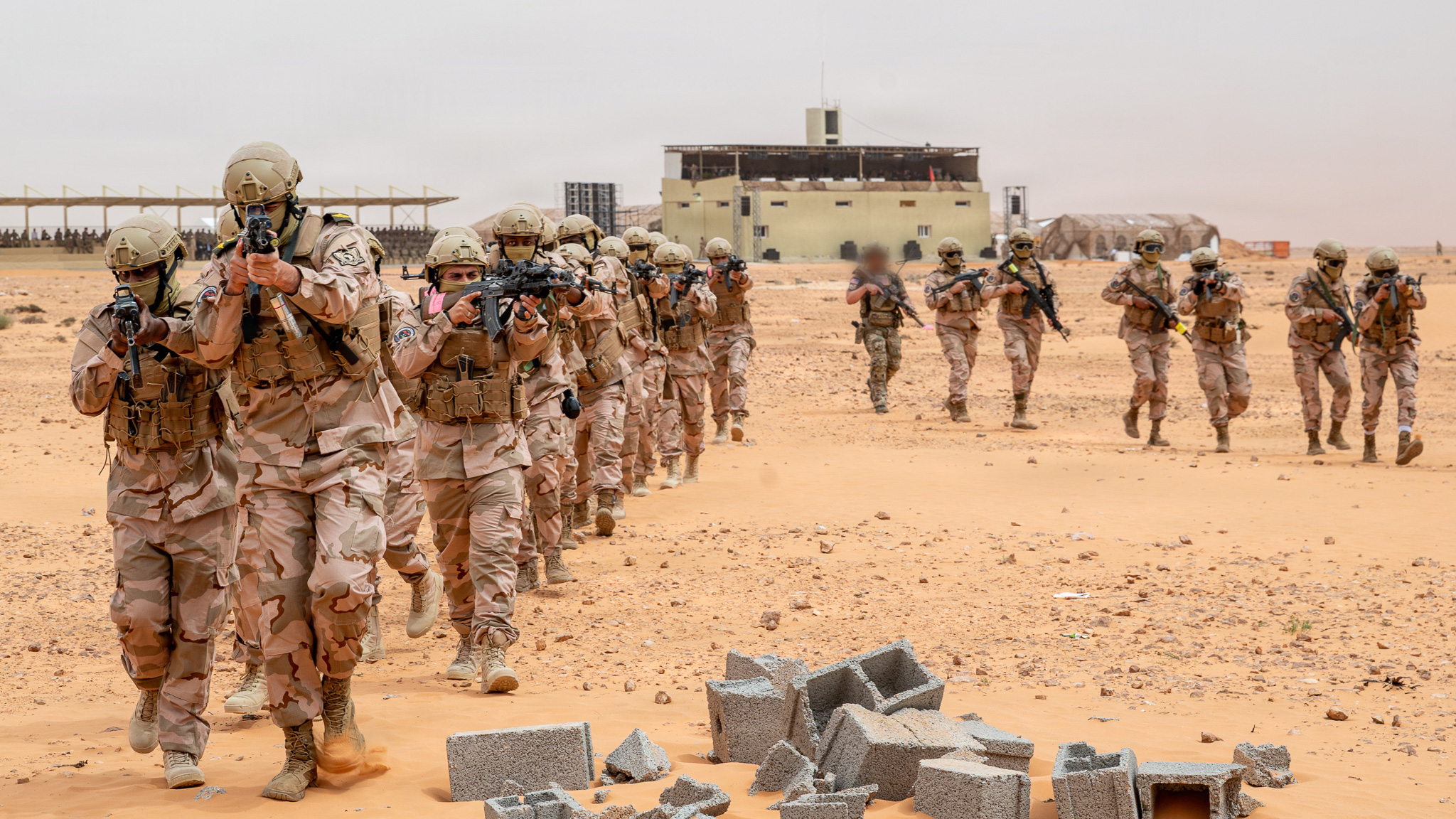
SOAA Board Director Alex Plitsas saw SOF elements undertaking an innovative approach to regional stabilization while traveling to Libya with AFRICOM Deputy Commander Lt. Gen. John W. Brennan Jr. to observe Flintlock 2026, the premier annual special operations exercise focused on building partner capacity, interoperability, and counterterrorism effectiveness across Africa. He said that the visit was not simply a snapshot of tactical proficiency, but a compelling model of how SOF can enable strategic-level outcomes: political reconciliation, economic stabilization, and the groundwork for democratic governance.
Plitsas shared his observations about Flintlock 2026’s success, which he reports was enabled by applying SOF principles to a dynamic and complex local scenario. Plitsas also notes that the basic principles applied in Flintlock 2026 could prove successful across multiple conflict zones.
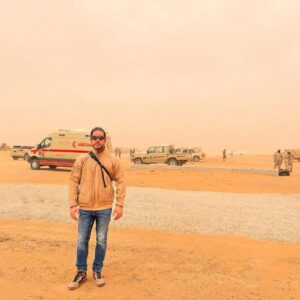
SOAA Board Director Alex Plitsas observing Flintlock 2026 in Libya
Flintlock 2026 – Innovative
Presenting one of the most complex operational environments within AFRICOM’s area of responsibility, Libya’s struggles with fragmented governance, competing militias, and external interference have historically undermined efforts at national unity.
In Flintlock 2026, Libyan partner forces from competing political and regional factions requested that they train side-by-side in integrated formations under a common operational framework. Deliberate, sustained engagement throughout the Flintlock planning cycle enabled this request, with planners focusing on building trust, standardizing procedures, and creating shared incentives for cooperation.
The fundamental shift reflects the core strengths of special operations: persistent presence, culturally-attuned engagement, and mission-tailored training. Rather than imposing rigid structures, SOF teams worked with Libyan units to develop interoperable capabilities in areas such as intelligence fusion, small-unit tactics, logistics coordination, and command-and-control. Crucially, these discussions made success in the field contingent on cooperation.
This approach yielded measurable effects. Integrated Libyan units demonstrated improved operational cohesion and effectiveness during joint exercises, particularly in counterterrorism scenarios targeting shared threats such as ISIL-affiliated networks. More importantly, these units began to function as a unified institution within a divided state. In fragile environments, security forces often serve as either accelerants of fragmentation or anchors of stability. Through Flintlock and related engagements, Libya’s emerging integrated units are increasingly trending toward the latter, which may become a catalyst for political alignment.
Paying Dividends Beyond Security
Enhancing security within Libya will enable broader economic and political progress. The risk calculus for foreign investors will begin to shift as Libyan forces demonstrate an ability to secure key infrastructure, borders, and population centers., SOF-enabled capacity-building can become a foundational enabler of foreign direct investment, which in turn will fuel economic recovery.
Moreover, the integration of AFRICOM and U.S. military support creates conditions conducive to political reconciliation and, ultimately, democratic elections. Flintlock’s model helps create the space for legitimate political processes to occur, and ultimately provides citizens a secure environment that allows them to participate without coercion and fear.
Leaders Steeped in SOF Expertise
AFRICOM’s senior leaders, commander USAF Gen. Dagvin R.M. Anderson and Deputy Commander Brennan, bring deep special operations and counterterrorism experience to their roles. This shapes their operational philosophy, which prioritizes partner-centric approaches and long-term effects over short-term metrics.
Brennan’s presence at Flintlock 2026 underscored the command’s commitment to the endeavor and his engagement with both U.S. personnel and African partners reflected a nuanced understanding that strategic outcomes are manufactured at the tactical level.
“Across AFRICOM’s area of operations, we are leveraging SOF not as a standalone capability, but as a force-multiplier within a whole-of-government, interagency, multinational, and private sector corporate framework which advances common and interrelated security, economic, and informational interests,” Brennan told SOAA.
“By coordinating with our allies and partners, interagency stakeholders, and host-nation leaders, we ensure that security gains are aligned with diplomatic and economic objectives that ensure peace and prosperity through strength. We see this particularly promising manifestation today in Libya, where there is a nexus of threats and malign actors, but also great opportunity for military and political unification which would create an environment that is conducive to more economic investment and prosperity,” Brennan added. “By employing a global network, Combined Joint SOF are pivotal to countering the threats and they have also led the way in setting the conditions for military unification in Libya.”
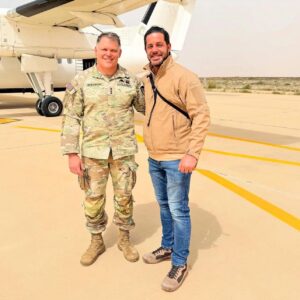
Alex Plitsas with AFRICOM Deputy Commander LTG John W. Brennan, Jr., U.S. Army
Scaling the Success Across the AO
Flintlock 2026 offered a clear demonstration of how disciplined, strategically aligned special operations engagement can move the needle in some of the world’s most challenging environments. In Libya, the results are still emerging, but the trajectory is encouraging: former adversaries working together, security institutions beginning to cohere, and the early conditions for economic and political normalization taking shape.
For policymakers, defense leaders, and industry stakeholders, the lesson is straightforward but significant. SOF, when employed with clarity of purpose and supported by experienced leadership, can do far more than conduct direct action or counterterrorism raids. They can help knit together fractured societies, enable economic opportunity, and lay the groundwork for democratic governance. In an era defined by complex, irregular challenges, that capability is not just valuable—it is indispensable.
Flintlock 2026 is particularly instructive for its potential scalability. The model of integrating divided partners, combined with persistent SOF engagement, can be adapted across other regions within AFRICOM’s portfolio, which present similar challenges and opportunities. By focusing on building unified, professional security forces, the United States and its partners can help create the conditions for broader stabilization.
Beyond AFRICOM, the model has relevance for other combatant commands. In regions such as the Middle East, South Asia, and parts of Latin America, where political divisions and security challenges intersect, SOF-led capacity-building can serve as a bridge between tactical effectiveness and strategic outcomes. The key is not to rigidly replicate Flintlock 2026, but to adapt it to local contexts.