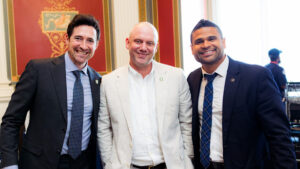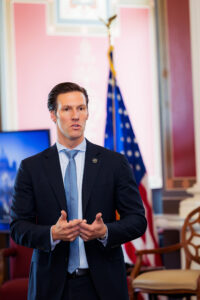

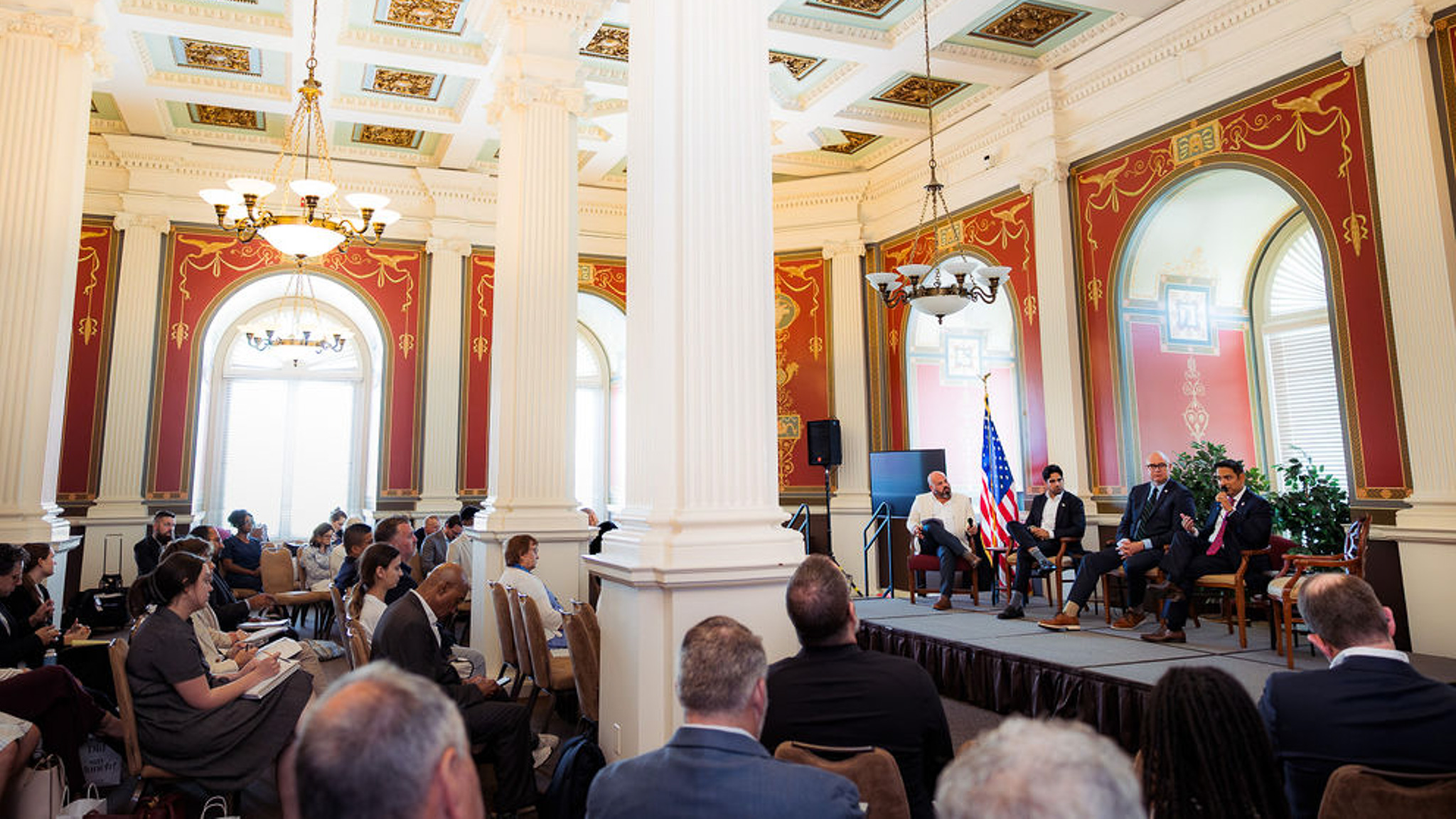
On May 20, the Special Operations Association of America (SOAA) hosted a well-attended two-panel discussion at the Library of Congress that focused on overcoming difficulties affiliated with securing critical minerals required for national security.
While we recognize that special operations forces (SOF) are not mining, refining, or recycling rare earth minerals, they are the end users of many defense industrial system products that require rare earth minerals. As such, we recognize that we have a role in advocating for the resourcing of these materials to maintain the readiness that SOF operators rely on while supporting operations around the world.
 Our Experts
Tito Torres, former U.S. Army Ranger, special mission unit veteran, and intelligence officer, moderated the first panel, which included SOAA Board of Advisors member Luis Avila, a defense innovation expert, Dr. Sam Kalirai, Senior Staff Product & Business Development Manager for Sila Nanotechnologies, and John M. Melkon II, a 13-year veteran of the U.S. Army Special Forces who has held multiple leadership roles within the Defense Department, and currently teaches at West Point.
SOAA member Austin Higgins, a U.S. Air Force veteran and technology strategy leader, moderated the second panel. Taking part were Kent Taggart, CEO and Co-Founder of I.T. Asset Disposition (ITAD) company Mender, Kunal Thaker, Senior Resilient Energy Systems Manager at the Idaho National Laboratory, and Shirley Martey-Hargis, a U.S. Cyber Command AI policy professional and nonresident fellow at the Atlantic Council with decades of expertise in Chinese strategy.

The Discussion
Our moderators and panelists identified a number of possible difficulties in maintaining our military prowess with the current stock of critical minerals in our possession.
Not only does China control the vast majority of critical minerals like cobalt, but creating new mines to obtain minerals domestically is a decades-long process, with the typical discovery to production timeline stretching on 29 years.
In October 2025, China announced new export controls on a number of critical minerals, but one month later, suspended the enforcement of those controls for one year. With that suspension set to end in November, the U.S. holds a stockpile of just over $1.3 billion of rare earth minerals today, compared with $42 billion during the Cold War. Project Vault, launched by President Donald Trump in February, aims to increase that stockpile to $12 billion.
Our critical mineral needs are not insignificant. A single F-35 requires over 900 pounds of critical minerals to assemble. Building a single Virginia-class submarine requires 9,200 pounds of critical minerals.
Panelists agreed that a large part of the problem with sourcing these materials is not simply in mining them, but in the refining process. Because refining is not cost effective inside the U.S., those who do extract minerals domestically must ship them overseas to be refined. China currently dominates 90 percent of mineral separation and processing.

Seeking Out Innovations
While the U.S. seeks solutions to refining and resourcing minerals, a variety of innovative solutions could help offset sourcing needs. ITAD companies like Mender are able to separate out numerous critical minerals from the bulk quantities of office materials they recycle for clients. Unfortunately, there is no domestic solution for recycling these materials, so at present, recycled materials already purchased by the U.S. are being shipped overseas for recycling and subsequently returned to the global marketplace.
Another possible source for maintaining minerals lies in the billions of tons of mine tailings, the refuse produced from over 100 years of mining, at mines across the country. Previously considered castoff, new processing methods could help to curtail environmental pollution and separate out a host of critical minerals still viable within the tailings. However, research and oversight are needed to understand what minerals may be obtainable in the vast network of mines where usable tailings exist.

Critical Minerals for the Future
Panelists agree that moving forward will require a whole-of-government effort that unites Defense Department procurement and incentivization, private equity expenditures, industry research and innovation, and legislative support to initiate sweeping changes to the mining industry. Panelists suggested creating a consortium of experts across these sectors tasked with tackling the critical mineral shortage.
Each sector could have a unique role in moving things forward. Some panelists believed that the Pentagon should seek out equity in mining companies. Legislation is required in some cases to alleviate barriers to mining and refining materials in the U.S. In the private sector, investment into recycling and refining could spur momentum as well. Even foreign policy should focus on critical mineral shortcomings, with panelists arguing that we should replace aid-based deal-making with countries that possess strategic minerals with economic partnership agreements.
For those interested in delving further into the difficulties we face securing critical minerals and the solutions to procuring sufficient rare earth minerals, please join us July 21-22 at Carahsoft Headquarters in Reston, Virginia for our annual conference, co-sponsored by the Irregular Warfare Initiative (IWI). Click this link to register.