
After President Donald Trump signed an executive order on April 18 that will expedite medical research into the effectiveness of psychedelic treatments for use in mental health care, there are many questions across the country about what psychedelics are, and how they can be used to support veterans with post-traumatic stress disorder (PTSD), traumatic brain injury (TBI), depression, and substance dependency.
The Special Operations Association of America (SOAA) has been advocating for increased research into psychedelic-assisted therapies for nearly five years. To clear up misconceptions about these therapies and highlight their utility, we are releasing a series about how various psychedelics work, and their documented effects for veterans.
What is DMT?
Dimethyltryptamine (DMT) is a hallucinogenic with structural similarity to psilocybin that is found naturally in plants and animals but can also be produced synthetically. DMT is known for producing “a brief but intense visual and auditory hallucinogenic experience” that can be so intense and revelatory people refer to it as holy or spiritual.
There are multiple varieties of DMT, including N,N DMT and 5-MeO-DMT. 5-MeO-DMT is found in a smaller number of plants, and in the venom of some species of toad. It is widely believed to induce more vivid hallucinations than N,N DMT, though the effects of 5-MeO-DMT have a shorter duration.
Ayahuasca is a brewed beverage consisting of DMT boiled together with a plant that contains a monoamine oxidase inhibitor (MAOI). The MAOI prolongs the effects of the DMT, making for a longer hallucinogenic experience.
DMT’s Legality and Risks
Like most psychedelics, DMT is listed as a Schedule I drug with no accepted medical use and a high potential for abuse. Some religious groups have been able to obtain exemptions from the court system to utilize ayahuasca in their religious ceremonies. Colorado has decriminalized ayahuasca throughout the state. Some localities in California have also decriminalized ayahuasca, and in Oregon, having small amounts of ayahuasca has been decriminalized despite the drug still being illegal.
Common side effects associated with DMT and ayahuasca are nausea, vomiting, diarrhea, anxiety, and increased heart rate and blood pressure. Less frequently, users may experience more serious side effects like seizure, chest pain, breathing difficulties, and fainting.
Studying Ayahuasca and DMT
There has been limited testing of ayahuasca and DMT in clinical settings, though both have yielded significant results for alleviating depression.
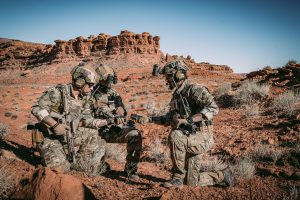
Researchers have examined data from SOF veterans who used a combination of ibogaine and 5-MeO-DMT during three-day retreats in Mexico between 2019 and 2021 to seek help for cognitive and mental health struggles. The participants noted “significant and large improvements in self-reported PTSD symptoms,” as well as in depression, anxiety, insomnia, and post-concussive symptoms during a one-month follow up.
A 2019 clinical trial of ayahuasca found that it had “significant antidepressant effects” for trial participants.
A 2025 study in Neuropsychopharmacology found that vaporized DMT was able to produce “rapid, significant, and lasting antidepressant effects” for those with treatment-resistant depression. Trial participants experienced “significant reduction” of symptoms within a single day, and those effects continued for three months.
SOAA’s Psychedelics Expert’s Take
SOAA Chief of Veteran Health Innovation and Partnerships Dr. Ryan Ziegler has followed psychedelic research and treatment closely, and hopes to expand access to treatments for participants in SOAA’s new transition and healthcare initiative, Project Valkyrie.
According to Ziegler, one of the biggest differences between DMT variants is length of impact and type of experience. Ziegler says that 5-MeO-DMT and N,N DMT are inhaled, and usually impact users for 15 to 30 minutes. While DMT often creates visualizations, Ziegler says that 5-MeO-DMT is more often used in treatment settings for “drug addiction, PTSD, and trauma related to sexual abuse.”
Ziegler says that ayahuasca has a more enduring impact of around 12 hours, and is more commonly used in ceremonies in South American countries. During ayahuasca journeys, Ziegler says that users report a spiritual experience where they have “a lot of visualizations and meet different entities.”
When it comes to having an enduring impact for veterans with PTSD, TBI, or substance abuse, Ziegler says that there isn’t enough research yet to fully understand the best use cases for each and that the integration work surrounding the use of these medications is just as important as the medication itself. He also notes that any DMT variant is best used in a controlled setting with medical provider oversight.