
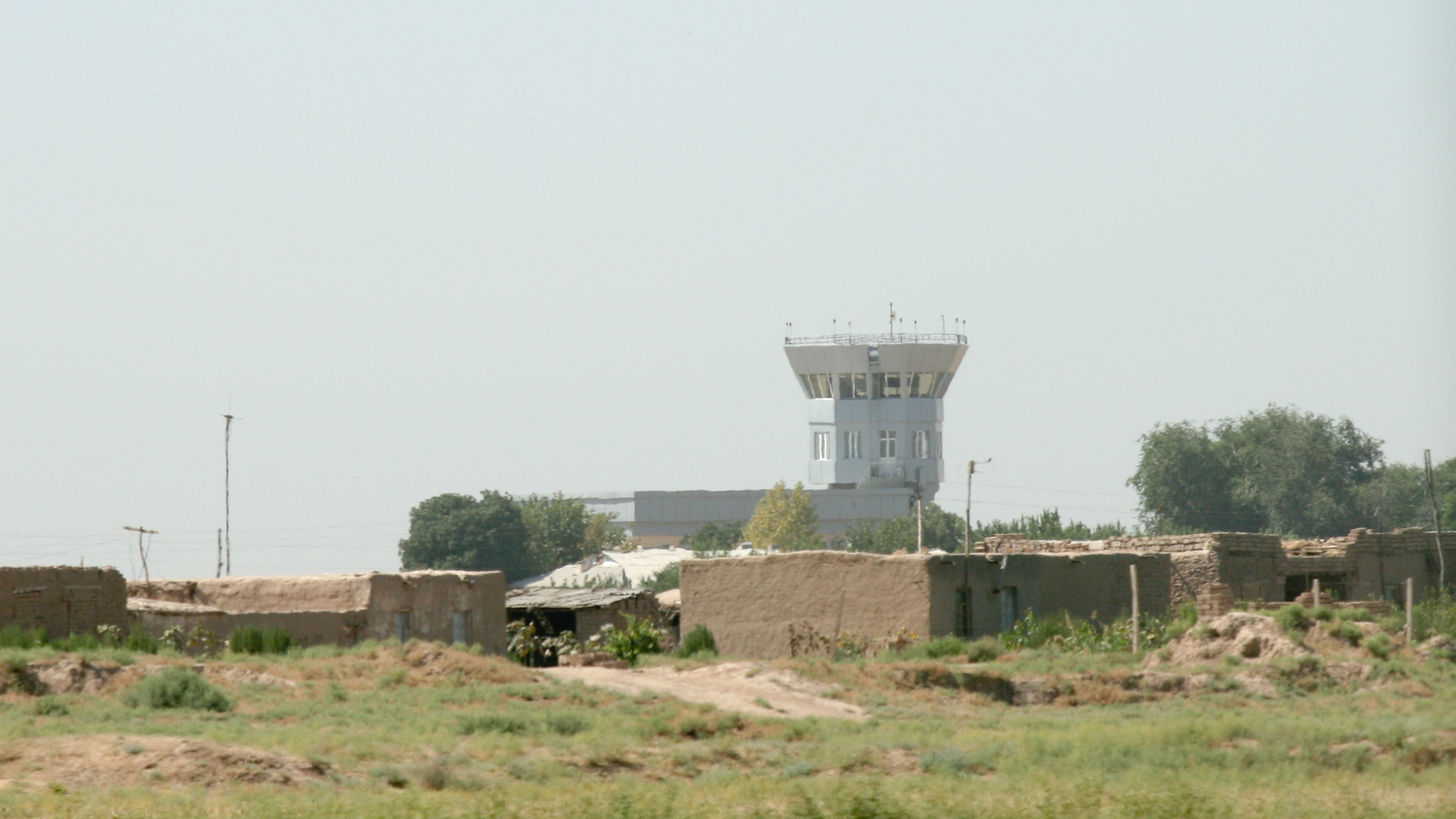
Between October 2001 and November 2005, more than 15,000 U.S. service members passed through Uzbekistan’s Karshi Khanabad Airbase (K2), typically on their way to support Operation Enduring Freedom in the Afghanistan theater. Formerly used by the Soviet military to support operations in Afghanistan, the base was found to contain several hazards, including the presence of underground jet fuel, depleted uranium, asbestos, and airborne particulate matter.
Through the years, service members and veterans have raised alarms about cancers that their fellow veterans faced following service at K2. While K2 veterans qualify for support through the VA on account of their service location, definitively linking K2 service with adverse health outcomes has been difficult.
Initial studies conducted by the Department of Defense have found that service members who spent time at K2 are at “higher risk of malignant melanoma and neoplasms of the lymphatic and hematopoietic tissues.” The Department of Veterans Affairs’ K2 website, however, states that “only a few cases of each type of cancer” were discovered, and “should not be viewed as definitive evidence of an association with service at K2.”
A number of veterans organizations, including SOAA, are linking arms to advocate for K2 veterans and demand additional support to answer ongoing questions about whether their health conditions are linked to exposures on the base.
If you or someone you know believes they have been impacted by their service at K2, please contact SOAA to share your story.
Sources of Possible Exposure
Testing to determine K2’s suitability for U.S. forces turned up a number of concerns emanating from Soviet-era structures. An old jet fuel distribution system buried underground released “widespread jet plumes” approximately 1-3 meters underneath the soil. The fuel created noxious odors and caused “black goo” to pool up from the ground when soldiers dug in the tank’s vicinity. Testing of air samples determined that “[volatile organic compounds] in the jet fuel vapor did not exceed Military Exposure Guidelines.” Still, to mitigate the issue, the trench contaminated with jet fuel was “filled with clean soil to create a cap to hold the vapors underground.”
At a site where Soviet missiles are thought to have been destroyed and buried, asbestos and depleted uranium (DU) were detected in some surface dirt. A “thick layer of clean dirt” was applied over the impacted areas, which were cordoned off. As a result, the VA assessed that “long-term health effects would not be expected from DU contamination based on site assessments and the proper use of protective measures by personnel to prevent DU exposure.”
Though initial testing at K2 showed signs of chemical warfare agents, these were “later determined to be falsely positive.”
K2 was also impacted by “high levels of particulate matter and dust that constantly blew through the camp.” Sound pollution was also identified as a hazard, with the noise produced on the base “equivalent to a large city or industrial facility.”
Testing Underway
A number of studies about K2 exposures or of personnel deployed there have turned up sometimes contradictory results about whether the base posed a danger to service members.
A Periodic Occupational and Environmental Monitoring Summary (POEMS) for K2, based on findings collected between October 2001 and April 2005, has assessed “health risks at the population-level” for those who served at K2, finding that noise exposure and airborne particulate matter might lead to long-term health risks. The study assessed that while there was a “potential” short-term, low health risk for those who inhaled contaminated dust, there were no long-term health impacts due to DU exposure.
As the assessment explains, “a 2001 environmental site characterization identified low radioactivity uranium which could be potentially harmful only if inhaled.” The 2002 site survey and risk assessment found very small amounts of ‘processed’ uranium, which was later identified as depleted uranium.” The survey explains that after clean fill was added and the area “marked off-limits,” the uranium was determined to pose “minimal health risk.”
A 2002 survey also “found no identifiable ionizing radiological hazards for any areas within the K2 perimeter.”
An Army Public Health Command survey in May 2024 for the Karshi-Khanabad Surveillance Program (K2SP), however, turned out different findings. In a study comparing a group of 7,000 service members with time at K2 with a group who deployed to South Korea, “the only increased risk was found for malignant melanoma…and leukemias and lymphomas.” The K2SP stated that “these results do not provide definitive evidence to support or negate an adverse health effect associated with K2 deployment. However, it is concerning that this study suggests there may be an increased risk of leukemias and lymphomas and indicates the need for ongoing assessment and monitoring of the K2 population.”
In its “discussion” section, the study found that “each of the K2SP groups had a substantially lower mortality risk compared to the general population,” and that “at this time, there is no evidence to suggest that having deployed to K2 is associated with adverse health outcomes.”
Though 15,023 veterans with time at K2 were identified for the K2SP survey, 2,832 were not included because they either “remain on active duty and/or were special operations for whom deployment information is unavailable.”
A June 2024 Department of Defense mortality study about the K2 population found that “there was no significant association between K2 deployment and increased all-cause mortality risk.” Within the study, the DOD noted that “being deployed to K2 was associated with a 30% decrease in all-cause mortality risk compared [with] having no K2 service.” However, the study also found a statistically insignificant increase in mortality risk for those with increasing numbers of days on K2.
Finding Answers
Currently, K2 veterans are auto-enrolled in the Airborne Hazards and Open Burn Pit Registry, and are “fully covered under the PACT Act.” Veterans who served at K2 can also schedule a “urine assay to test for the isotopic signature of DU” through the VA at no cost.
Veterans who spoke to SOAA said they feel that more is needed to understand the full impact of exposures at K2. Many spoke of fellow service members battling cancers, and some who have unfortunately perished as a result.
SOAA has talked to multiple service members who were stationed at the base as we work to establish a timeline of when various safety improvements were made, what exposures service members were subject to, and what health impacts they and their fellow service members have experienced following their time at K2.
We implore those who want to speak out to contact [email protected].