
U.S. Special Operations Command (USSOCOM) regularly hosts partnership exercises with nations worldwide to increase interoperability, build host nation skills, and deepen alliances. These endeavors can range from smaller-scale Joint Combined Exchange Training (JCET) exercises, meant to sharpen partnerships with a single country, to multinational exercises that require coordination across entire regional commands.
In partnership with SOF News, SOAA is highlighting Trojan Footprint, the premier, largescale multinational exercises for the Special Operations Command, Europe (SOCEUR) area of responsibility.
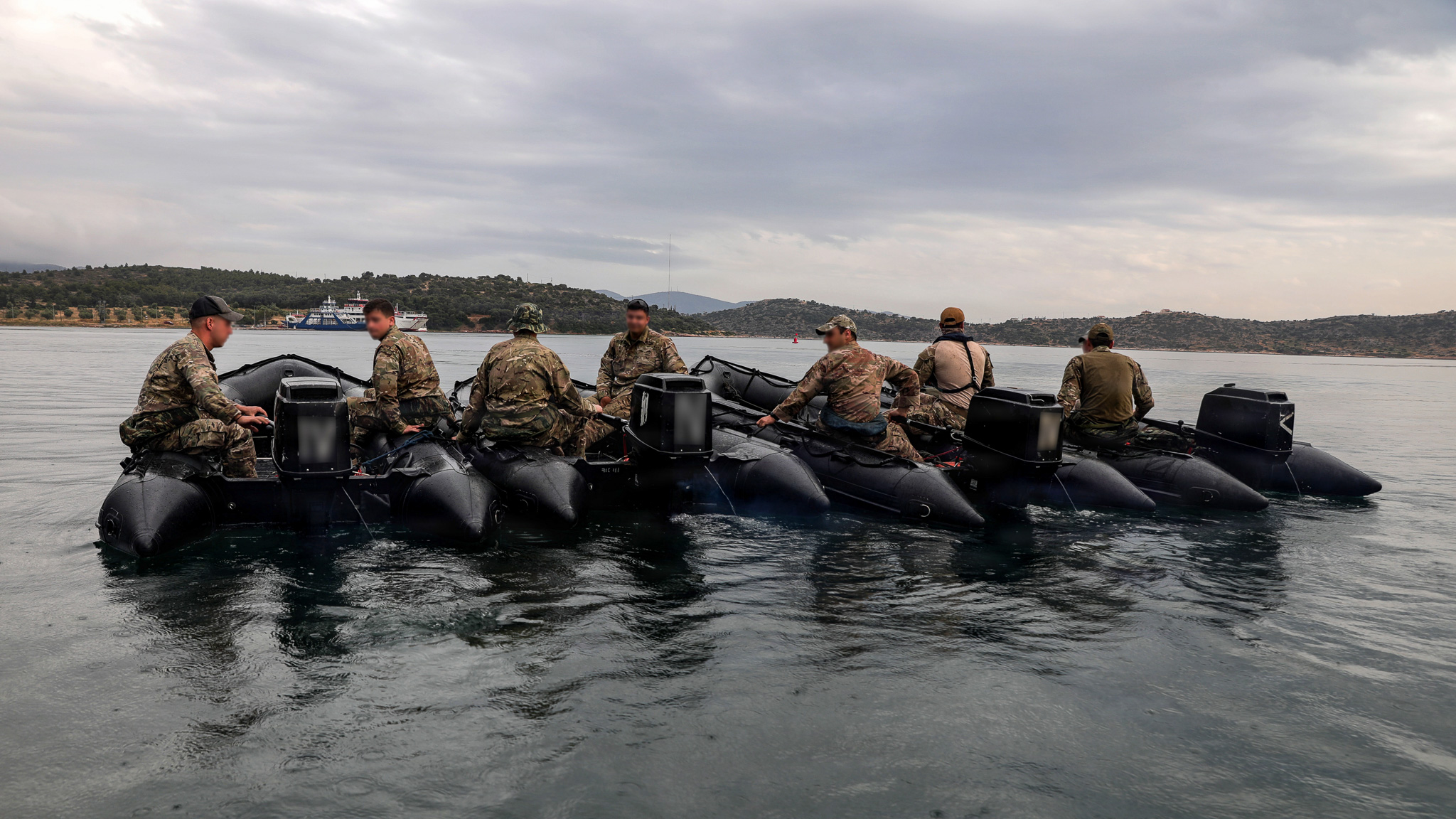
This year’s Trojan Footprint, which took place in May, was the largest iteration to date for SOCEUR. Special operations forces (SOF) from 24 nations trained side by side on the land, air, and sea across 10 countries, with a focus on maritime operations, airborne insertions, and the integration of autonomous systems for reconnaissance, targeting, and aerial resupply.
The ten-day exercise demonstrated NATO Special Operations Forces’ ability to integrate rapidly and operate effectively in complex, multi-domain environments. Among the objectives of Trojan Footprint are to strengthen interoperability, operational cohesion, and collective readiness to respond to security challenges in the European theater.
“The overarching purpose of TROJAN FOOTPRINT is to demonstrate a competent, credible, SOF capability to defend every inch of the Alliance,” said U.S. Army Lieutenant General Richard Angle, Commander of U.S. Special Operations Command Europe and NATO’s Special Operations Forces Command. “If deterrence is about the adversary’s understanding of your will and your capability, the adversaries should look at this and say, ‘We both have the will and the capability to defend every inch of the Alliance.’”
The exercise was first conducted in 2016 and has over time increased in scope and size. This year, the biennial exercise had over 3,000 participants, including around 1,000 U.S. SOF and 2,000 SOF from NATO Allies and partner nations.
Multiple Locations. The Trojan Footprint exercise was held in ten European countries. It took place in locations across Europe, from the Black Sea to the Balkans and from Greece to the Baltics. In the Balkan region, Green Berets from the U.S. Army 20th Special Forces Group trained with Greek and North Macedonian special forces units.
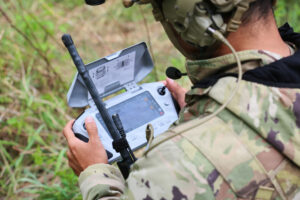
Long-Range Resupply. In the new operational environment in this era of strategic competition, logistics for SOF have become more challenging. This exercise provided the opportunity to integrate cutting-edge autonomous technology to solve the critical challenge of contested logistics. The exercise served as the operational debut for the Long-Range Grasshopper, an expendable, low-cost cargo glider that can deliver a 500-pound payload with accuracy over hundreds of miles, ensuring that isolated units can be sustained in high-threat environments without risking manned resupply crews. During Trojan Footprint, precision drops were executed in both Romania and North Macedonia in May 2026. This ongoing experimentation is actively transforming the way U.S. SOF approaches modern warfare. The use of Unmanned Aerial Systems (UAS) will likely be the backbone for special operations logistics in the future.
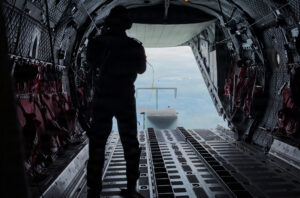
“Logistics Unmanned Aerial Systems, like the Grasshopper represent a paradigm shift in resupplying forces in contested environments,” said Maj. Jarret Flexman, SOCEUR’s chief of plans and exercises. “While legacy systems like the Joint Precision Airdrop systems are highly capable, they often face limitations in standoff distance and are susceptible to wind-induced inaccuracies. In contrast, the Grasshopper is not affected by winds and offers a standoff range of hundreds of miles.”
Participating Nations. Albania, Bulgaria, Croatia, Czechia, Estonia, Germany, Greece, Hungary, Italy, Latvia, Lithuania, Montenegro, Poland, Portugal, the Republic of North Macedonia, Romania, Slovenia, Slovakia, Spain, the United Kingdom, the United States, and partners from Georgia, Moldova, and Switzerland.
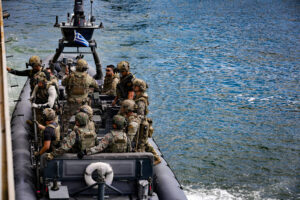
As part of the Trojan Footprint 2026 exercise, the Georgian Defense Forces conducted “Black Sea Gateway 2026”, which featured both land and maritime operations. This exercise included service members from SOF units of Georgia, the U.S., Poland, the UK, Spain, and Romania.
Trojan Footprint was first established in 2016 and has since developed into the largest SOF-led exercise in Europe. The exercise forms part of a broader Large-Scale Global Exercise framework intended to maintain multinational readiness and credible deterrence capabilities.
This year’s exercise served as a testing ground for refining tactics, employing innovative operational concepts, and testing new emerging technologies. As a biennial global exercise, Trojan Footprint brings together the U.S. Air Force, Navy, Space Force, Marine Corps, and Army special operations units as well as NATO and partner nation SOF units. The exercise demonstrates NATO’s resolve to deter aggression and defend regional security in Europe.