
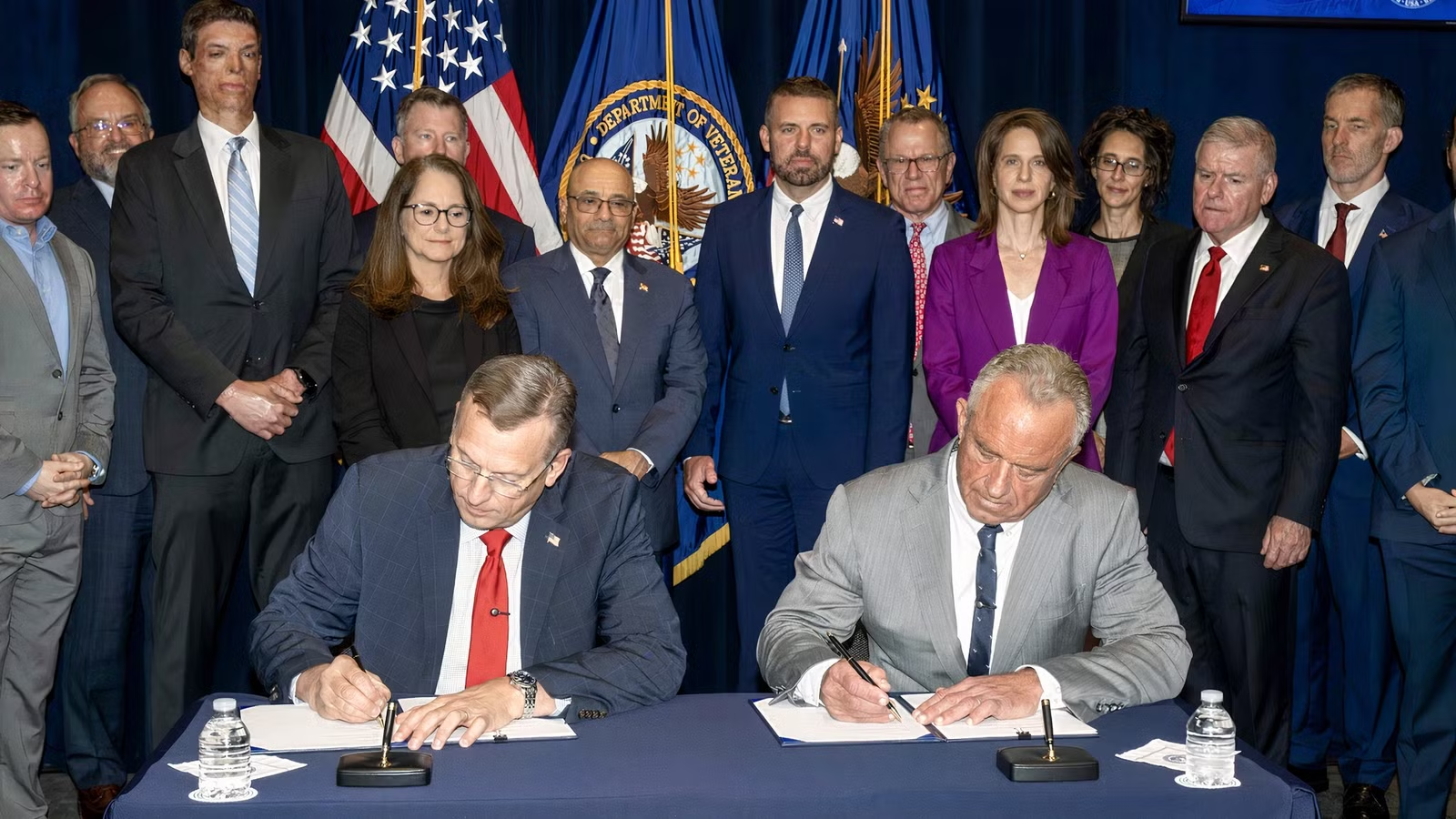
On April 18, President Donald Trump signed an executive order easing the pathway to researching psychedelic therapies in hopes of finding treatments that could put the brakes on an epidemic of suicides in the veteran community. The latest result of that directive is a five-year memorandum of understanding (MOU) between the Department of Health and Human Services (HHS) and the Department of Veterans Affairs (VA), announced on July 13. In their press release, the agencies noted that they intend to “strengthen collaboration on the research, clinical development, and responsible deployment to veterans suffering from serious mental health conditions of potential future rapid-acting psychedelic drug products if approved by the Food & Drug Administration.”
As part of the MOU, both agencies have dedicated themselves to “increasing participation in clinical research on promising rapid-acting mental health treatments for veterans.” They will also train staff on administering drugs that gain FDA approval, share data on treatments’ efficacy and other relevant factors, create materials to advise providers on the particulars of approved treatments, and “coordinat[e] research and shar[e] evidence as appropriate and consistent with legal authority that may help inform future FDA regulatory decisions and coverage policies.”
The Special Operations Association of America (SOAA) applauds this development, having been at the forefront of advocacy for research into clinical psychedelic treatments for veterans.
SOAA’s Chief of Veteran Health Innovation and Partnerships Ryan Ziegler (DMSc, PA-C) has elucidated many of the promising benefits that psychedelic treatments like DMT, psilocybin, ketamine, ibogaine, and MDMA have demonstrated in clinical trials. He applauds the important developments the VA-HHS collaboration will usher in, explaining that the MOU will “safely expedite the process of making these life-saving medicines available.” By “working with each other and sharing information,” Ziegler says that the VA and HHS are fulfilling “the intent of the Trump administration.”
Ziegler warns against veterans attempting to treat themselves with psychedelics as research continues. “Just like any medication that you are prescribed when you go to a doctor’s office, there are contraindications,” he explained. “There are certain risk factors for each of these psychedelic medicines that can be dangerous for patients. A medical provider should screen for these possibilities prior to treating a patient.”
As an example of possible complications, Ziegler noted that when a patient takes psilocybin, “the risk of having a psychotic episode increases drastically for patients with a first-degree family history of schizophrenia or bipolar disorder type one.” With ibogaine, Ziegler says that patients who have pre-existing heart conditions may experience a phenomenon known as QT prolongation, which can lead to cardiac arrest and death. He added that “there’s also the risk of continued hallucinations even after the medication has technically worn off.”
Ziegler also reminds veterans that psychedelics should be utilized in conjunction with therapy. “The lasting effects of a treatment, whether it’s used for depression or anxiety, tend to wear off much faster without the co-administration of therapy,” he said. “Studies that had talk therapy built in showed a tremendous increase in durability,” with effects demonstrated “for up to a year and beyond.”
In some therapy-paired treatments, Ziegler said that patients experiencing clinical depression found that “over time or after the treatment, their depression went into remission, meaning that they weren’t depressed anymore according to recognized clinical screening tools.”
Following years of advocacy in Congress and helping veterans source psychedelic treatments through reputable organizations, SOAA stands with the government’s multi-level effort towards granting veterans access to well-tested, effective treatments. Promising results from early research lead us to believe that the special operations community will benefit from additional methods to help treat substance use disorders, traumatic brain injury, depression, and post-traumatic stress disorder.