

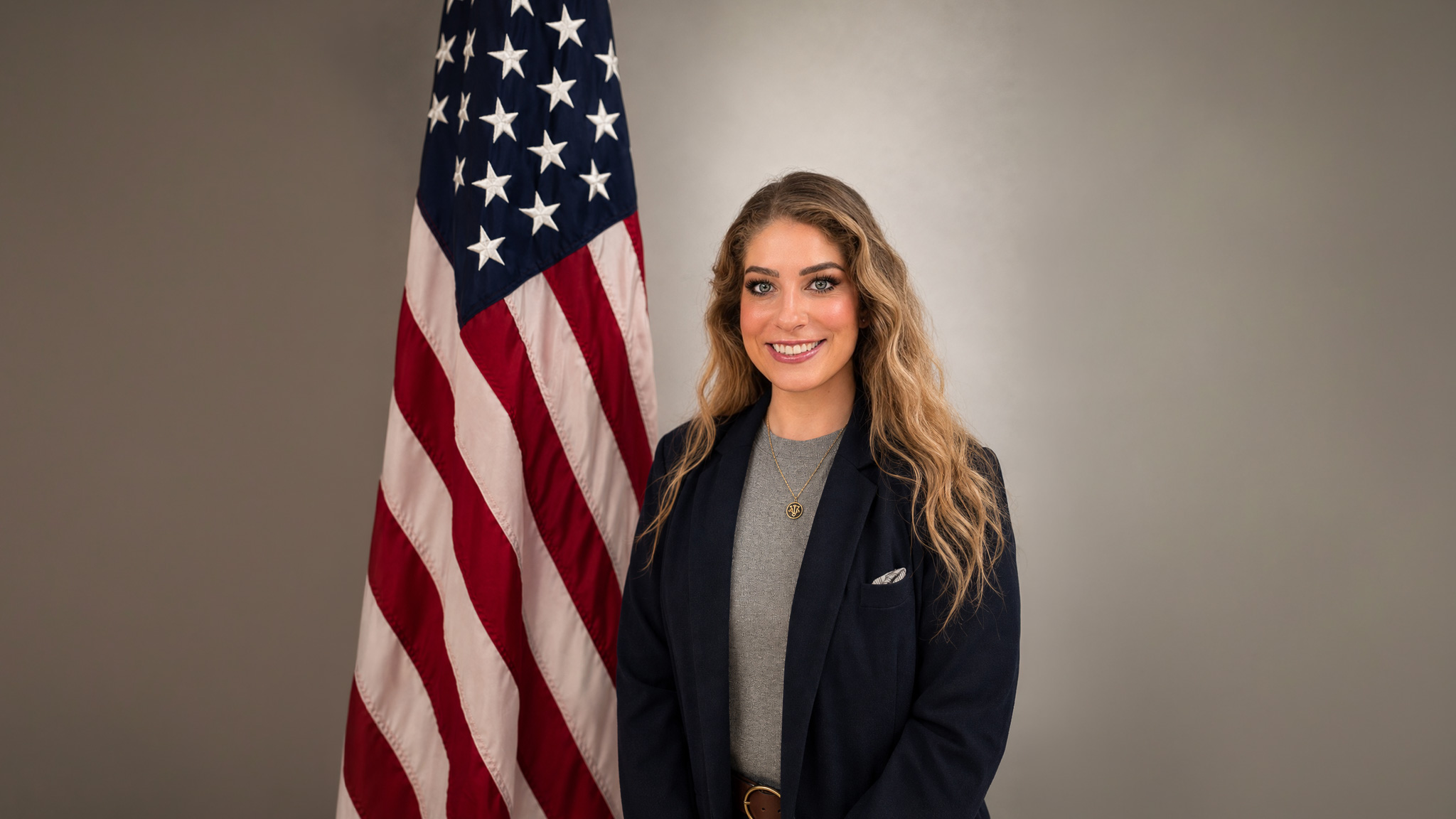
When a team of physicians discovered that former U.S. Army Capt. Flora Edelbrock had a rare cancer atypical for her age group, the special operations forces (SOF) enabler began to wonder whether her service may have played a role in her diagnosis.
After the U.S. Special Operations Command (USSOCOM) recently found that SOF personnel have an 18% higher chance of acquiring cancer than their conventional forces counterparts, Edelbrock shares her own cancer journey with the Special Operations Association of America (SOAA) to provide a warning for other SOF personnel not to overlook irregularities in their health during and after their military service.

Overseas SOF Service
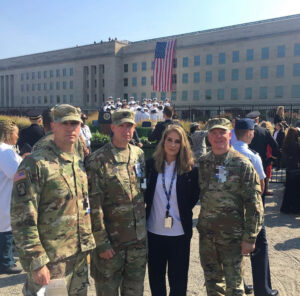
After graduating from the Virginia Military Institute (VMI) in 2014, Edelbrock spent four years as an active duty logistician supporting U.S. Army infantry units. In 2018, she made the transition to the SOF community, first supporting the 2nd Battalion of the 19th Special Forces Group. As the senior logistician for a Special Forces Task Force in Germany in 2021, Edelbrock began having erratic menstrual cycles, only getting a period three or four times per year in what she believed was an abnormal response to the COVID-19 vaccines that she received earlier in the year in order to deploy outside the continental U.S.
When Edelbrock took her concerns to her military physician and his medical staff, they attributed her symptoms to lack of sleep, time zone changes, a low body fat percentage, and stress from the high operational tempo. Edelbrock was directed to change her birth control prescription on multiple occasions, but lab work and scans were never ordered, and she was never sent to an external obstetrician-gynecologist (OB-GYN). While the symptoms continued, Edelbrock tried to convince herself that her doctors were correct that they were a normal response to abnormal conditions.
By 2023, Edelbrock departed the service to work as a Systems Engineering and Technical Assistance (SETA) contractor in support of the special operations community. It was 2024 before she began the process of signing up for Department of Veterans Affairs (VA) benefits and cataloguing the impacts that service had on her body.
Six days after a July 20, 2024 MRI to gauge the wear and tear on her right hip and knee, the physician assistant (PA) from her orthopedic surgeon’s office called “really, really late” on a Friday night. Edelbrock’s brain went into overdrive as she hoped in vain that the call was just an appointment reminder.
The PA “started really calm,” Edelbrock said, explaining that the findings for her hip and knee were “workable.” Then came another revelation. “I had to bring to your attention that I did see something free-floating near your right ovary in your pelvis,” the PA continued. “The size is pretty large, and the shape is round, so not concerning,” she related. But still, the PA advised Edelbrock to see an OB-GYN as quickly as possible.
Since Edelbrock had not yet found an OB-GYN after departing the military, she began calling various offices hoping for a quick appointment. Most doctors she called had a six-week wait for taking on new patients. Finally, Edelbrock found an OB-GYN who specialized in surgery and oncology who could see her the following week.
Edelbrock’s OB-GYN consulted radiology scans and told her he believed that the mass was “likely something harmless, like a benign cyst or a fibroid.” He scheduled Edelbrock for surgery on Aug. 26, 2024. He informed her that the procedure would be simple and that she could expect to be home by noon.
Unexpected Findings
When Edelbrock woke up in the recovery room, she noticed that clocks on the walls read 2:20 p.m. “I started to realize that people were touching me, and there were nurses taking blood out of my arms, and they had already taken my blood before the procedure.” Edelbrock said she then “freaked out,” asked what happened and requested to speak to the surgeon. Nurses told her that he was running diagnostics and would return soon.
When he did arrive, Edelbrock’s surgeon told her that “everything went really well,” explaining that he had achieved clean margins and that she would heal without any major scarring.
“Was it cancer?” she asked.
The surgeon’s tone grew quiet. “When I first got in there, it didn’t look like what I had originally expected…the tissue was really funky.” He explained that he had another member of his team bring a piece of the tumor to the pathologist while he continued with surgery. The pathologist agreed that the tissue was “abnormal and suspicious.” On the pathologist’s advice, the surgeon removed everything in the vicinity of the mass, including Edelbrock’s right ovary and fallopian tube, which he had not initially intended to take out.
To fully determine the extent of the growth and to give a proper cancer diagnostic staging would have required a full hysterectomy. But because Edelbrock was still of child-bearing age and hoped to one day be a mother, the surgeon instead aspirated her abdominal cavity and scraped neighboring organs to send samples to pathology for further testing.
Though he attempted to keep Edelbrock calm, the surgeon told a family member that he was “pretty sure” the tumor was cancerous. “We don’t want to scare her or anything,” he said, advising the family member not to tell Edelbrock about his concerns for the two weeks it would take for samples to return.
In the days that followed, Edelbrock waited on her various testing results. The findings from her first blood tests came not through a phone call, but by way of an e-mail notification on her patient portal. “I had to read it and put it through ChatGPT to be able to understand it,” she explained.
Edelbrock knew that the main tumor markers for ovarian cancer are Inhibin A and Inhibin B. She first received results for Inhibin B, and her numbers fell within normal ranges. Several hours later, at 11 p.m., she received her Inhibin A report. “It was so high,” Edelbrock said. “I started researching. Everything I read said it was probably cancer.”
Nine tense days later, Edelbrock received her diagnosis through a hospital phone application notification. Her cancer was an Adult Granulosa Cell Tumor (AGCT), stage 1A.
According to Edelbrock’s research and doctors’ insight, AGCT is not believed to be hereditary. Edelbrock says medical practitioners believe it arises from the mutation of the FOXL2 gene, which all humans possess. Mutations are believed to be caused by environmental exposures, hormonal influences, DNA replication errors, or some combination of factors.
Typically, women who get AGCT ovarian cancer are post-menopausal, usually between 55 and 65 or older. Many have already given birth to children. Edelbrock, who was 32 at the time of the discovery, said “I am none of those things.”
Though the cancer was discovered early, it was not early enough to prevent significant issues, Edelbrock says. Her oncologist believes that her AGCT had been present for up to a decade before her diagnosis. Because of the cancer’s rarity, it is impossible to prove the origination and timing of her tumor. Her physician has recommended that she give up on seeking out a cause.
The recommendation has not stopped Edelbrock from trying to trace her acquisition of the cancer to a period or location of service. This is particularly difficult for Edelbrock. As she explained, during the one-year period she spent serving in Germany, she was in over 10 European Union nations. “As an enabler, I didn’t go to the most dangerous places,” she explained. “I wasn’t exposed to the most obvious harmful things. It could have been something regular…it could have been anything.”

Living With the Diagnosis
While pushing off getting a full hysterectomy until after her childbearing years have ended, Edelbrock says that she does annual CT scans and quarterly ultrasounds and blood panels to check for signs of recurrence.
Edelbrock finds it difficult that she lacks insight about changes that have been taking place in her body between appointments. Mast cell issues and hormonal setbacks, such as severe swelling in her eyes and face, could portend something more serious. “I’m very data-driven and love to research things. I want to find answers,” she explained. “I don’t know my current status now and it’s unnerving, but I’m just dealing with it day by day. When I’m full and whole and don’t have swelling and other weird side effects, I take advantage of those moments and I go hard in all that I do.”
For other SOF personnel with health concerns that they feel are going unaddressed, Edelbrock recommends getting multiple opinions from a variety of medical professionals, and always being your own advocate. “You might have to fight for acknowledgement,” she said. “It’s not always comfortable. In this community, we’re conditioned to put the team and the mission first, and sometimes that means our own health, experiences, and concerns get pushed to the side. In reality, taking care of ourselves isn’t stepping away. It’s what gives us a better chance at getting back out there to continue doing what we love and are good at.”
Following SOCOM’s groundbreaking SOF cancer study in November 2025, Edelbrock contacted the hospital where her surgery was performed and learned that staff have retained two block tumor samples from her AGCT, given the rarity of her diagnosis. She now hopes that those samples could be used for additional research about cancers in the SOF population, especially rare cancers without any particular known causation.
While taking care of her ongoing medical needs, Edelbrock continues to tell her story, research her case, and work towards being comfortable with all the unknowns she still faces.