
In addition to deploying military instructors across Africa, Russia’s grey zone operations on the continent include a well-funded effort to seed countries with anti-Western rhetoric and to promote pro-Russian narratives.
In the case of Niger, Russia’s disinformation efforts were so successful that following a decade of providing military support to Niger’s military, U.S. forces withdrew from the country in 2024, leaving Russia to sweep in and fill the void. Gen. Michael Langley, then head of U.S. Africa Command, told Defense One that the incident proved “we need to take the disinformation campaign [and] we need to hit it front and center.”
The task already falls within the bounds of special operations forces trained in irregular warfare tactics. In particular, Alex Plitsas, the Special Operations Association of America’s Board Director and a CNN National Security analyst, explained that the environment presents “a perfect opportunity for U.S. Army psychological operations to help engage in potential counter propaganda, as well as to support public diplomacy through the dissemination of information designed to support the local host nation governments and their efforts to combat terrorism.”
Disinformation to Counter Western Influence
The Modern War Institute (MWI) at West Point cites about 80 campaigns associated with Russia that have sought to “influence political discourse, promote anti-Western narratives, and elevate Russian-backed authoritarian figures in Africa.”
In Africa, where 600 million internet users “rely on social media platforms for consuming news at among the highest rates in the world,” Western outlets have been “culling…operations due to budget constraints and different domestic priorities.” Using polling data that helps the Kremlin understand, then exploit local sentiments, Russia leverages overt messaging from state-owned outlets and NGOs as well as the full gamut of radio, television, websites, ground teams, paid influencers, and social media accounts to “continually cross-circulate false and inauthentic content” through “more deniable methods” that “disguis[e] state involvement.”
According to the Deutsche Welle, a whistleblower was forced to flee the Central African Republic after lifting the veil on Russian disinformation operations in the country. The whistleblower alleged that his journalism was “just shy of being directly dictated by the Russian intermediaries he worked with.”
African Initiative
The Russian site best known for sowing propaganda is “African Initiative”, once affiliated with now-deceased Wagner Group founder Yevgeny Prigozhin. The entity now “presents itself as a news agency designed to ‘build a bridge’ between Russia and Africa.” African Initiative has even created a video game, African Dawn, where players can choose to act as either African Army personnel with their Russian assistants, or the West African ECOWAS member states supported by the U.S. and France. The objective is to push back on French colonial influence.
The European Council on Foreign Relations (ECFR) calls African Initiative “a covert information manipulation operation” that pushes out content in local languages as well as English, Arabic, and French, and also trains and recruits journalists and influencers to spread pro-Russian narratives. Wagner employees told one researcher that the group paid up to $3,500 per day for online supporters and influencers for a total outlay of about $450,000 annually.
The State Department warned of the African Initiative explicitly in February 2024, stating that Russian intelligence services were “providing material support and guidance” to the group, resulting in “disinformation regarding the United States and Europe.”
African Initiative’s drive to harm the West seems to know no bounds, with some of its efforts targeting Western health initiatives and thus putting the health and safety of Africans at risk.
Countering Russian Influence
Suggestions for countering Russian disinformation are varied. The ECFR notes that Europe says that it has yet to manage an effective response, but “has made real progress in tracking Russian disinformation.” In addition to calling for increased funding to media outlets like BBC World Service and putting out grants for African-owned and -led outlets, ECFR suggests that Europeans must “learn from the Russian offensive methods.” The organization defines this as delivering evidence of “Russian corruption, rape, and murder” to “the right audience in the right way,” translating news into local languages, and giving local journalists leeway in spreading credible messaging.
The MWI also suggests countering foreign information manipulation and interference (FIMI) by investing in African “journalists, fact-checkers, cybersecurity experts, and media literacy educators” trained in counter-FIMI who can expose disinformation campaigns. While the institute sees a role for the security sector, it notes that this “must operate within clearly defined boundaries to avoid politicization and overreach.” The authors urge that the endeavor be civilian-led, “with security actors supporting rather than leading the response.”
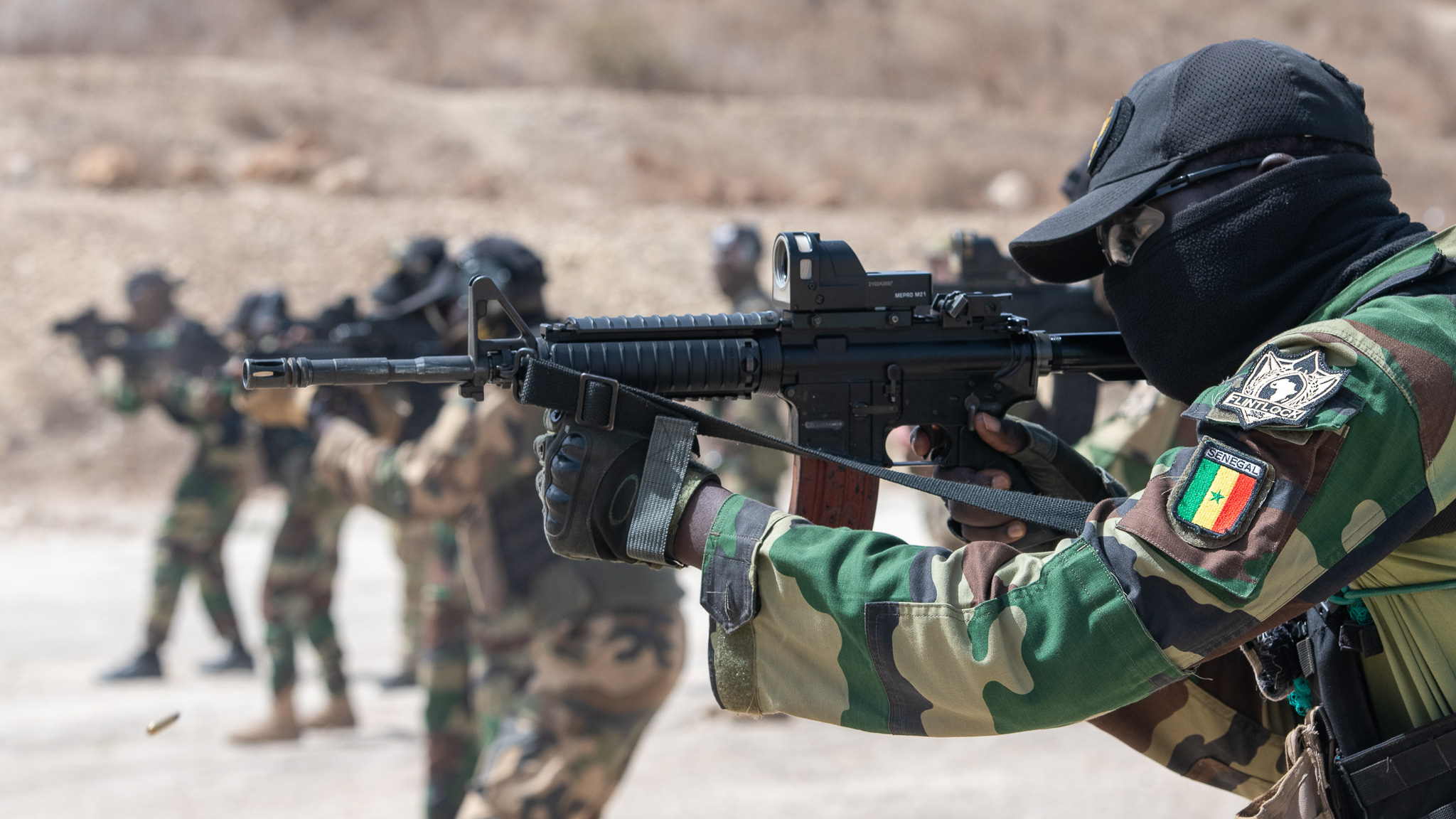
SOF personnel with expertise in irregular warfare tactics can help fill that void and counteract malign Russian influence. Plitsas emphasized that there is “an opportunity to help shape the battle space and to support kinetic operations and training missions performed by other special operations elements as they’re operating across the continent.” He explained that “while the information environment is not the primary battle domain, it’s becoming increasingly more important, especially with the advent of global social media reach and the spread of viral disinformation.”