
After President Donald Trump signed an executive order on April 18 that will expedite medical research into the effectiveness of psychedelic treatments for use in mental health care, many across the country are asking what psychedelics are and how they can be used to support veterans with post-traumatic stress disorder (PTSD), traumatic brain injury (TBI), depression, and substance dependency. One of those possible treatment options is the theraputic use of Ketamine.
The Special Operations Association of America (SOAA) has been advocating for increased research into psychedelic-assisted therapies for nearly five years. To clear up misconceptions about these therapies and highlight their utility, we are releasing a series about how various psychedelic treatments work and their documented effects for veterans.
What is Ketamine?
Ketamine is a dissociative anesthetic with hallucinogenic properties. In addition to making users feel relaxed and relieving their pain, it can result in sensory distortion and cause the user to perceive a loss of control.
Often used in anesthesia or short-term sedation, ketamine has also been prescribed for treatment-resistant depression.
Ketamine’s Legality and Risks
Unlike most psychedelics likely to be impacted by the president’s executive order, ketamine is already considered for medical use as a Schedule III substance but remains illegal for non-medical use.
Side effects can include being confused or disoriented, experiencing dizziness, vomiting, or nausea, increased blood pressure, heart rate, temperature, and breathing. If used in conjunction with a central nervous system depressant or alcohol, it may “result in profound respiratory depression and death.”
Ketamine withdrawal can lead to depression, and extended use of the drug can be associated with structural and functional brain changes.
Already in the VA Toolkit
The Department of Veterans Affairs already provides ketamine therapy options to veterans around the country, explaining that it can help veterans “with decreasing their thoughts of self-harm, feelings of hopelessness [and] depression, and enhances their overall quality of life.”
In a VA study of 215 veterans diagnosed with treatment-resistant depression, nearly half “saw a meaningful drop in depression scores by the end of six weeks of infusions.” For a quarter of participants, depression scores dropped by half. About 15% were “officially in remission” following six weeks of intravenous ketamine treatments.
As of January 2025, the VA had strict criteria for providing intravenous ketamine, only allowing its use to treat patients with depression featuring severe suicidal ideation or treatment-resistant depression. To be considered, patients had to fit several inclusionary criteria involving specific diagnoses and previous treatment attempts, and they had to have none of a lengthy number of exclusionary factors.
SOAA’s Psychedelics Expert’s Take
SOAA Chief of Veteran Health Innovation and Partnerships Dr. Ryan Ziegler has followed psychedelic research and treatment closely, and hopes to expand access to treatments for participants in SOAA’s new transition and healthcare initiative, Project Valkyrie.
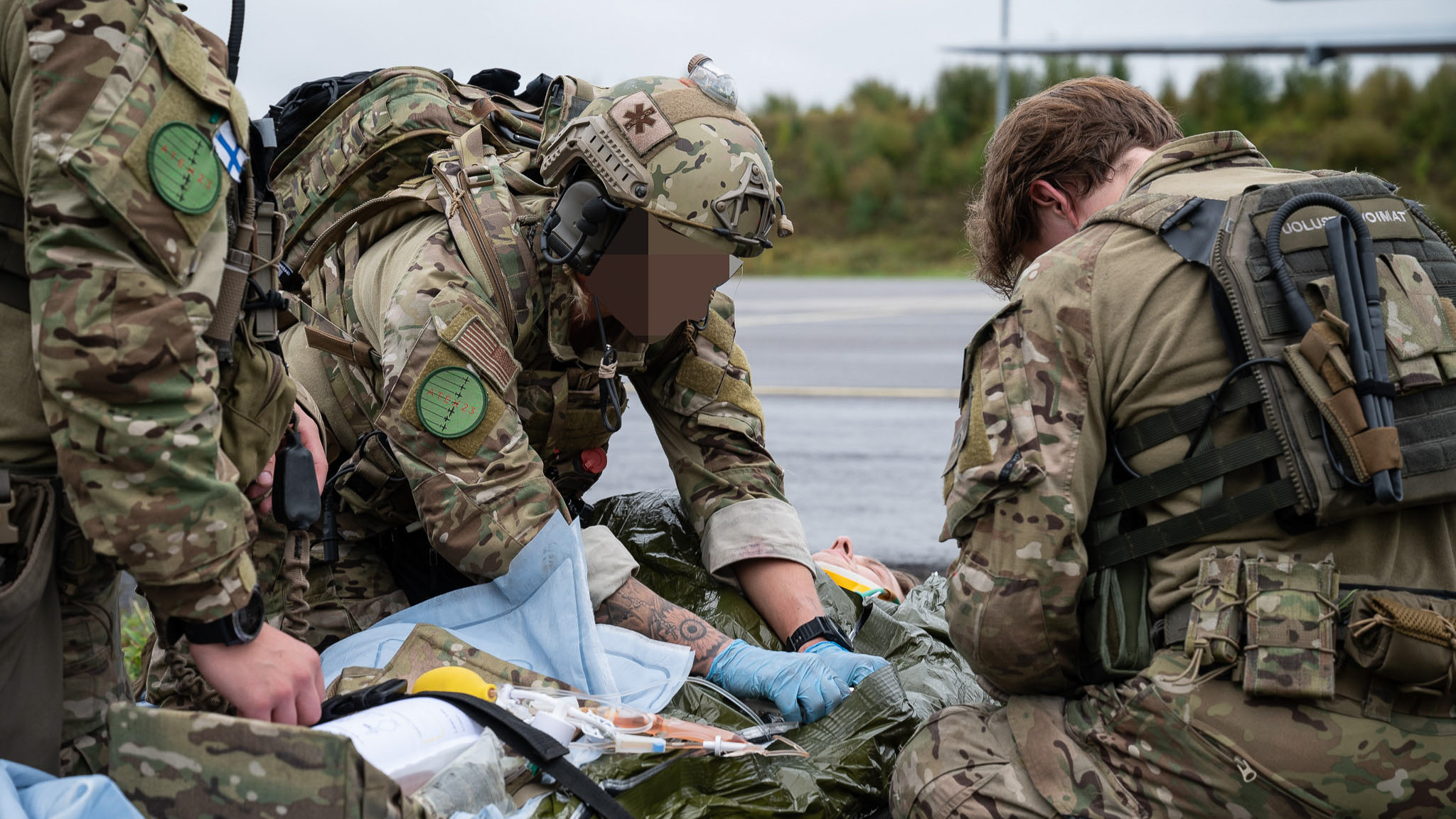
Ziegler notes that ketamine presents a “very interesting” case because it is widely available across the United States and utilized for a variety of medical treatments. Not only do SOF medics carry the drug to administer in cases of severe trauma, but the VA already uses ketamine to support veterans, particularly those who suffer from “depression related to PTSD.” As it becomes more widely studied, Ziegler noted that ketamine is increasingly being found to have benefits in new arenas, including being used to help patients sleep.
When it comes to resolving PTSD and depression, Ziegler noted that ketamine should be used in conjunction with therapy. “It’s not a fire-and-forget type medicine like an antibiotic. Frameworks need to be in place to reach a patient while the drug induces a neuroplastic state,” Ziegler said, referencing the point at which the brain is most capable of making lasting adaptations.