
As the five-year anniversary of the U.S. withdrawal from Afghanistan approaches, a number of organizations around the country are still working to support our Afghan allies, whether they are stranded overseas amidst shutdowns of programs meant to bring them safety or facing uncertainty domestically as protections have eroded.
Since 2013, nonprofit No One Left Behind (NOLB) has been supporting Special Immigrant Visa (SIV) applicants from Iraq and Afghanistan whose service by or on behalf of the U.S. government placed them at risk. By virtue of that service, applicants are eligible to go through a vigorous security screening process to obtain a green card, and ultimately U.S. citizenship.
While more than 44,000 Afghan principal applicants have achieved SIV since 2014, tens of thousands are still mired in the SIV process. They are scattered across the globe, and even remain in limbo inside the U.S. while waiting for a visa decision.
NOLB Director of Advocacy Sonia Norton gave SOAA an update about the organization’s priorities for supporting the diverse needs of Afghans in urgent need of a visa.
Status of the Program
Norton reports that the “number one policy ask” NOLB continues to bring to members of Congress and the Trump administration is for “reopening SIV issuance.”
The SIV program has been frozen since January 2026, but SIV applicants have faced increasing constraints since early 2025. A Jan. 20 executive order that ended foreign funding also canceled funds for SIV recipients to travel to the U.S. In 2025, NOLB was able to raise funds for more than 3,321 SIV recipients and family members to travel to the U.S.
Just as preparations began for the U.S. to fund SIV travel once more, in November 2025, Afghan Rahmanullah Lakanwall shot two members of the West Virginia National Guard, killing one, in Washington, D.C. Following the attack, the Trump administration removed a prior carveout for SIV recipients in its travel ban. When the new travel ban came into effect Jan. 21, 2026, SIV recipients were no longer able to travel to the U.S. without a rare national interest exemption, and all issuance of wartime allies’ SIVs was halted. Afghans who have continued to seek interviews during this period have received blanket refusals of their cases, with little information about whether these refusals will be permanent when and if SIV processing resumes.
Norton says that NOLB’s next policy priority is for Congress to allocate additional SIVs for Afghans. After achieving “bipartisan support in the House” for an influx of visas in early 2026, Norton says that NOLB is hopeful that movement from Congress may arrive at the end of the year through the appropriations process.
According to the most recent quarterly Afghan SIV report from the U.S. Department of State, as of March 31, there were just 5,978 SIVs remaining for the 144,038 Afghan principal applicants in various stages of the process.
This includes 66,126 Afghan principal applicants awaiting review for Chief of Mission (COM) approval, the first step of the SIV process, who have submitted documentarily-complete SIV applications. An additional 62,043 principal applicants have submitted incomplete applications for COM approval, and will not be processed without additional submissions of supporting documents.
A total of 15,869 principal applicants have achieved COM approval and are awaiting I-360 processing, visa interviews, or administrative processing.
Norton says that NOLB also supports new legislation put forward by Sens. Mike Rounds (R-S.D.) Chris Coons (D-Del.), Amy Klobuchar (D-Minn.), and Thom Tillis (R-N.C.), the Afghan Ally Records and Credential Heritage (ARCH) Act, which would create a process to preserve and verify service records for our Afghan allies. A key reason that the SIV system has been so difficult to maneuver has been the lack of a government-wide database of employment records that would allow verification that applicants worked with the U.S. “We’re putting this undue burden on wartime allies,” Norton explained.
Allies Overseas
Many Afghans who await an SIV remain inside Afghanistan or in third countries worldwide. A large number have fled to Pakistan to avoid a Taliban reprisal campaign and to more easily process their visas after the U.S. Embassy in Kabul ceased operations in August 2021.
Though NOLB traditionally supported Afghan SIV applicants with their adjustment needs inside the U.S., the organization has supported applicants overseas in recent years. In particular, the nonprofit has provided assistance to some Afghan SIV applicants inside Pakistan, which has escalated a deportation campaign targeting Afghan refugees amid months of ongoing, deadly conflict between the bordering nations.
Since 2023, Pakistan has deported 2.56 million Afghans. An estimated 900,000 Afghan refugees remain in the country. The Pakistani government gave those refugees a deadline of July 10 to depart the country.
Allies at Home
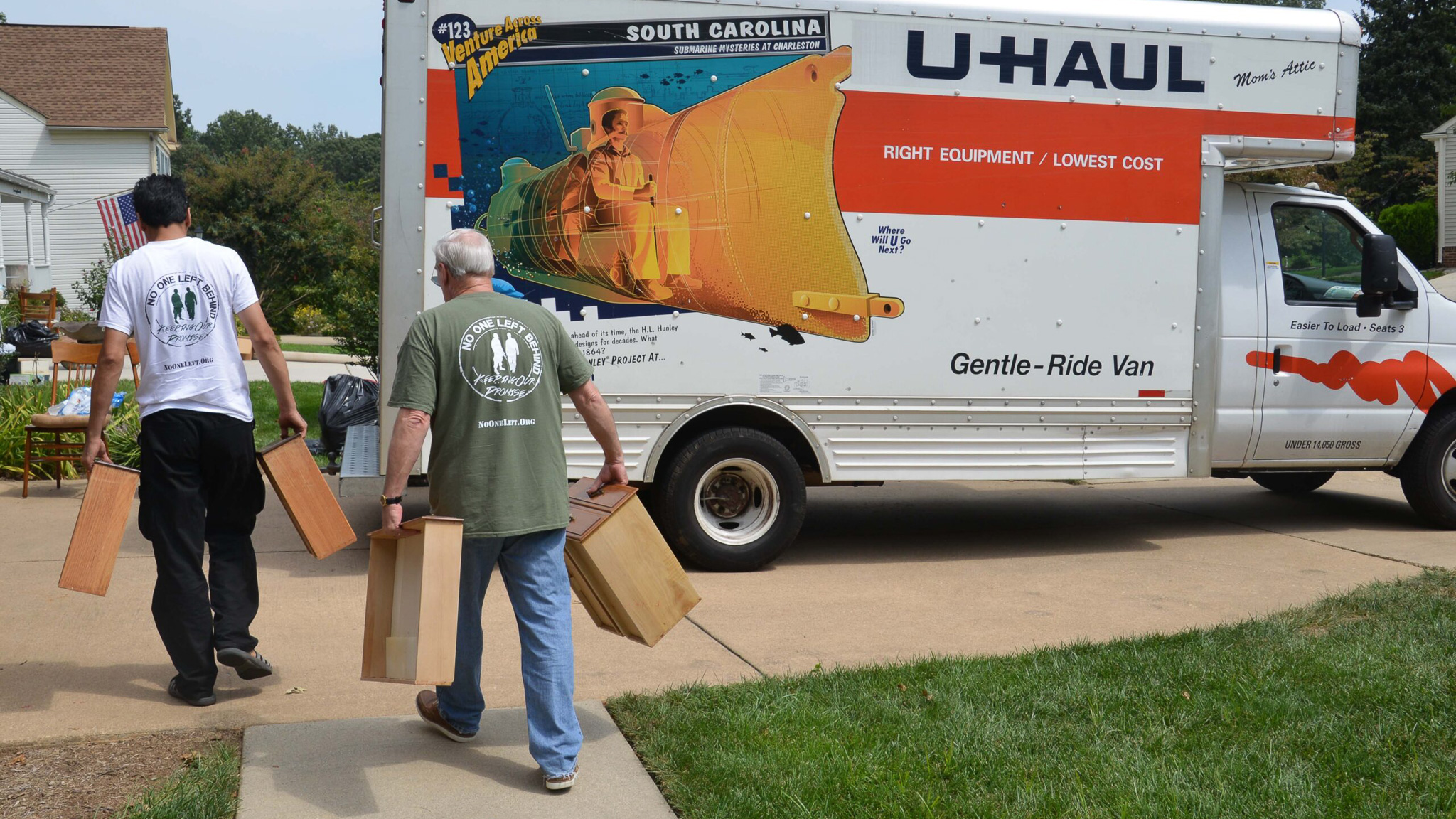
Through its own programming and in conjunction with partner organizations, NOLB is supporting SIV recipients who have arrived in the U.S. so that they can more readily adjust to their new home. In recent years, this has become more complicated.
A portion of the more than 74,000 allies who were evacuated to the U.S. during Operation Allies Welcome following the U.S. withdrawal were eligible for an SIV. Because the program was designed to be adjudicated from overseas, it was never intended to give enduring status to Afghans inside the U.S. All new Afghan arrivals from Operation Allies Welcome were granted status through two years of humanitarian parole. When this parole term expired, Afghans were eligible to apply for two additional years of parole in 2023. But after the second parole term expired in August 2025, Afghan SIV applicants who had not filed an alternate form of protection were left without permanency, to include work authorization or access to benefits.
Temporary Protected Status (TPS) was an alternative form of protection that SIV applicants sought. Its removal, effective July 14 2025, likewise placed SIV applicants in a precarious legal status.
NOLB has supported and facilitated the introduction of a new bill, sponsored by former U.S. Army Ranger Rep. Jason Crow (D-CO). The Afghanistan TPS Act of 2026 (H.R. 9899) would grant Afghans TPS through July 2029. Norton said that the act is an important recognition of the “fear and uncertainty” Afghans face at the prospect of being returned to an Afghanistan run by the Taliban. To qualify for TPS, Afghans would be required to come forward and subject themselves to vetting. Those approved for TPS would have “that layer of protection that allows them to work legally for the length of their temporary protected status, as well as have that protection while they pursue their SIV.”
To further support Afghans, NOLB has worked with state and local providers to ensure that SIV applicants were not impacted by H.R.1, an act which rolled out across the country to adjust spending on federal programs, but which Norton says was not intended to impact “nutritional assistance and medical coverage for SIV holders or Green Card holders who came to the U.S. on an SIV.”
NOLB is also standing up mental health assistance for Afghan allies in recognition of the strain they faced during two decades of war, the tumult of the withdrawal, and the years of difficulty that often followed. Tailoring that assistance to Afghans’ experiences is important for NOLB Executive Director Andy Sullivan, himself an Afghanistan veteran. As Sullivan told SOAA, “we’re a veteran-led organization, and we know what it’s like to come home and have somebody tell you to go see a professional, only to not be able to get an appointment with someone who understands our needs. We didn’t want that to be our clients’ experience”
The Voices of Afghans Awaiting Aid
SOAA spoke with several SIV applicants who are awaiting the restarting of the SIV process. Their stories demonstrate the gamut of issues facing our allies across the world. Each has been given a pseudonym to protect their identity.
Nawaz worked with the U.S. Army Corps of Engineers creating border patrol bases and surveillance and counternarcotics infrastructure that struck at the heart of Taliban operations. That work put him on the Taliban’s radar, making him the target of threatening “night letters,” and eventually leading to his capture for a period of several months in 2012. Once Nawaz was released, he fled with his family to the United Arab Emirates and worked hard to eke out a living.
After receiving COM approval in December 2024, Nawaz and his family paid thousands of dollars for medical examinations that were only valid for a period of six months. Nawaz’s case was subsequently stuck in administrative processing, but since the travel ban was extended to SIV applicants in late 2025, Nawaz’s family has been stuck in the UAE. With their visas now about to run out, Nawaz’s family faces possible deportation to Afghanistan.
“I am running out of options,” Nawaz told SOAA. “The closer my UAE visa expiry gets, the more I lose sleep, because I genuinely cannot see a safe solution for my family. I have reached such a desperate state that there have been times when I have prayed for my own death because I simply could not see a way out.”
Aziz worked as an interpreter with U.S. forces for a total of five years. Like many Afghan SIV applicants, Aziz fled to Pakistan for processing of his case, and after receiving COM approval was interviewed and medically cleared in 2022, and subsequently again in 2025. As Pakistan has increasingly stepped up its deportation campaign against Afghans, Aziz found himself in Pakistani custody for 10 days. He was released only after paying a bribe to Pakistani authorities. “If this is continuing like this I prefer to go to Afghanistan in Taliban’s hand,” Aziz reported. “There is no way for me to be in Pakistan any longer.”
Amina spent multiple years working for nonprofit organizations and universities to foster human rights inside Afghanistan, earning her access to the SIV program. When she arrived in the U.S., she received status through an F-1 student visa that allowed her to pursue a Master’s program. That visa expires in four months.
As Amina awaits COM approval, she has also filed for asylum. She has received no response about whether asylum has been granted. As she faces a loss of status inside the U.S., she told SOAA, “I spent years helping the U.S. mission in Afghanistan, believing that when I needed safety, the United States would keep its promise. Now, I am asking for that help.”
Continuing the Mission
Despite a variety of setbacks with the SIV program, NOLB has been able to continue offering services to allies at home and overseas, thanks to the help of its diverse donors.
Allison Hasser, Chief Development Officer at NOLB, reports that “over the past 18 months, our donor base has grown considerably, but our supporters continue to reflect America across a range of ideologies. As an organization that is entirely privately funded, we are proud to know that Americans across the political spectrum stand together for our mission.”
Norton emphasized that NOLB also continues to advocate for the expansion of the SIV program to include any allies who support U.S. forces deployed across the globe. She encourages members of the special operations forces (SOF) community, who often rely on foreign forces’ support when working overseas, to reach out to Congress to voice their support for continuing and expanding the SIV program to protect our closest allies.
Beth Bailey is a SOAA Staff Writer, podcast host, and longtime advocate for the safe evacuation and resettlement of Afghan allies. She has written extensively on Afghanistan, the U.S. withdrawal, and the ongoing efforts to protect Afghans who supported the United States.