

On Feb. 22, violence broke out across Mexico following the death of Nemesio Rubén Oseguera Cervantes, better known as “El Mencho,” the leader of the Jalisco New Generation Cartel (CJNG), a leading fentanyl trafficking organization.
As CJNG appoints a new leader, competing cartels make use of the brief power vacuum to grab up CJNG turf, likely leading to further mayhem inside Mexico.
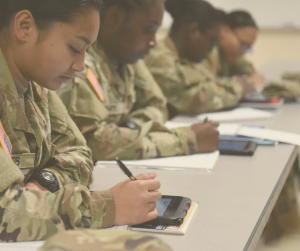
Border Report announced on Feb. 27 that 12 Green Berets from the U.S. Army’s 7th Special Forces Group will enter Mexico to train the Mexican military. They will remain in the country until July 15.
In 2025, 11 Green Berets from the 7th Special Forces Group engaged in a significantly shorter training exercise with the Mexican Marines between Feb. 17 and Mar. 30, aiming to increase their competency in responding to both conventional and unconventional threats.
The Green Berets’ deployment follows 19 members of U.S. Navy SEAL Team Two traveling to Mexico to train Mexican special forces between Feb. 15 and April 16. This training exercise was only authorized by the Mexican lawmakers on Feb. 12.
Following the ouster of Venezuelan dictator Nicolás Maduro, the Mexican legislature’s sentiments about U.S. training had wavered. On Jan. 5, the Mexican Senate had delayed a vote to allow U.S. Navy SOF elements to train the Mexican military.
There have been 1,677 training exchanges between Mexican and U.S. special operations forces teams over the past decade. Reports indicate that President Donald Trump is looking to expand cooperation further.
Looking for More
In January, Trump requested that the Mexican government permit U.S. special operations forces (SOF) or CIA officers to take part in Mexican counter-drug operations against fentanyl producers inside Mexico.
Mexican president Claudia Sheinbaum told the press that Trump “generally insists” on U.S. participation. The Mexican government presented a counter offer, which would allow for enhanced information sharing and would give the U.S. “a greater role inside command centers.”
Sheinbaum has instituted a firm red line, saying that she opposes American boots on the ground or drone strikes into her country. Dating back to the Biden administration, the CIA has used drones to seek out fentanyl labs and track precursor chemical movements inside Mexico and passes off the intelligence produced to the Mexican military. It has been widely reported that the CIA provided important information about the whereabouts of El Mencho, who died while being taken into custody.
Less than a few hundred unarmed U.S. personnel are already operating inside Mexican military command posts, the New York Times reported. They are currently providing intelligence support with the approval of Mexican officials.
The latest Trump proposal would see American personnel in support roles, “providing intelligence and advice to frontline Mexican troops” as they lead raids on fentanyl labs.
Some American officials are also lobbying for the U.S. to conduct drone strikes on suspected fentanyl labs.
The Sheinbaum government claims to be making steady progress on its own, “arresting cartel members and destroying drug labs at nearly four times the rate of the previous government.”
The New York Times reported that the El Mencho operation “should give the Mexican government some leverage in holding off U.S. demands for joint raids or unilateral U.S. drone strikes.”
America’s Argument for Greater Involvement
In February 2025, the U.S. designated six Mexican drug cartels as foreign terror organizations. In December, the DEA labeled fentanyl and its precursors as weapons of mass destruction. Between August 2024 and August 2025, 73,000 Americans died from fentanyl overdose, down from 92,000 in the prior 12-month period.
Following Trump’s order in August for the Pentagon to create plans to use force against drug cartels in Latin America, reporting in November indicated that the U.S. was preparing plans for a mission into Mexico, with the Joint Special Operations Command said to be tasked with sending troops for a “potential mission against drug cartels.” At the time, further drone strikes were planned for not only drug labs but cartel leaders.
Trump had indicated before taking office that he would be willing to conduct strikes in Mexico to combat the influx of drugs into the U.S.
Writing for the Small Wars Journal, Army veteran and former CIA security contractor Brandon Schingh painted a spectrum of national security repercussions if SOF operators participate in counter-drug operations inside Mexico. While direct action missions “would likely be pivotal,” Schingh said they would also likely be “fraught with exceptional risks due to the cartels’ firepower, territorial control, and intelligence capabilities.” Possible backlash could include retaliatory attacks into U.S. border cities.
However, Schingh reported that “by partnering with Mexican counterparts, U.S. SOF could amplify their impact, working not only to dismantle cartel operations but also to undermine their influence within the region.” He noted that competition among remaining cartels in the ensuing power vacuum could lead to further violence.
The Special Operations Association of America considers the prolonged Green Beret training mission and Navy SEAL training exercise as important steps to increasing the Mexican military’s capabilities in countering the cartel threat across the southern border. Over the next few months as CJNG faces a power vacuum and possible battles over territory take place, increased insight from American operators could help the Mexican military seize on cartel vulnerabilities and further dismantle networks.