
From the Battlefield to the Pentagon: Chris Miller on the Future of Special Operations
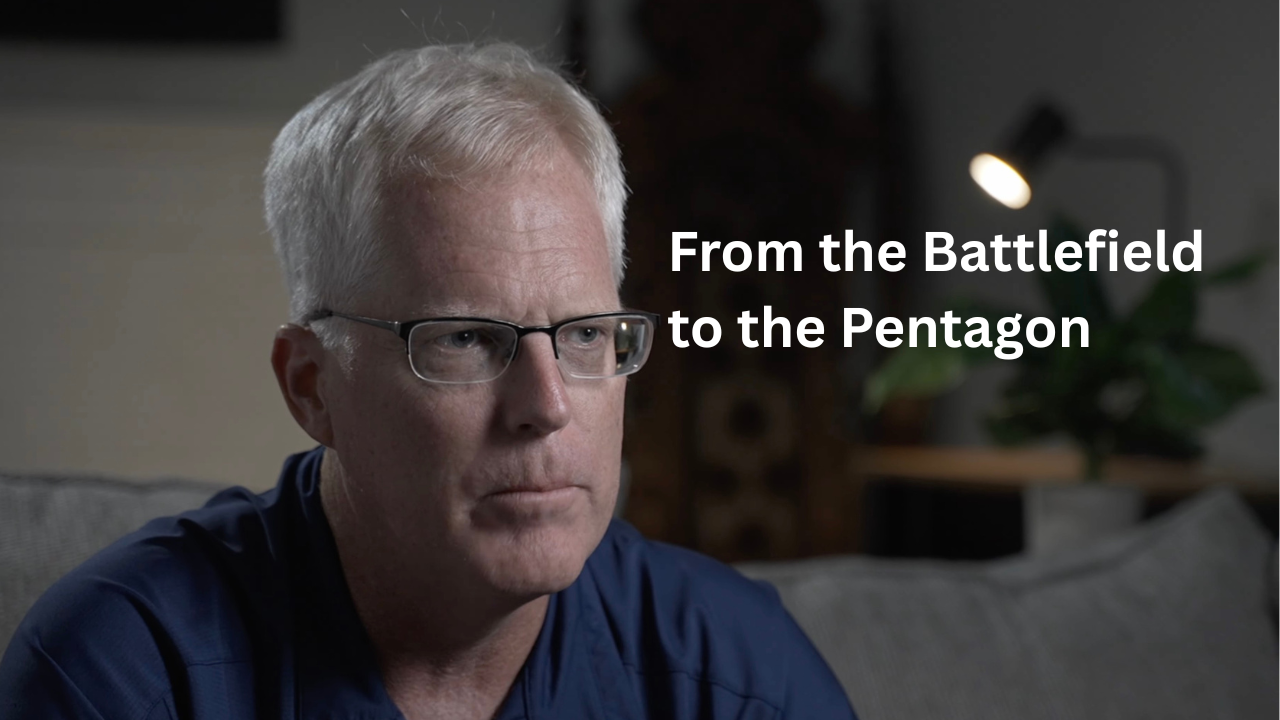
We recently sat down with former Acting Secretary of Defense and our Chairman of the Board Chris Miller to ask about the highlights of his Special Forces career and his thoughts on the future of special operations.
You can watch the full interview below, where Miller talks about important moments in his career, his thoughts on women in the special operations community, and why we need to educate U.S. leaders on the many ways special operations skillsets can be used in future wars.
Joining Special Operations Community
Miller told us that joining the special operations community was an easy choice. Not only did the Special Forces seem like “the best of the best,” but Miller was tired of infantry life, where your “platoon sergeant control[led] every single moment of your life.”
Most Important Moment of Career
The most important moment in Miller’s career came at an unexpected time.
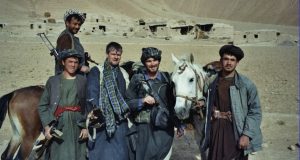
“If you wanted peace to break out, just hang out with me,” Miller said, explaining how his career had been a series of near-misses with combat when he arrived at Karsh-i Khanabad Air Base (K2) in Uzbekistan in late 2001 to support combat operations inside Afghanistan.
Miller was leading a B-Team attached to Fifth Special Forces Group’s Company Headquarters Element. In keeping with his prior experience, he said that the war in Afghanistan appeared to be ending as time ticked onward.
Desperate to find his way into the fight that remained, Miller spent every day at K2 putting together briefs and slide decks to “try to convince somebody that we needed to have a mission.” But on the morning of Dec. 5, 2001, Miller was tired of constantly begging to be put in the game. Just as he settled down to eat breakfast, he saw “frantic activity” at the Joint Operations Center and learned that the U.S. Air Force had accidentally dropped a 2,000-lb bomb on one of the A-Teams operating north of Kandahar.
With a quick reaction force spinning up to answer calls for relief from theater, Miller went back to the team tent, kicked open the door, and told his team “Get your shit on. We’re going.”
“Everybody got jocked up, got their kit on, went out, got on an MC-130, flew down into it.”
Transition
The process for preparing operators to leave the force is an area of concern for Miller given the large quantities of deployments that special operations forces personnel have undertaken during recent wars. Miller said he worked through many of his own struggles while doing “thousands of hours of running” to take on a goal he gave himself of running a sub-three-hour marathon as he transitioned out of the Army.
Miller says he recognizes that the government does not have the tools to take on transition alone, and he believes that public-private partnerships are the best path to veterans’ success.
Women in the force
Miller believes that the special operations community has “got to do better” about fully integrating women. “That’s going to be the thing that truly makes us special,” he explained.
During a reconnaissance assignment in Europe, Miller was paired with a female partner who “provided us so much more capability.” His partner had gone “through the exact same training, assessment and selection,” but because she “didn’t match the profile,” she gave Miller a level of cover that working alongside another male operator could not have done.
“I’m absolutely horrified that there are female veterans that have served in our formations that are not recognized for their service based on the [military occupational specialty],” Miller said. “We’ve got to solve that.”
Care for Veterans
On Capitol Hill, Miller said that the percentage of veterans in leadership positions has dwindled significantly over the decades, as has leaders’ understanding of military operations and veterans’ benefits. This lack of knowledge is a demonstration of “how important it is to have operators, current or former, involved in…SOAA.”
Miller described the Global War on Terror as “the first time in the history of our country that special operations was the primary tool used to accomplish our goals.” With that conflict ended and the conventional force now preparing for peer- and near-peer competition, Miller says that it will be important for leaders to understand the role that special operations has in “utilizing an indirect approach [and] utilizing human-centric warfare” to prepare the battlefield.
“The beauty of special operations” is that leaders do not have to tell the community “how to do it. Just tell them what you need done. Give them the tools. Maybe give them some money too…and they’ll figure it out.”
“We’ve got to educate people on the future of special operations, and that we had a great contribution to the joint force,” Miller explained.