
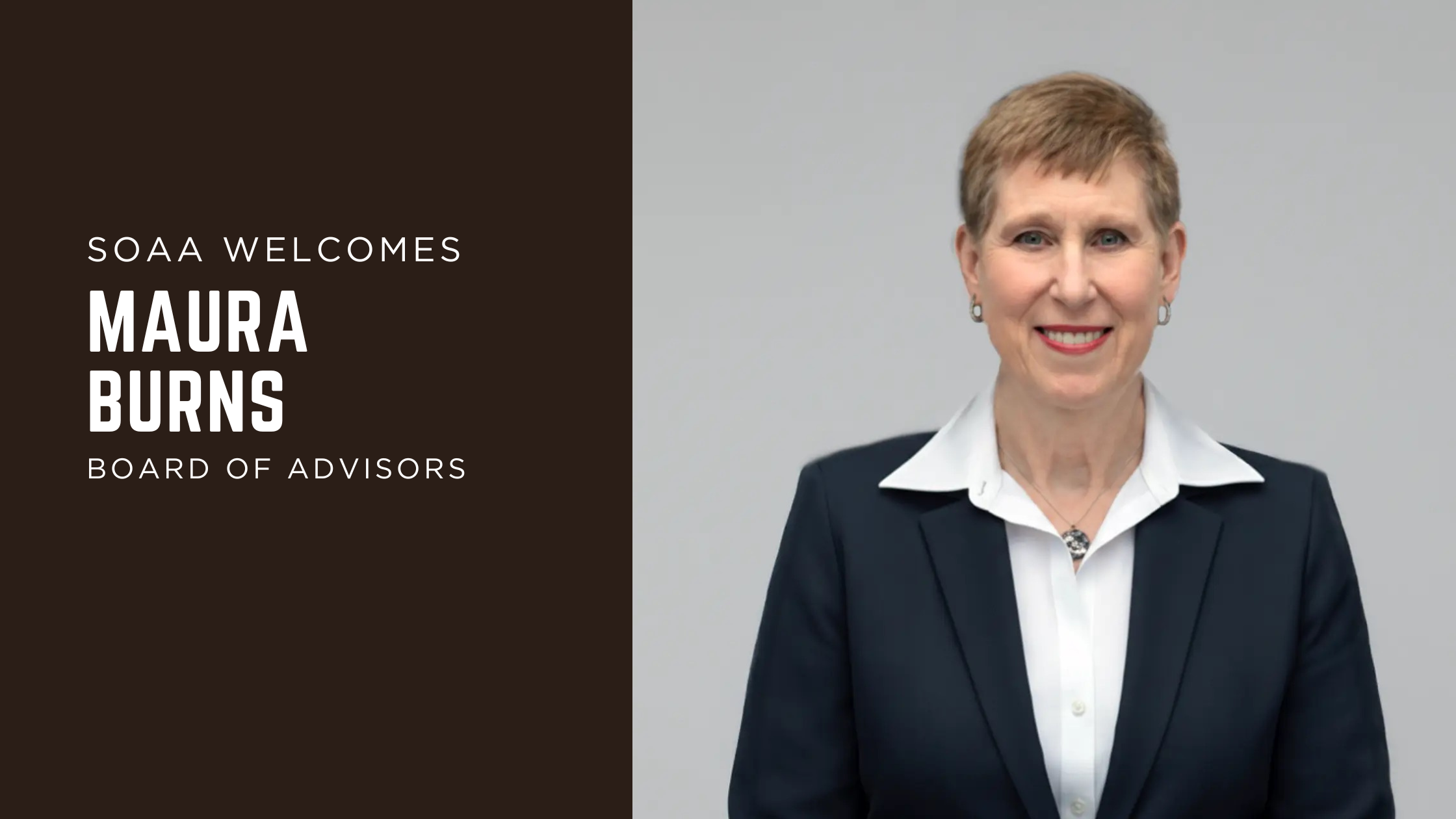
We are excited to welcome former CIA Chief Operating Officer Maura Burns to the SOAA Board of Advisors. She shared insights on key lessons from her 37-year career at the agency, the importance of recruiting exceptional talent in national security fields, her biggest concerns for the future of national security, and her opinion on which special operations forces (SOF) skillset is most vital in the post-Global War on Terror environment.
Choosing a Career in Intelligence
As a student in engineering school, Burns says she “had no idea” that her skills were desirable in the intelligence world until a college professor suggested that she would be a good fit for the CIA.
Burns began the process of applying for a role at the CIA in 1988. While waiting to be notified through sporadic “phone calls from a nameless person in the recruiting office” about her application status, she worked for Westinghouse. Burns was 26 when she came aboard and began learning her role as an intelligence officer.
Taking Risk, Agency Style
At its heart, Burns says that “the thing that the agency does pretty well is looking at risk and taking risk.” She emphasized that “taking smart risks…comes from experience. When you fail, and sometimes spectacularly, you always learn from it.”
At times, Burns said that it can be complex and hard to comprehend when something goes awry in spite of an exhaustive analysis of consequences, and the second, third, and even fourth-order effects of an action. “But if you are trying your best with the information that you have and you make an assessment or you do some operation that doesn’t go well,” the most important thing is that you’ve undertaken the action “with the right goal in mind for national security,” and that “you still gave 100%.”
Recruitment
At the time when she began applying to the CIA, Burns said that there wasn’t a lot of focus or awareness of the role of technical analysts in intelligence. Throughout her career, she actively focused on recruiting experts in STEM and informing them that “there’s a great career in the national security field.”
Burns says that it remains true that without “the best and the brightest,” our nation will not be able to solve complex national security problems. She tells new recruits that she felt empowered by being part of a team that shared a common mission of protecting their country. “It’s a very rewarding experience to have a career where you do all these other things for the greater good and it’s not all about you,” she explained.
Proudest Achievement
Though there are “a lot of things” Burns did in her career that brought her immense pride, she says that she “just can’t talk about” them.
One unclassified accomplishment she can discuss was her induction into the Senior Analytic Service. More important than the promotion that came with her elevation was the “recognition that I was an expert in my field.”
Future Areas of Concern
As Burns looks to national security threats that loom on the horizon, she says that three technological pacing, control of space, and managing biological developments cause her the greatest concern.
“In the tech space, we have to make sure that we have an edge with our adversaries, and that’s really China,” she explained. “They’re our peers in a lot of different ways,” Burns acknowledged, but she said that “our adversaries are just getting smarter and I worry that we don’t always recognize that because we can out-tech them in some areas.”
When it comes to the “final frontier” of space, Burns says that maintaining control of an increasingly contested domain will create new challenges in the future.
Burns is also concerned about how adversaries may work on biotechnology without recognizing the consequences. “You don’t want to stop progress in medicine,” she elaborated, “but without controls and fully understanding what our adversaries are doing,” progress invites risk.
SOF Talent
Burns says that in both her career and her retirement, she has noticed the relational prowess that SOF elements have in bringing the right people together, “whether that’s domestically or even with our allies.”
With that kind of “readymade support system, you can accelerate and amplify the right national security threats and messages,” Burns said.
As the battlefield changes in the aftermath of the Global War on Terror, Burns said that those unique SOF capabilities can “be used for national security missions that involve other adversaries.”
Retirement Goals
Burns has several plans for using her experience and expertise in her retirement.
After spending “the bulk of my career in the weapons world,” Burns said she plans to return “to the nuclear world” through the tech space. She also plans to share the leadership skills she gained as COO of the CIA.
Finally, Burns will continue the work she started at the agency of “encouraging young people to focus on national security and how rewarding a career in national security can be.”