
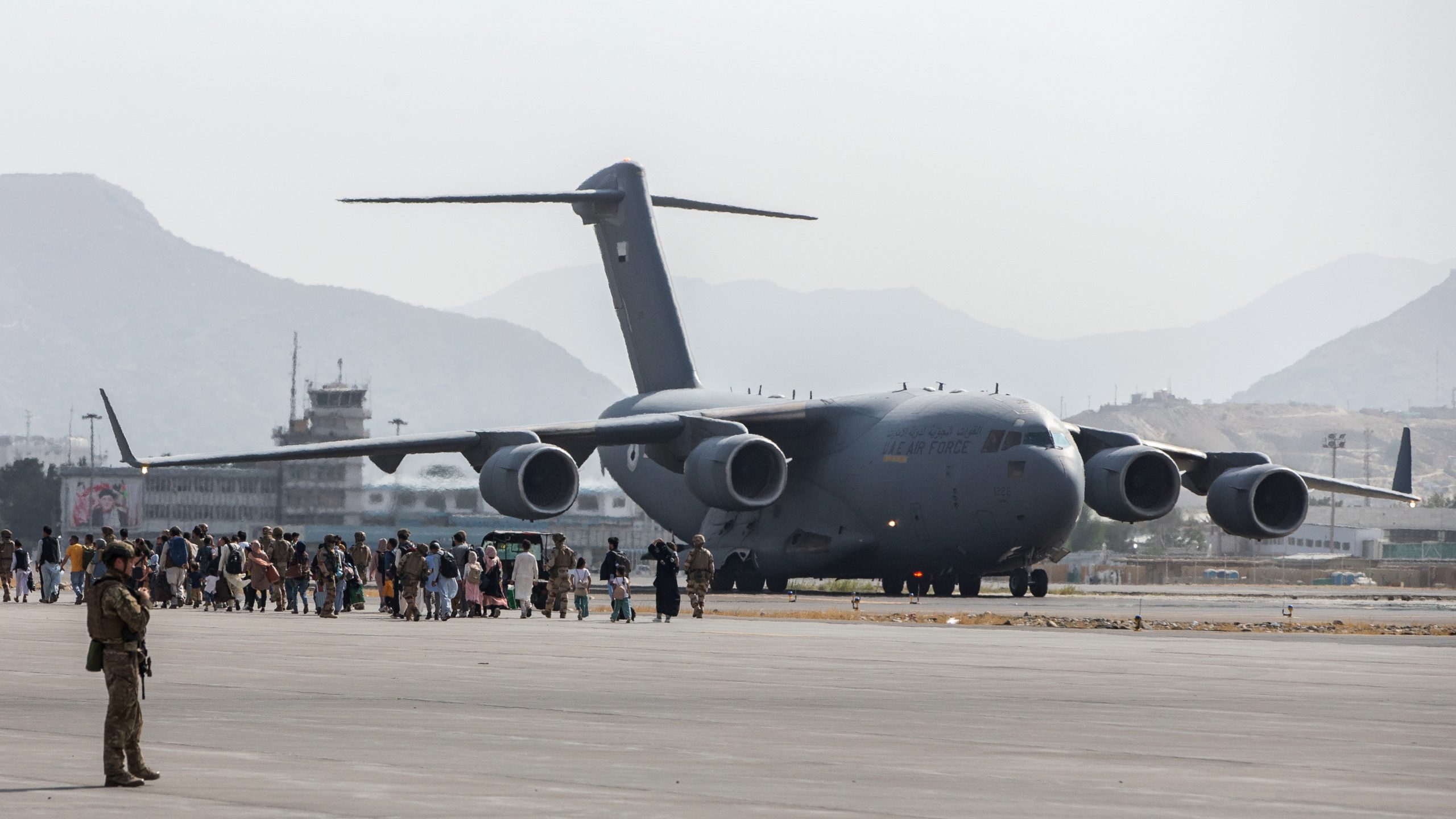
Dating back to 2006, Congress has created one permanent and two temporary Special Immigrant Visa (SIV) programs to afford legal permanent resident status to Afghan and Iraqi nationals who served as interpreters or translators, or who were employed by or on behalf of the U.S. government, or the International Security Assistance Force (ISAF) in the case of Afghanistan.
In an effort to keep America’s promises to its wartime allies, nonprofit No One Left Behind (NOLB) has been assisting SIV recipients since its inception in 2013, providing resettlement assistance and advocating for the program in Congress and with multiple presidential administrations.
Recent policy changes have significantly impacted Afghans in the SIV process, including both recipients of the visa who have arrived in the U.S. since January 2025 and Afghans overseas with applications underway.
NOLB Director of Communications Matthew Marcellus spoke with the Special Operations Association of America (SOAA) about how these changes affect our allies, and how the organization continues to evolve its support of eligible applicants in the face of changing circumstances.
The importance of protecting our allies is felt particularly strongly by American veterans, Marcellus explained, which is evidenced by the fact that many of NOLB’s leaders and board members are former service members.
Because our Special Operations Forces rely heavily on local partners for support during military operations, SOAA in particular understands the importance of efforts to maintain the SIV program and carry through on promises made to those who worked beside us, both to preserve our moral credibility and to ensure that a reputation for failing our partners does not endanger SOF elements as they seek out local partners during future conflicts.
Bipartisan Support for the SIV Program
While the media in recent months has turned support for our allies “into a partisan political game,” Marcellus emphasized that “this is a non-partisan program.” The program was initiated under President George W. Bush, expanded under President Barack Obama, and continued under subsequent administrations. Marcellus emphasized that the “moral obligation” we owe to our allies has been recognized across the political landscape.
Moreover, Marcellus explained that maintaining the SIV program is a national security decision supported by both Republicans and Democrats. He stated, “Future allies…are watching how America treats the people who served with us in the past. If the answer is abandonment, we will fight the next war alone, and that is, of course, not going to be in the interest of the United States.”
The SIV Program Under Threat
Early in President Donald Trump’s second term, a series of executive orders significantly affected SIV applicants. An executive order pausing foreign funds on Jan. 20, 2025 halted government-funded flights for SIV recipients between overseas processing hubs and the U.S.
NOLB stepped in immediately to address that gap. Along with NOLB volunteers, Executive Director and Afghanistan veteran Andrew Sullivan flew to processing facilities in Qatar and Albania to organize and pay for flights for the first tranches of SIV recipients.
Between February and December 2025, Marcellus says NOLB procured flights for a total of 3,321 Afghans in the SIV program.
Difficulties did not stop when Afghans arrived in the U.S. A stop-work order on resettlement funding issued on Jan. 24, 2025 had left refugee assistance agencies without public funds to support new arrivals. Before resettlement funding was reinstated, NOLB worked with a cadre of more than 50 partner organizations across 42 states, “providing things such as emergency assistance, loans, phone plans, and laptops,” Marcellus explained. That support continues today.
Initially, SIV applicants were exempt from the travel ban that Trump issued against 19 nations, including Afghanistan, in June 2025.
However, the Trump administration began clamping down on Afghans after Afghan national Rahmanullah Lakanwal shot two members of the West Virginia National Guard on Nov. 26, 2025, leading to Specialist Sarah Beckstrom’s tragic death the following day.
Among the measures targeting Afghans was the removal of the SIV exemption when the administration updated the travel ban, restricting travel from a total of 75 countries effective Jan. 21, 2026.
Fewer than 9,200 SIV remain for the more than 122,000 pending applications in the SIV pipeline. Though processing of cases has recommenced, applicants awaiting final decisions on their cases have begun receiving unappealable denials, based not on their worthiness for an SIV but on the guidelines for the new visa ban. Because the deadline for submitting new SIV applications passed on Dec. 31, 2025, it is unclear whether these individuals will be considered for SIV if the program resumes. As an additional time-constricted hurdle, the deadline for including new documents in an SIV applicant’s case is scheduled for June 5, 2026.
These devastating circumstances lead some to believe the program is finished. The New York Times reported on Feb. 5 that in failing to allocate additional SIVs in its recent budget process, “Congress quietly closed the door to the program altogether.”
Marcellus said that the “whole misconception that the SIV program might be dead in the water…is not the case. The door is still quite open, and there are so many opportunities that the administration can take to really help reopen the program” by restoring the SIV exemption in the travel ban.”
“America prides itself on the idea of making a promise to our wartime allies, but right now…it is not keeping it,” Marcellus explained.
Helping Our Allies in the U.S.
The realities that our SIV allies face when they arrive in the U.S. are often poorly understood by the American public. As Marcellus explained, many SIV recipients “sacrifice so much to come here,” selling everything they have prior to departing for a new country and arriving with very little. NOLB prides itself on providing support to new arrivals, which “is critical to them becoming the best American they can possibly be,” Marcellus explained.
When Afghans arrive, Marcellus says that “they are integrating into the culture. They love the culture. They are becoming valued community members.”
Marcellus spoke of one Afghan SIV recipient who worked with the U.S. State Department and arrived in the country with a budget of $100 per month to care for his family.
After using what he called “Afghan math” to work out subsistence survival, the new arrival became integrated into his community, and is now a student at a prestigious California university. “He’s in a position where he’s taking the knowledge he learned of the American tax system while he’s in school, and he’s teaching other Afghan community members,” Marcellus said.
The Problem with Pakistan
Following the Taliban takeover of Afghanistan, numerous U.S. allies fled to Pakistan, both for safety and because they could only be processed for the SIV program or the U.S. Refugee Admissions Program (USRAP) in a country with a functioning U.S. Embassy.
In 2025, Pakistan began increasing efforts to deport Afghan immigrants, reportedly returning 1.1 million Afghans to their homeland over twelve months. A number of those returnees were Afghans who qualified for U.S. programming.
Marcellus explained that allies “are consistently at risk in Pakistan,” and that for those with “documented U.S. military service, a return to Afghanistan would mean a target on their back.”
Once inside Afghanistan, Marcellus said SIV applicants have no viable path forward, as there is no U.S. Embassy to support their processing. He added that applicants cannot safely fly out of Afghanistan if they have U.S. SIV documents in hand.
Several SIV applicants in the processing pipeline spoke to SOAA about the impacts they face as a result of the recent programmatic changes. We have given them pseudonyms to protect their identity.
Samad, a ten-year employee of a U.S. government agency, whose work protected Americans from insider threats. Samad’s family, which includes three daughters under the age of 18, has been living in Pakistan while his SIV went through processing. His SIV had been in “ready” status, but in recent weeks, Samad reported receiving an unappealable denial of his case, and his lawyer’s efforts to procure a national interest exemption on the basis of Samad’s valuable vetting knowledge were not successful. With his Pakistani visas expired and his passport held by the U.S. Embassy, Samad says he will be forced to return to Afghanistan. He reports being “disheartened and disappointed.”
Nargis shared a story on behalf of her husband Ahmad, who drove trucks for U.S. forces for over five years, placing himself repeatedly in harm’s way to support American efforts. Though Nargis says her husband’s SIV case has been documentarily complete since 2024, the family remains in Afghanistan, where they feel constant fear for their lives. She urged the U.S. government not to “let loyalty end in abandonment.”
A Path Forward
Despite mounting difficulties, NOLB continues to advocate for our SIV allies. “America made a promise. Our allies kept theirs.” While Marcellus said that NOLB continues “holding the line,” he emphasized that “holding the line isn’t the same as America keeping its promise.” Marcellus called on the U.S. government to “act to finish the mission.”
Carrying through with the SIV program is not NOLB’s sole goal. Marcellus said NOLB would like to continue expanding the program and eliminating the current visa cap that exists on the temporary Afghan program to “make sure that as many of our allies as possible can receive an SIV…and make sure that we fulfill the promise to them.”
Despite the pain that Afghans have faced over 4.5 years of uncertainty, Marcellus said that Afghans he speaks with “are hopeful that we will find a way to help them. It’s not only hope they have that they’ll be able to get to the United States, it’s a true belief.”
Marcellus says that our Afghan allies “truly do love America. They have that resilience to come here and truly become thriving members of the community. We just need to reopen the pathways and make sure that it is accessible.”