
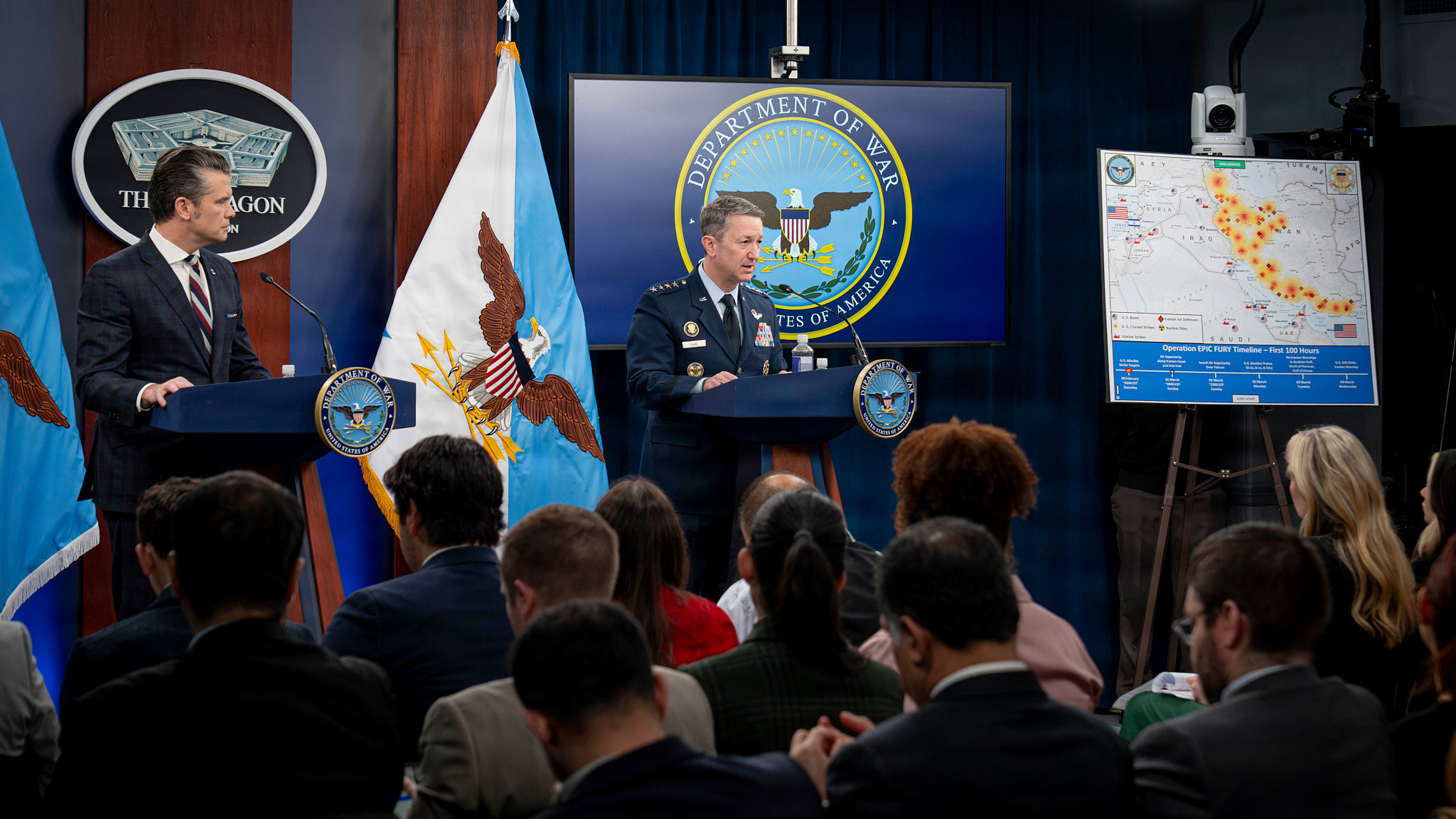
Following ongoing U.S. and Israeli strikes on the Iranian military and leadership apparatus, federal and local authorities are alerting Americans to a wide range of possible targets for Iranian reprisal. There are warnings of potential attacks on military personnel, individuals or locations of importance, and of hacking incidents that could target cyber infrastructure and disrupt American life.
Military bases around the country have been placed on high alert, with increased security measures in place to protect installations. The Pentagon has also spread word of “active threats” against military personnel in the U.S. stemming from the use of the apps Uber, Talabat, and Snapchat, which “are considered compromised.” U.S. service members have been advised to turn off location services on their electronic devices.
The Special Operations Association of America (SOAA) has rounded up information about known threats, previous activities of Iranian agents, and attacks that may be linked to the conflict in order to help readers stay prepared and remain vigilant in uncertain times.
Fatwas and an Attack
On Mar. 1, Grand Ayatollah Nasser Makarem Shirazi issued a fatwa against Israel and the U.S., explaining that Muslims were to seek vengeance for the “blood of the martyr” following the death of Iranian leader Ayatollah Ali Khamenei. On the same day, Grand Ayatollah Hossein Nouri Hamedani likewise said that Muslims are obligated to “avenge Khamenei’s death.”
Also on Mar. 1, a gunman wearing a t-shirt with the Iranian flag and a sweatshirt emblazoned “Property of Allah” opened fire outside of a bar in Austin, Texas, killing two and wounding 14 before being shot and killed by responding police officers. Inside the shooter’s apartment was another Iranian flag in addition to photographs of the Islamic Republic of Iran’s leaders.
The shooter, born in Senegal, had been a naturalized American citizen since 2013. The FBI has not yet determined whether the shooting was an act of terrorism.
Iran’s Hacking Surge
Jake Braun, former senior counselor to the Secretary of Homeland Security, told ABC 7 Chicago that Iran has previously engaged in four kinds of hacking attacks on the U.S., including targeting banking systems, going after systems related to oil supply, attacking “critical infrastructure, like water,” and affecting elections through mis- and disinformation. Braun has urged businesses to remain vigilant about the risks posed by hackers.
So-called “hacktivists” and other state-linked groups are already said to have targeted the U.S. with cyberattacks. Researchers have warned about a possible “escalation,” particularly involving “distributed denial of service, wipers and other malicious activities.” In addition to critical infrastructure, the attacks may target the energy, finance, healthcare, and telecommunications sectors.
Sleeper Cells and Iranian Agents
As Rep. Brad Knott (R-N.C.) noted in June 2025, 1,500 Iranians were caught by law enforcement at the southern border during the Biden administration, with nearly half of these being released into the U.S. Knott noted that the Islamic Revolutionary Guard Corps (IRGC) had made plans to put the assasination of President Trump in motion with sleeper cells to avoid his return to the White House. The Department of Homeland Security had determined that sleeper cells may try to target other high-ranking officials.
Braun mentioned that “Iran and its allies have a long history of radicalizing individuals across the world, whether they be in the U.S. or Europe or elsewhere, and encouraging them to take violent action against soft targets in those countries.”
The varied backgrounds of individuals recently charged by the U.S. Department of Justice for cooperating with the Islamic Republic demonstrate Braun’s point.
In December 2024, dual Iranian-U.S. citizen Mahdi Mohammad Sadeghi was “charged with conspiring to export sophisticated electronic components” in violation of U.S. sanctions. When the FBI analyzed the drone which killed three U.S. service members at a U.S. military base in Jordan on Jan. 28, 2024, they found that it contained a navigation system made by a company owned by Sadeghi’s associate, an Iranian citizen who was additionally charged with providing support to a foreign terror organization.
Naturalized U.S. citizen Abouzar Rahmati, a former contractor with the Federal Aviation Administration, was indicted “for acting and conspiring to act as an agent of the Iranian government” in September 2024. Rahmati had previously been a first lieutenant in the IRGC, and lied about that service while seeking contract employment.
Pakistani national Asif Merchant was indicted in September 2024 for “attempting to commit an act of terrorism” after he hired undercover agents to murder an American politician or government official on behalf of Iran.
In October 2024, charges were brought against five Iranians, including an IRGC Brigadier General, who had contracted three members of the Russian mob to kill Masih Alinejad, a U.S. citizen of Iranian descent who routinely speaks out in opposition of the Islamic Republic. The $500,000 hit came “chillingly close” to fruition, according to Assistant Attorney General for National Security John A Eisenberg. Two members of the Russian mob involved in the attempted murder were subsequently sentenced to 25 years in prison in October 2025.
Proxy-Inspired Attacks Possible
Iran relies on terrorist proxies like Hamas, Hezbollah, and the Houthis to use Iranian weaponry and training to conduct attacks that destabilize Iran’s enemies in the Middle East while maintaining a whiff of non-attribution for the Islamic Republic.
The FBI has noted the possibility that Iran’s “terrorist partners like Lebanese Hizballah” may direct criminal actions against the U.S.
Two Hezbollah members were apprehended in 2017 while conducting reconnaissance in Michigan and New York.
Columbia University Apartheid Divest (CUAD), which has previously expressed support for Iran’s “Axis of Resistance,” including the Houthis, Hezbollah, and Hamas, made waves by making social media statements reading “marg bar Amrika,” or “death to America,” following Khamenei’s death.
In keeping with our mission to keep America safe, SOAA will continue to raise awareness of domestic threats arising from the conflict with Iran that could impact service members, veterans, intelligence professionals, and civilians.