
Preparations for the next great military threat involve far more than the development of weapons systems and maintaining troop readiness. A growing portion of the military sector relies on access to critical minerals that fuel the technologies proliferating across every service branch.
Look no further than U.S. operations in Iran, where batteries have transitioned from mundane components to strategic assets as critical as fuel or ammunition. The shift toward autonomous warfare and high-energy defense systems has made battery technology a decisive factor in tactical superiority and supply chain resilience. In modern combat, a drone’s capability is directly proportional to its onboard energy. Critical minerals and battery materials are the building blocks.
Unfortunately, the U.S. has created minimal opportunities for domestically acquiring many of the critical minerals necessary for military development, forcing us to rely on the People’s Republic of China (PRC) for access to minerals or for components necessary for our military materiel.
The Special Operations Association of America (SOAA) recognizes that success on the next-generation battlespace will require a resilient industrial system within the U.S. to power the nation’s defense.
Among our greatest vulnerabilities today is a reliance on the PRC for the graphite anodes that power batteries needed for phones, cars, data centers, and military power systems.
By 2023, China controlled 75% of the global market for naturally derived graphite, and 74% of the synthetic graphite market. In 2026, the Benchmark Mineral Intelligence Graphite and Anode Forecast Report projected that China will produce 93% of the world’s anode material, including 73% of global natural graphite and 96% of synthetic graphite.
The shortcoming of our lack of access became clear in October 2025, when the Chinese imposed export controls on graphite anode materials, in addition to lithium batteries and cathode materials. This signals the PRC’s willingness to weaponize access to essential materials and expose a critical weak point in America’s energy and defense infrastructure.
Domestic Solutions Essential
In this contested strategic landscape, finding solutions inside the U.S. becomes essential. In addition to Chinese controls on graphite exports, there are internal developments that necessitate urgent changes.
Section 842 of the FY26 National Defense Authorization Act (NDAA), enacted in December, will limit Defense procurement of batteries from foreign entities of concern (“FEOC”), including companies located in, or subject to the control of, China, Russia, Iran, or North Korea, beginning in 2028. Section 848 prohibits sourcing critical minerals (including components or elements) that are mined, refined, or separated in non-allied foreign nations. Likewise, the March 2025 Defense Production Act (DPA) executive order designates mineral production and advanced battery manufacturing as a “priority industrial capability” and provides federal agencies with expanded authority to prioritize U.S.-based procurement.
These policies are important signals that the United States is shifting from awareness of the problem to direct action, and the procurement of domestically sourced technologies is an imperative next step. Fortunately, we’re not starting from scratch and can leverage technology invented, developed, and produced right here in the United States.
U.S.-based materials innovator Sila is pioneering high-performance silicon anodes that can replace or significantly reduce dependence on graphite. Their Si/C technology, already adopted by leading automakers and scaling rapidly with domestic manufacturing, presents a clear alternative to foreign-controlled supply chains.
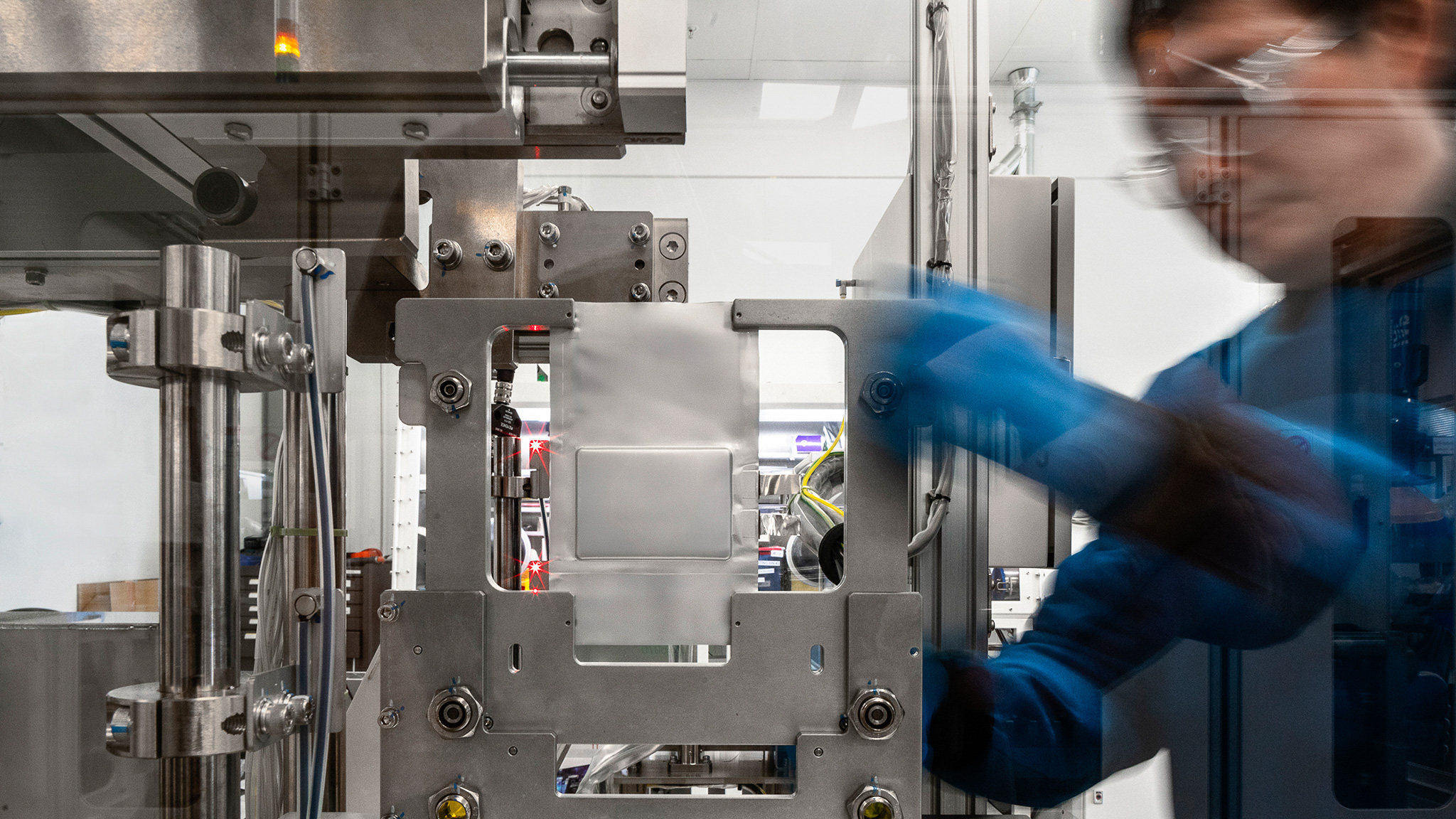
Sila emphasizes providing a technological edge through domestically-produced silicon anodes that enhance battery performance, increase energy density, reduce reliance on Chinese graphite, and strengthen America’s industrial base. Sila’s Titan SiliconTM anode is groundbreaking technology, and will be manufactured at scale in Sila’s plant in Moses Lake, Washington–the first of its kind in the West.
Silicon anodes offer significant advantages over traditional graphite, including higher energy density, lighter battery packs, and improved performance for both civilian and defense systems. But most importantly, silicon is abundant, accessible, and capable of being produced entirely within the United States and allied nations–providing much needed logistics freedom from China. This directly aligns with ongoing federal initiatives to reduce risk, enhance resilience, and build secure supply chains that cannot be disrupted by foreign export controls.
The stakes are high. Battery systems power nearly every facet of modern defense–from unmanned aerial systems to surveillance platforms to mobile power systems vital for operators in the field. When supply chains are vulnerable, so is the mission. When they are sovereign, the nation is stronger.
To translate this strategic need into action, SOAA emphasizes several key policy priorities:
- Prioritize procurement of batteries and components using domestically-sourced or allied-produced silicon anodes. Doing so directly reduces exposure to Chinese export restrictions and strengthens American industrial resilience.
- Require domestic-content standards in federal and defense battery solicitations. This aligns with Department of War priorities, executive orders, and recent statutory mandates under the NDAA. Start now to move domestic capacity-building in advance of statutory deadlines.
- Establish long-term supply agreements with U.S.-based silicon-anode producers. Stable demand enables U.S. manufacturers to scale capacity, develop the workforce, and enhance competitiveness.
- Leverage Defense Production Act (DPA) authorities to accelerate domestic production. DPA tools can streamline scaling, strengthen supply chain security, and ensure sustained manufacturing readiness.
- Support continued research and development. Improvements in silicon-graphite blends, silicon nanostructures, and related technologies will expand performance and maintain U.S. leadership in next-generation energy systems.
Taken together, these actions form a coherent national strategy: shift procurement away from adversarial supply chains and toward domestic innovation that enhances security, stability, and capability.
Recommendations
For SOAA, an organization dedicated to elevating the voices and needs of U.S. special operations veterans, this issue is not abstract. Power systems underpin the tools, platforms, and technologies that operators rely on in the most demanding environments on earth. Whether in austere theaters, disaster zones, or contested regions, reliable energy storage is an operational necessity. And when a single foreign adversary controls the overwhelming majority of a critical material, America’s readiness is at risk.
As threats evolve, so too must the partnerships that protect the nation. National security depends not only on those who serve, but on those who innovate. By aligning operational insight with cutting-edge materials science, the United States has the opportunity to secure its energy future and reduce a major strategic vulnerability.
In an era defined by uncertainty, one thing is clear: keeping America safe requires securing the technologies that power it. That work begins now–here at home.