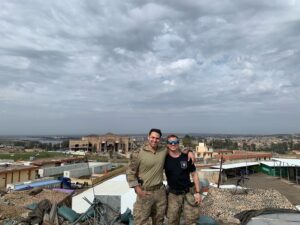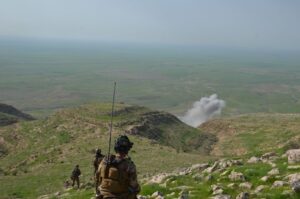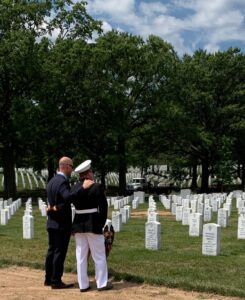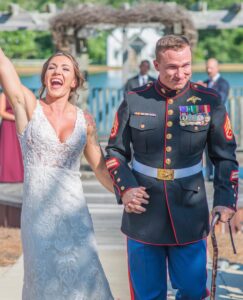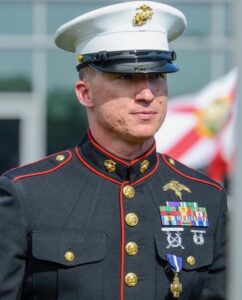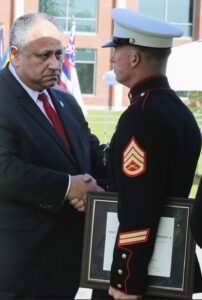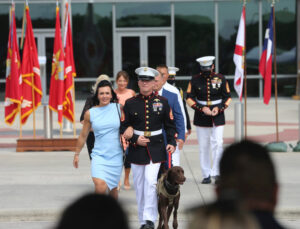

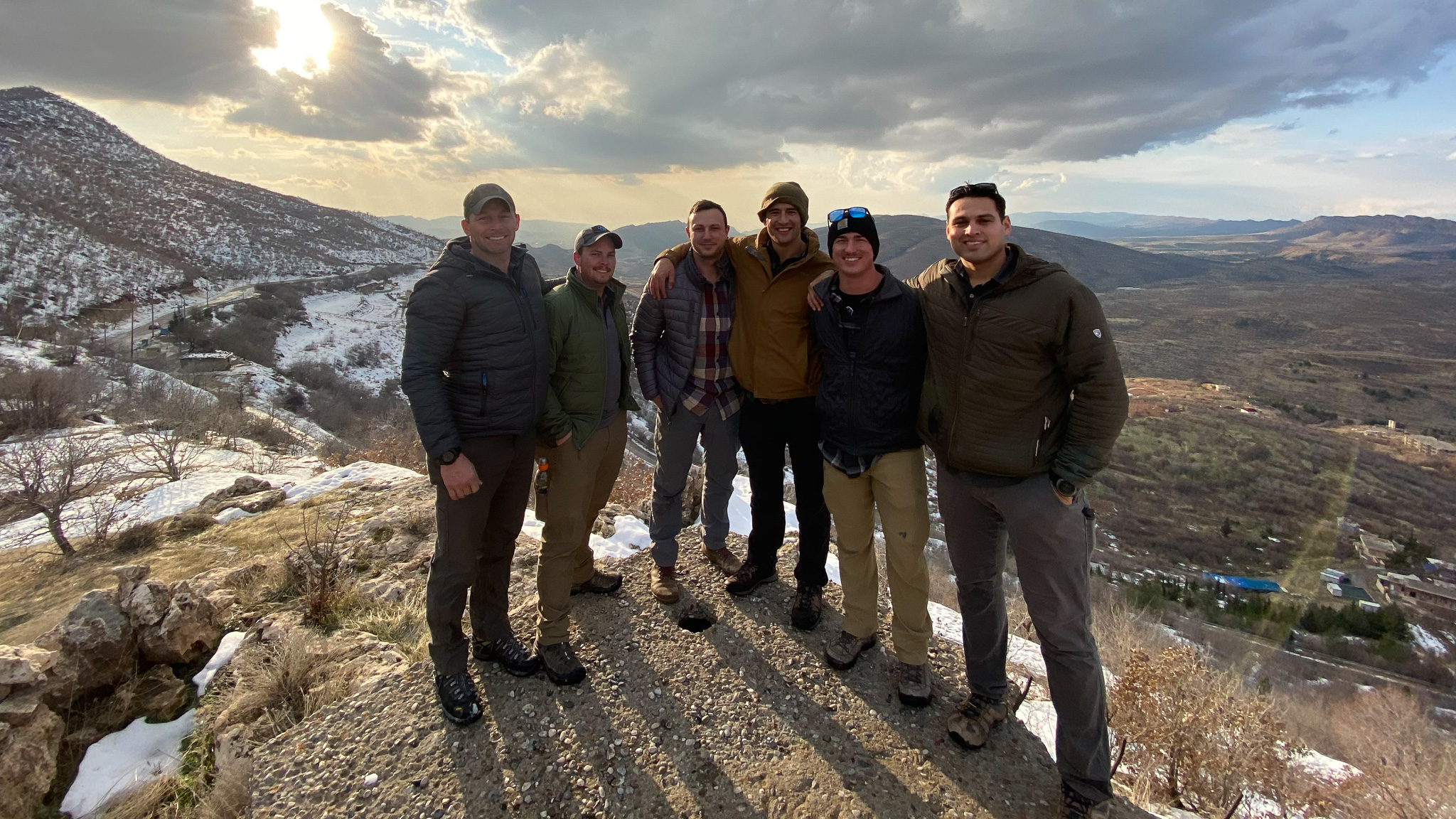
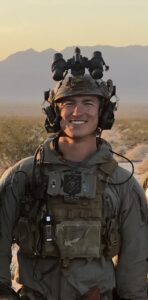
Nick Jones understands the impact of service at the tip of the spear. The former Marine Forces Special Operations Command (MARSOC) Raider pushed hard through injury and loss to remain in the fight with his fellow special operations forces (SOF) members until one tragic operation forced him into medical retirement in 2021.
While working through the physical and mental impact that the unforeseen departure had on him, Jones was drawn into holistic healing modalities that changed his life. Now, he’s bringing those modalities and functional medicine to other operators through nonprofit organization Talons Reach Foundation. He told SOAA about his journey, and the status of the growing organization.
 A Career in Special Operations
After getting into drugs and alcohol at a young age, Nick Jones’ final arrest was a wake-up call. He used his one phone call to contact his Marine Corps recruiter, telling him he was “ready to make a change.” After being released early and doing community service at the Marine Corps recruiting station, Jones left for boot camp in January 2010.
It wasn’t long before Jones decided he wanted more than a conventional military career. “I found the snipers running around one day in their ghillie suits and was like, ‘Oh, man, I want to get dirty and do that stuff!’”
While going through Scout Sniper selection, Jones ran into the trailer where MARSOC recruiters were operating and was pulled in by the allure of their signage. Once he finished the course, he knocked at the trailer door and introduced himself. Intrigued by what he learned about the Marine Corps’ SOF force, Jones said he “tried to apply right then and there” but was told that he had too few years in service to go through selection.
After a 2012 deployment to Afghanistan, Jones sought out the MARSOC recruiting office again. This time, he learned that he needed to be promoted to corporal before he could go through selection. As soon as he picked up rank the following month, he returned to MARSOC.
In January 2013, Jones went through MARSOC assessment and selection, and began his special operations career twelve months later at the Marine Raider training program, at that time known as the Individual Training Course (ITC). After nine months of learning everything from basic infantry skills to advanced special operations tactics, he went to language courses for Modern Standard Arabic. “Sitting down in an academic setting again, I was like, ‘No, this is not for me,’” Jones explained. “But it ended up working out because I was with my buddies.”
Jones was assigned to his special operations team in March 2015 and deployed to Iraq in January 2016. It was the start of a rigorous cycle of deployments and 18-month workups that “sometimes felt faster than the deployment because we were never home,” Jones explained.
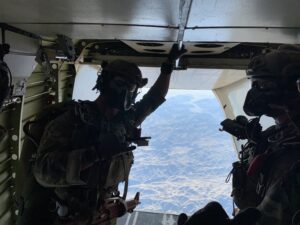 Raiders were expected to spend six of the 18 months attending schools to develop “individualized skill sets to help the team overseas.” Oftentimes Raiders would pack in “as many schools as they can” into the next 12 months to add value to their units. “We were always gone training,” Jones said.
During more than six years as a Raider, Jones attended numerous courses, including military freefall school, advanced sniper school, and a master assaulters course, which combined close-quarters combat with breaching skills.
In the midst of his second workup, tragedy struck. On July 10, 2017, a plane carrying 16 service members, including seven MARSOC personnel, crashed over Mississippi. Many of the MARSOC members came from Jones’ company. Not only did the company have to attend back-to-back funerals for their fallen teammates, but they now needed to find new members of their team for an upcoming deployment.
For Jones, the tragedy hit especially close to home because one of the men who perished was his close friend, Sgt. Talon Leach. When he received a phone call notifying him of the death, Jones was told to put on his uniform and notify Leach’s wife of the loss. “It was by far one of the hardest things that I’ve ever had to do,” he explained. “I wanted to mourn for my friend, but I had to try to stay strong for her.”
It was also surprising to Jones how effectively he had learned to compartmentalize during his military career. “We could stuff down any emotions, any feelings that we wanted, and we could just become these robots that were so good at hunting and killing and doing that lifestyle. But it starts to wear on you,” he explained.
Jones’ next deployment to Jordan to train up partner forces involved working with explosives and shooting in close-quarters environments. He began having struggles with sleep and memory, and recognized that the symptoms may be related to head trauma from overpressure exposure and the emotional trauma of losing his friend.
During his next workup, Jones ended up going through occupational therapy to offset the health effects he was experiencing. Though he was trying to improve, he said he was simultaneously in “self-destruction mode…countering all of it with booze and working harder and working out.”
As his third deployment to a very kinetic region in Iraq loomed, the chief of the team Jones’ unit would be replacing was killed. It was the first sign of the ferocity of the combat the Raiders would face.
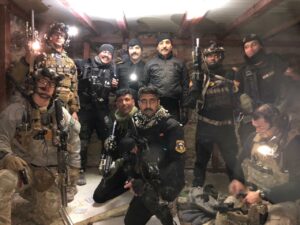
Immediately after arriving in Iraq, Jones’ team was receiving tasking for operations they had not prepared for. Instead of taking high ground and using drones and other tools, they were being sent on subterranean operations in tunnels buried under villages.
On March 8, 2020, the team was tasked with a large clearance operation in a deep tunnel inside a valley. As the member in charge of the tactical scheme of maneuver, Jones was “very intimate with the location.” But as the operation drew closer, there were intelligence changes that showed enemy numbers almost triple those first estimated. “We were still told to go,” Jones reported.
An overhead bombing campaign preceded the ground infiltration of the tunnel, but Jones’ team of 50 local national forces, 25 Raiders, and 8 French special operators knew that the ordnance would “more than likely just wound” their opponents.
As they entered the tunnel, Jones said that “something just felt very eerie.”
In the first few caves, the unit cleared out several dead ISIS fighters before getting split into two groups. Jones and his half of the team moved towards the known point they had planned to attack. The second team moved towards a location that ended up being the stronghold for the remaining ISIS fighters.
As the executive officer for Hotel Company, Capt. Moises A. Navas, and team chief for team 8232, Gunnery Sgt. Diego D. Pongo, tried to encircle the stronghold, a French operator who had gone around the opposite side of the cave was immediately shot. ISIS fighters simultaneously killed Navas and Pongo.
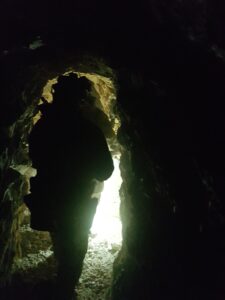 When Jones heard the commotion, “it sounded like absolute chaos happened behind me. Hell opened up, and they just started taking so much gunfire and explosions that all these radio signs started to come over saying that there’s casualties.” In quick succession, Jones heard someone report “there’s an Eagle down,” referring to a U.S. special operator killed in battle. “A second later, there’s another Eagle down,” Jones said. “So I just turned to my partner force and said ‘Hey, you guys watch his cave, I gotta go.’”
Jones made his way to the cave mouth and jumped down, fighting side-by-side with a French operator to pull out the wounded French operator who had been shot minutes earlier.
As rounds began coming in, Jones watched “the legs of the French guy just fly up in the air,” so he pulled his partner down to the rocks and provided cover as another Raider helped his French counterpart to safety.
Jones still does not know how long he stayed in the cave. “Time is not real during those things. I know a couple more grenades were thrown and I shot a lot of rounds. And I saw the mouth, the opening of that cave, and it was just the most intense, disturbing thing I have ever seen. It was like a very dark fortified bunker basically on the side of this ravine.”
Eventually, Jones made it to the roof of the cave and began throwing grenades at the ISIS fighters, trying to kill them in order to retrieve Navas and Pongo. He called in an Apache helicopter to “see if that would help kind of soften it up,” and though the helicopter put out 220 rounds of 30-millimeter cannon and laid down a Hellfire missile, it had “little to no effect.”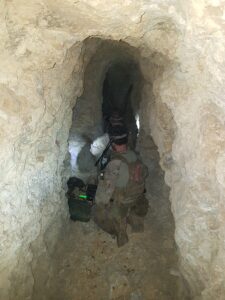 Just as Jones was preparing to leap into the cave, he “got whacked in the shin” and was overcome by a pain “so bad that I immediately just hit the ground and tried to roll back away.” As he showed the medic his wound, Jones’ leg began to swell.
Through the radio, the commander told the team that a quick response force (QRF) had been sent out to assist, and that the team needed to provide overwatch until they arrived. Jones tried heroically to avoid calling in a medical evacuation (MEDEVAC) flight, but as he walked up the side of the mountain, he was on the brink of crying “because it hurt so bad.”
Mentally, Jones was also struggling. “Everything started to sink in at that moment,” he explained, including thoughts that he had failed by leaving his teammates behind.
Finally, Jones’ medic told him that they had called a MEDEVAC to pull him to safety. “Just take the drugs, you’re not in charge anymore,” the medic told him.
The moment was difficult for Jones, who realized, “It’s real. I’m done. They made the call and they’re pulling me out.”
Though he had previously been skeptical when fellow service members talked about mental health and post-traumatic stress disorder, Jones suddenly understood their feelings vividly. “I could feel this thing happening to my nervous system, and I was like ‘Holy shit, I’m losing it,’” he said.
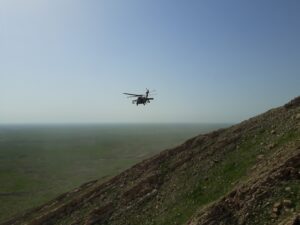
When the Special Operations Aviation Regiment (SOAR) medic hit Jones with ketamine to combat the pain, Jones had “this horrible trip” where he got “sucked back down into the mountain” and could hear Navas and Pongo screaming for him to get them out of the cave. Desperately, Jones tried to talk back to his dead comrades by hitting his push-to-talk, but his hands were stuck in the litter. “I have still to this day this picture of Mo’s hand reaching up out of the ravine towards me and my hand reaching down…so close but I couldn’t get him.”
The next memory Jones has is of waking up in the hospital, sobbing and screaming “What the fuck? I was so close!” Jones was in “an extreme panic” surrounded by dozens of unfamiliar faces until he finally saw the French operator who was wounded with him.
Later, Jones and the French operator heard that elements from Delta Force had inserted into the cave to recover Pongo and Navas and got into “a really gnarly firefight” in the process. Jones and his French counterpart were wheeled out to watch injured Delta operators come off the bird. The following day, they were wheeled out for the ramp ceremony for Navas and Pongo.
After suppressing his response to so many friends dying over the years, the ceremony “was so intense that I just couldn’t contain my emotions anymore,” Jones said. He told doctors his pain was too severe, and that he needed to return to the States.
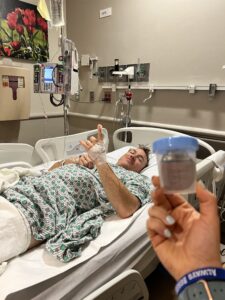 Once in the U.S., Jones had to quarantine for two weeks because of the Coronavirus pandemic. “Nobody visited me or greeted me at the airport when I landed” in Wilmington, North Carolina, he reported, with the exception of his and Navas’ wives. At Walter Reed National Military Medical Center, Jones began undergoing surgery for his bullet wound. He urged doctors to help him make a quick recovery so that he could return to his team for the remaining four months of their deployment. Instead, Jones was diagnosed with complex regional pain syndrome and nerve damage that required eight major surgeries over the next two years.
The pain from his condition “just tore me apart,” Jones explained. Prescribed a “huge cocktail of medications,” Jones was also disqualified from special operations and told that he would likely be medically retired from MARSOC.
“One of my questions to the doctor was, ‘Well, when can I start drinking? Because I think that it will be fine,’” Jones said.
His doctor told Jones that drinking was not advised, but that he might “try a drink” and “not overdo it.”
In Jones’ mind, the words were a full-send authorization. “I ended up going right back to my old ways and drinking on top of all this stuff. My marriage started to crumple. I was just a drunk and flatlined…zombie.”
During Navas’ celebration of life in July 2020, Jones had “a very big breaking moment” and recognized that he needed help. He headed to the Intrepid Spirit program in Camp Lejeune, where he received support from a team of doctors including a psychologist, psychiatrist, and occupational therapist. He was also introduced to holistic modalities, including yoga, breath work, meditation, music, and art.
After seeing the art program, Jones asked to participate.
A one-hour art session “quickly turned into three hours” where Jones experienced “all these feelings and emotions…that were almost resolved as it was happening.”
Jones’ success was so stark that the Special Forces Trust asked Jones to speak about it at a fundraising event. Unsure of what to share, Jones said he decided “to shoot from the hip,” and his seven-minute speech turned into a 20-minute emotional outpouring.
Off to Montana
Following his speech, Jones says that “everything just clicked.” He decided to start a nonprofit of his own, where he would teach SOF personnel about the various signs and symptoms of allostatic load and Operator Syndrome that they might experience in their career. Jones planned “to guide them through holistic ways to combat them, and then get them outdoors, and reconnect with themselves.”
To take on the huge effort, Jones recruited friends and teammates who could execute the program, naming it Talons Reach Foundation after Jones’ friend Leach.
The program consists of a five-day, all-expenses-paid retreat in Jackson, Wyoming. Participants receive an education about the body’s physiological and nervous system responses to traumas that operators are often exposed to. They also receive work on the various modalities available to alleviate those signs and symptoms.
During the program, operators are introduced to functional medicine through blood, gut, and stool tests to point out deficiencies that may impact whole-body health. “We don’t treat anybody,” Jones explained. “We just give strong recommendations towards certain ways or tools to live by.”
All of these features combined are designed to show participants how to “identify the volume button rather than the light switch. Because all these guys want to go home and find the light switch. They’re like, ‘Yeah, it’s at the bottom of this bottle right here.’” But Jones says that medications and alcohol are “suppressing everything” and keeping operators from “letting you get to the core of the problem.
So far, Talons Reach Foundation has put through 12 cohorts of 69 participants who come from “every single branch, almost every single SOF unit there is.” The foundation is putting through its first cohort of women SOF personnel in November, and hopes to also bring in spouses for future cohorts.
The organization raises funds to support the effort through individual contributions but also through peer-to-peer fundraising. It also hosts several large fundraisers, including a golf tournament and a black-tie veterans ball, set for November 14 this year to follow the first female cohort completing the program.