
After an F-15E Strike Eagle was downed by Iranian air defenses on April 3, U.S. intelligence, special operations forces (SOF), and conventional forces mounted a multi-layered response over the course of around 45 hours to retrieve first the pilot, and later the Weapon Systems Officer (WSO) from inside Iran as local military forces hunted them down.
Alex Plitsas, Board Director at the Special Operations Association of America and CNN National Security Analyst, compared the success of this weekend’s incredible SOF mission with Operation Eagle Claw, an attempted exfiltration from 1980 that Plitsas said ultimately failed because “there was no interoperability between the services” and “no joint training.”
Contrarily, Plitsas said that this weekend’s effort, because it was enabled by incredible interconnectivity between American assets, “was a behind enemy lines rescue of an American inside of Iran with a desert meetup, once again, and the U.S. was successful this time.”
What We Know
Plitsas’ observations are confirmed by the details revealed in a joint press conference on April 6 in which President Donald Trump, CIA Director John Ratcliffe, Secretary of War Pete Hegseth, and Chairman of the Joint Chiefs of Staff Gen. Dan Caine addressed reporters about the nature of the recovery operations.
After the Strike Eagle’s pilot and WSO successfully ejected inside enemy territory, the Islamic Republic of Iran began to advertise a “valuable reward” for any Iranian civilians who brought in American personnel alive.
Retrieving the crew would be a dangerous operation, involving sending Combat Search and Rescue (CSAR) assets and SOF personnel into hostile territory.
Trump said that he made the “hard decision” to order the operation despite the risk that “we could have ended up with 100 dead as opposed to one or two,” because “in the United States military, we leave no American behind.”
Just hours after the aviators ejected, Trump said 21 aircraft were inside Iranian airspace. These included numerous A-10 Warthogs and remotely piloted aircraft that Caine said engaged the enemy “in a close gunfight to keep them away from the front seater and allow the pickup force to get into the objective area.” During this time, one A-10 was hit. With his plane no longer able to land, the pilot ejected and was “quickly and safely recovered.”
Meanwhile, a U.S. Air Force HH-60W Jolly Green II located and retrieved the F-15 pilot. As Caine explained, CSAR assets were then “engaged by every single person in Iran who had a small arms weapon,” causing the final aircraft to take “several hits” that caused “minor injury.”
Trump said the WSO, “a highly respected colonel,” was “injured quite badly and stranded in an area teeming with terrorists from the Islamic Revolutionary Guard Corps” as well as Basij military militia and local authorities.”
Ratcliffe described how the CIA took on the “daunting challenge comparable to hunting for a single grain of sand in the middle of the desert” to find the downed aviator.
On Saturday, the CIA was able to locate the WSO, who had used the skills acquired in Survival, Evasion, Resistance, and Escape (SERE) training to retreat to a safer location, 7,000 feet up a ridgeline.
The colonel’s first transmission upon engaging his transponder, according to Hegseth, was “God is good.”
While elements of the Iranian military drew closer to the WSO’s location, at least one MQ-9 Reaper reportedly circled overhead, killing enemy forces who came too close to his position.
With the WSO’s location in hand, the Pentagon began gearing up for a military evacuation operation while the CIA seeded a disinformation campaign, claiming they had already retrieved the WSO and were attempting a maritime exfiltration.
Trump confirmed that the secondary rescue mission involved “155 aircraft, including four bombers, 64 fighters, 48 refueling tankers, 13 rescue aircraft, and more.” To confuse the Iranians further, those air assets were dispersed across seven locations, including “the real area” where Trump said that “hundreds” of troops were involved in the operation to extract the WSO.
Reports indicate that U.S. Navy SEAL Team Six located the WSO and engaged in “skirmishes” with local forces and elements of the IRGC during the operation. Hegseth directed anyone with questions regarding the lethality of SOF personnel and air crews who “performed with near perfection under fire” to “just ask any Iranian soldier who dared attempt to get anywhere near that pilot before or during that mission.”
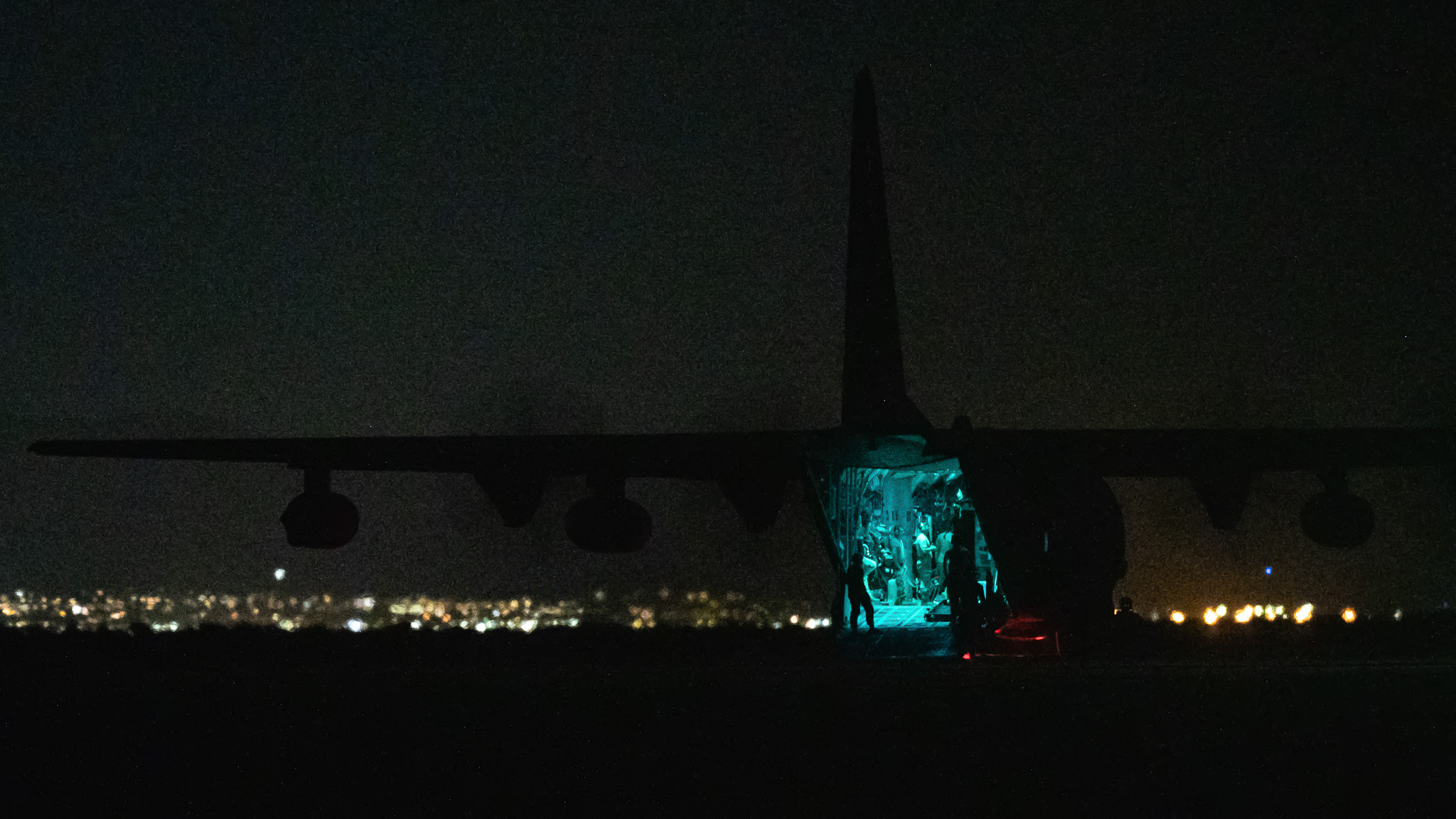
The two planes that had transported ground forces into Iran were unable to depart from a temporary landing zone due to the nature of the sandy terrain, according to Trump. After lighter aircraft arrived in 15-minute intervals to transport U.S. forces out of Iran, the larger planes were destroyed in place to avoid U.S. anti-aircraft and other technology falling into Iranian hands.
Hegseth said that at the end of the mission, the call length on the running video teleconference linking the various agencies involved in the rescue operation read 45 hours and 56 minutes. “From the moment our pilots went down, our mission was unblinking. The call never dropped. The meeting never stopped. The planning never ceased,” Hegseth said.
While many details of the daring missions to save two aviators’ lives remain classified, SOAA stands behind the quiet professionals in the community who enabled this joint, interagency effort. They demonstrated how vital it is to continue the training and maintenance that keep our elite SOF elements prepared to deploy wherever and whenever they are needed to preserve American interests. They also proved to our adversaries the value America places on the lives of her citizens by demonstrating the lengths to which we will go to save one of our own.
As SOAA Deputy Chief of Staff Jack Barry noted, “that 45:56 on the VTC counter is significant. No single crew operates 46 hours straight. What sustained that call was a deep bench of planners, pilots, and operators, each expertly trained and highly capable to conduct the mission. You cannot build that capability in a crisis. That skill set is years of iteration, failure, and repetition during peacetime, at a training tempo most people never see and few would believe.”
Barry emphasized that, “When the instinct in times of peace is to trim, remember Saturday night, when 155 aircraft were airborne over Iran and every single one performed. That readiness is not cheap, and it’s not fast to rebuild once lost. They have to already exist, already be ready, already be good. This weekend proved they were.”