
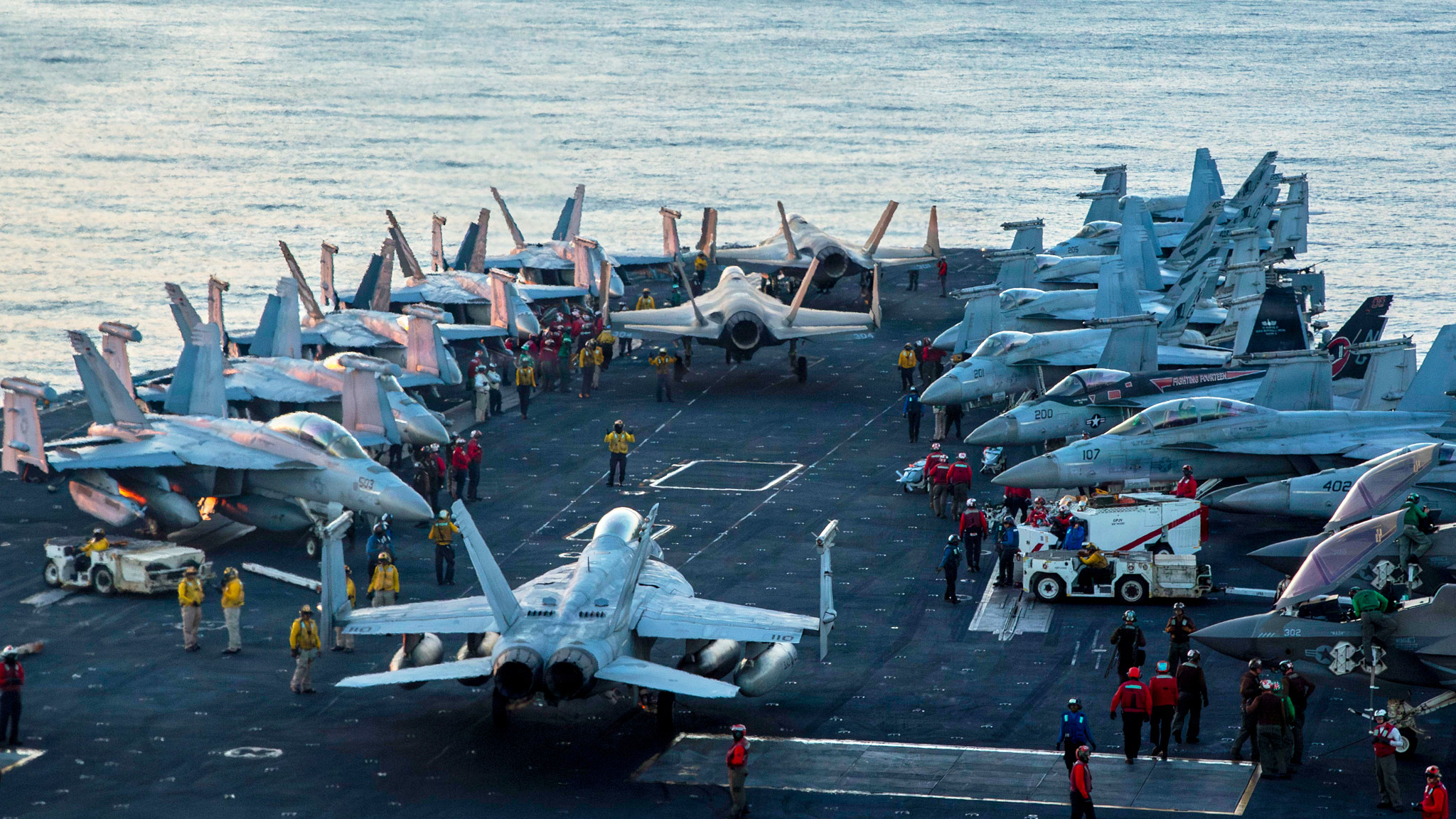
We’ve been monitoring the situation in Iran and today we’re dissecting Operation Epic Fury through a realist lens. Not only have precision military strikes decapitated the Islamic Republic of Iran’s immediate military and ideological leadership and decimated Iran’s Naval fleet, but they have done so while incurring minimal U.S. casualties, with the tragic exception of six U.S. service members killed in Iranian retaliation attacks in the U.S. Central Command area of operations.
While hitting over 1,000 targets in precision attacks, the U.S. has sought to create an opening for regime change that opposition leaders hope to seize. It also stands to have a weakening effect on U.S. peers, near-peers, and terrorist adversaries who exchange fuel, weapons, training, and/or technological expertise with Tehran.
Russia
Since 2022, Russia has sourced Shahed-131 and Shahed-136 drones used in Ukraine from Iran as part of an established exchange of military equipment and technological skills. Russia now produces around 5,000 Shahed-type drones at its own Yelabuga facility every month. Though CNN has reported that Russia “indiginized” 90% of the assembly process during 2025, it is believed to source the remainder of components from Iran and the People’s Republic of China (PRC).
Russia’s business dealings with Iran expanded far beyond the provision of drones and defense equipment. Lamenting the killing of Ayatollah Ali Khamenei, President Vladimir Putin said that he had made a “huge personal contribution to the development of friendly Russian-Iranian relations, raising them to the level of a comprehensive strategic partnership.”
Last month, Russia had signaled its desire to expand its influence into Iran’s oil and gas sector. A multi-billion dollar plan is underway to link the countries by rail, and Russia planned to build four nuclear reactors inside Iran at the cost of $25 billion. The future of these dealings is now unclear.
The People’s Republic of China
Though the PRC avoids giving direct military support to Iran, the Foundation for Defense of Democracies reports that it has provided precursor chemicals to the Islamic Republic which are used in its ballistic missiles. The PRC has also developed economic ties with Iran. The two countries signed a 25-year strategic agreement in 2021, and the PRC has invited Iran to join the Shanghai Cooperation Organization and BRICS+.
In 2025, the PRC purchased 87.2 percent of Iranian oil and 55.1 percent of Venezuelan oil. Currently, about a fifth of the world’s oil supply passes through the Strait of Hormuz, where commercial activity has come to a standstill.
It remains unclear how the PRC will be impacted in the short- and long-term, particularly because the country reportedly shifted towards importing Russian oil prior to Operation Epic Fury. The PRC also possesses about 1.5 billion barrels of oil in its reserves.
The PRC has expressed its hope that parties to the conflict “will exercise restraint and resolve differences through dialogue.”
North Korea
North Korean dictator Kim Jong Un stands to lose a chief importer of North Korean missile technology and components in a change of Iranian regime. Last Wednesday, Un warned the U.S. that it will face “eternal confrontation” if it does not accept his country as a nuclear-armed state.
Iranian Proxies
A host of proxy organizations designated by the U.S. as terror organizations, including Hezbollah, the Houthis, and Hamas, have received weapons and training from the Islamic Republic of Iran. Though stopping the flow of weapons and training will ultimately weaken these groups, some onlookers expect Iran’s proxies to increase attacks on Israel and the U.S. as a result of Operation Epic Fury, using stockpiled weapons to terrorize the region.
For Hezbollah, the attacks have already begun. On Monday, the Lebanese group fired missiles at targets in Israel in response to the announcement of Khamenei’s death, prompting Israeli retaliation.
In a show of support for Iran, the Yemeni Houthis have promised to resume attacking shipping routes and Israel.
Future Impacts
As the U.S. prepares for a multi-week fight against the highly-adaptive Iranian leadership apparatus, SOAA expects that impacts will spread through the network of countries that have allied themselves with the Islamic Republic.