
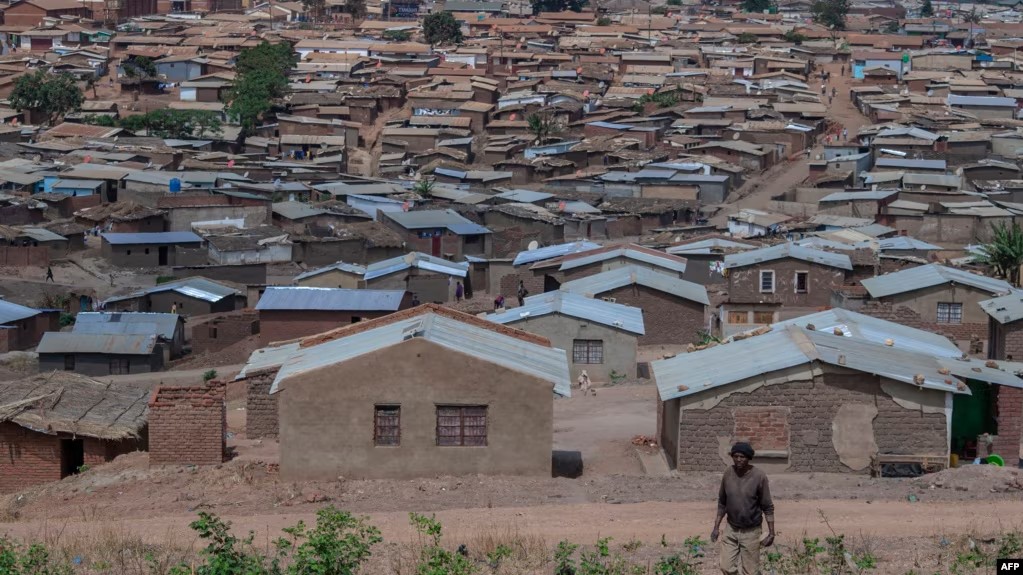
With the release of its 2026 Emergency Watchlist, highlighting the 20 countries around the world facing the greatest humanitarian and economic crises, nongovernmental organization (NGO) International Rescue Committee (IRC) argues that the world is heading into “a new world disorder.” With “more active wars than at any point since World War II,” IRC explains that external sponsorship of conflict, armed groups that exploit available aid, and diminishing humanitarian support have left 239 million people worldwide in need of humanitarian assistance.
The IRC proposes solutions to instability that include diplomatic initiatives, sanctions, and changes to aid distribution. Sources who spoke to the Special Operations Association of America (SOAA) offered up alternative ideas about how aid diversion and the underlying conflicts that drive some watchlist countries’ crises can be solved through increased military support.
Securing Aid or Minimizing Conflict?
Rising global conflict has taken the lives of countless innocent civilians, and increasingly harms the humanitarians seeking to assist them. During the first nine months of 2025, 617 aid workers were killed, wounded, detained, or kidnapped. 96 percent of these incidents took place in the IRC’s watchlist countries. IRC argues that attacks on civilians and aid workers “are increasingly used as deliberate, cost-free strategies of war.”
A senior U.S. diplomatic source involved with aid outlays said that “for too long the humanitarian industrial complex has resisted security elements for fear of violating ‘humanitarian principles.’ However if the aid gets stolen by terrorists or other armed parties to the conflict, then that alone exacerbates and prolongs a conflict. And both the U.N. and NGOs have been too hesitant and politically correct to identify [aid] diversion as a major problem.”
Despite the risks of aid diversion and violence, SOAA’s source said that “preventing even greater civilian unrest due to hunger or disease certainly reflects that humanitarian assistance, with adequate controls and accountability, is a net positive.”
Finding ways to provide security that protects civilians and aid workers is a difficult conundrum. Aid workers often frown on using armed security, which many feel harms their perceived neutrality and actually increases violence against them.
One solution may be to use American military capabilities to stabilize underlying conflicts and may also present an enduring solution for decreasing disorder in watchlist countries.
A Role for the U.S. Military
SOAA board member Timothy Parnell has 26 years of military experience with special operations forces and the Security Force Assistance Brigades (SFAB), conventional units created in 2018 to stabilize host nation militaries.
Parnell argued that a portion of the IRC’s watchlist countries are ripe for a U.S. presence. He includes in that list countries where terror groups have shown the will and capacity to conduct attacks on Americans, and conflict zones where the U.S. has strategic interests, including pursuing access to critical minerals.
In countries where the U.S. has a national security interest in providing stability, Parnell said that an SFAB team or Special Forces Operational Detachment Alpha (ODA) could address drivers of conflict.
Parnell explained that the makeup of a 12-man SFAB team and a 12-man ODA is “exactly the same, side-by-side.” An SFAB is limited to offering conventional military support, but can “advise [host nation militaries] all the way up to the division level,” Parnell said. “On the SOF side, we’re just not built that way.”
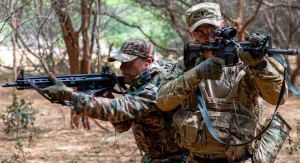
In countries where a SOF presence already exists, Parnell says ODAs could provide training on skillsets like reconnaissance, movement, tactics, and shooting. ODAs can also train irregular forces who demonstrate the ability to shape the battlefield.
Parnell also pushed back on the media’s “beefed up” narrative of SOF being “nothing but a bunch of shooters,” saying that the most valuable entity he could place into a conflict environment with no historical U.S. presence is a civil affairs team that can help the local populace with vital projects.
A source familiar with SOF assets concurred, telling SOAA that civil affairs teams “provide excellent support to the local populations, and act as a conduit to the larger U.S. government and NGO ecosystem.” They explained that civil affairs teams often provide “real-time insight into what local populations need, thus reducing their reliance on threat actors.”
One Watchlist Country Targets SOF Skills
In watchlist country Nigeria, local forces are seeking renewed military capabilities as internal conflict rages with Boko Haram and Islamic State West Africa Province.
After news of killings of Christians broke in November, President Donald Trump threatened to halt aid to Nigeria and enter the country “guns a-blazing” if the government did not protect its own people.
On Dec. 25, with permission from Nigerian president Bola Ahmed Tinubu, the U.S. launched 16 GPS-guided munitions from an MQ-9 Reaper on Islamic State targets seeking to enter northwestern Nigeria.
Also in late December, Nigeria announced that it will focus on increasing its Army aviation, special operations, and naval skill sets. At the time, SOFREP reported that increased SOF reform and effectiveness could “play a major role in whether Nigeria can finally break the cycle of insurgency.”
On Jan. 22, the White House officially launched the U.S.-Nigeria Working Group to “improve religious freedom and bolster security across the country.” Both countries confirmed their commitment to “further strengthen counter-terrorism cooperation, including by working together through operational cooperation, access to technology, anti-money laundering, countering the financing of terrorism and building law enforcement and investigative capacity.”
Nigerian authorities announced on Feb. 13 that they will host 200 U.S. military “technical and training personnel” to counter extremism in the country. U.S. forces will have no direct role in combat, the Military Times reported.
Disorder and the Future for SOF
When Special Operations Association of America member Lt. Col. Derrick Anderson was appointed Assistant Secretary of War for Special Operation and Low-Intensity Conflict, he explained the conundrum facing the SOF community as it fought to maintain a competitive advantage over China while preparing to respond to crises and terror threats. “This is a difficult balance for special operations forces to achieve when persistent, global demand for SOF remains high, strains resources, and day-to-day commitments compete with preparing for high end conflict,” Anderson explained.
SOAA concurs with Anderson’s assessment. In the face of various growing crises around the globe, the Department of War must recognize a growing need for SOF skill sets and grow the force, while also making preparations to care for operators called to take on the diverse worldwide battles that require their expertise.