
In the frozen reaches of the High North, tensions and Great Power Competition are both on the rise. Russia’s military presence reigns supreme, with Moscow operating three times as many bases as the U.S. and its NATO allies. China’s involvement is growing. In the Arctic gateway to the North Atlantic, our adversaries are making no secret of their intentions.
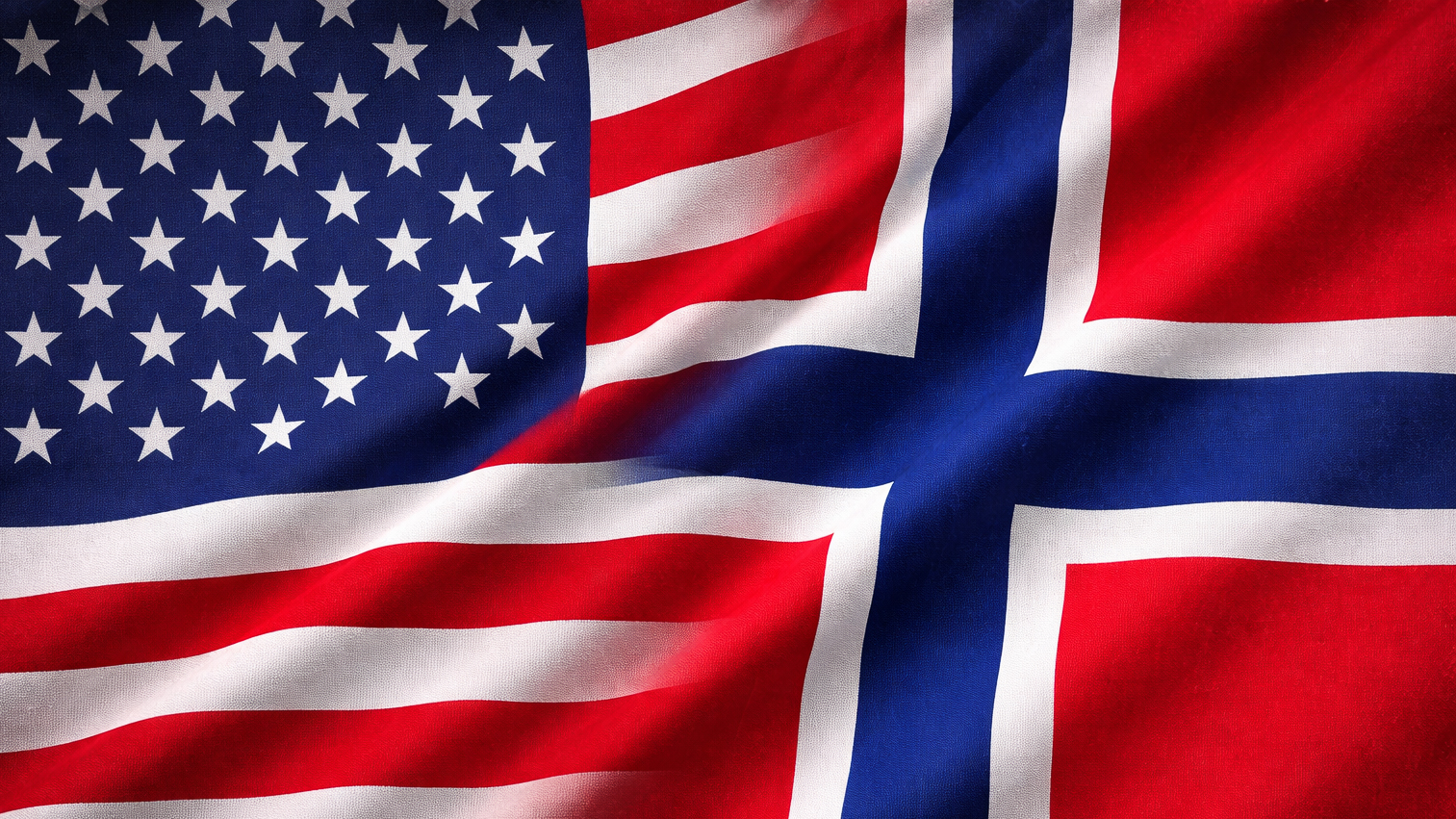
Yet amid this growing strategic rivalry, one partnership stands as proof that allied cooperation remains not just valuable but essential. The United States and Norway understand something that history has repeatedly taught: faced with a major peer conflict, no power wins alone.
A History of Standing Together
The partnership between the United States and Norway extends deep into the past. When Nazi Germany occupied Norway in 1940, Norwegians refused to accept defeat. Their resistance became legendary–perhaps nowhere more so than in Operation Gunnerside. Brave Norwegian commandos sabotaged the heavy water plant at Vemork, key to the Nazis’ nuclear ambitions, in what’s largely considered the most successful sabotage of World War II.
These Norwegian commandos did not act alone. Trained by the British Special Operations Executive, they were supported by American Lend-Lease aid flowing to the Allies, demonstrating that small nations fighting alongside larger powers can achieve outsized impact.
After liberation, Norway made a strategic choice: rather than attempt neutrality, it joined the U.S. and other democracies in founding NATO, history’s most successful collective deterrence alliance.
This close alignment of capabilities and strategic goals continued throughout the Cold War. The U.S. and Norway maintained close military cooperation, standing firm against Soviet pressure along the Northern Flank. This was not born of ideology alone, but of shared interests: both nations understood that their security was intertwined.
A Partnership That Works
Today, that partnership remains as vital as ever, and the evidence is visible on the ground in the High North.
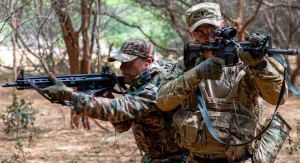
In 2024, U.S. Marines joined some 20,000 NATO troops from 13 nations to participate in the Nordic Response exercises in the northern tip of Norway. Just 150 miles from the Russian border, Marines learned to operate in Arctic conditions alongside Norwegian forces.
More than mere pageantry, this type of cooperation represents serious military preparation based on shared assessment of threats. Joint training exercises, intelligence sharing, and coordinated defense planning represent the kind of practical cooperation that makes alliance commitments credible.
The relationship works because it serves mutual interests. For the United States, Norway’s geographic position is invaluable. It controls sea lanes and air approaches that any adversary must consider. For Norway, the U.S. commitment to collective defense is a critical security guarantee. This is partnership at its most functional: neither nation demands the other sacrifice core interests, yet both gain from standing together.
Today’s Challenge in the High North
The threat driving this cooperation is not imaginary. The Brookings Institution has found Russia is building nearly 30 military or dual-use facilities above the Arctic Circle. The buildup includes modern radar systems, air defense installations, and expanded naval capabilities. Norwegian officials have detected Russian vessels conducting intelligence surveillance on NATO exercises and have reported increased electronic warfare activity and approaches by Russian forces. This is an active, competitive environment.
Russia’s military posture here is not abstract or distant. In a conflict with Moscow, the Arctic would constitute the shortest and most likely trajectory for missiles aimed at North America. Control of these waters and airspace carries enormous consequences. For the U.S., Norway’s participation is not optional but essential to maintaining freedom of navigation and deterring Russian aggression.
Why Alliances Matter
When major wars break out, the U.S. almost never fights alone. In fact, since the Spanish-American War in 1898, the United States has not fought a great power conflict without allies. There’s been no historical precedent for the United States successfully defeating a major power adversary in isolation.
In World War I, the U.S. joined the Allies. In World War II, it fought alongside Britain, France, the Soviet Union, and many others. During the Cold War, NATO proved essential to deterring Soviet expansion. In every major test, American strength was multiplied by alliances.
If conflict were to break out in the High North, the United States would again need allies. Norway, in particular, remains one of America’s most capable and reliable allies. As Norwegian Major General Joar Eidheim recently emphasized,
“The Arctic is of strategic importance for the US and for Norway. When the US operates in this geography they will find us, a trusted partner. We stand ready to enable and integrate 5th generation and strategic assets. This is credible deterrence.”
Norway is positioned at the crux of this geography. Its territory, its people, its military forces, and its strategic wisdom would be indispensable. The partnership is not charity, but necessity voiced in the language of mutual commitment. A U.S. that allies itself closely with Norway and other Nordic partners strengthens its own position while reinforcing the international order that has underwritten American security for generations.
The Path Forward: Continuing the Partnership
The U.S.-Norway partnership demonstrates what alliance commitment looks like in practice: joint training, shared intelligence, coordinated planning, and mutual respect for each partner’s sovereignty and interests. This is a model that works.
As Great Power Competition intensifies in the Arctic, the United States must deepen, not diminish, a partnership that strengthens both nations while raising the cost of aggression for any would-be challenger. Strength lies not in going it alone, but in the bonds forged by keeping faith with trusted partners. The Norwegian example reminds us that the most enduring victories come not to the strongest, but to those who stand united.