
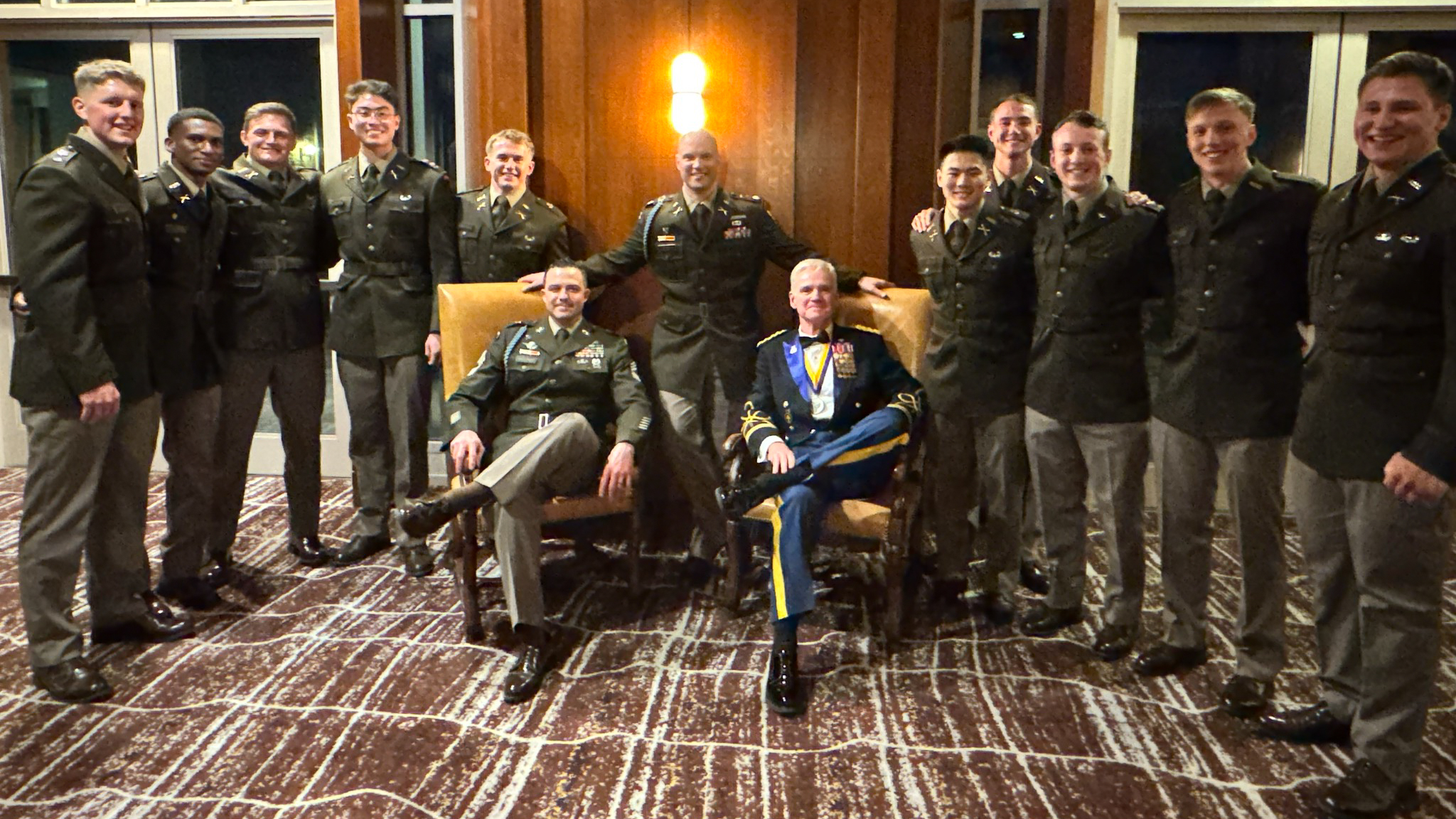
Rapid technological evolution across modern conflict zones has highlighted the importance of nimble adaptation that defies the typical acquisition and procurement process. In new research produced through Arrowhead Research, Master Sgt. Travis Williams, a career Special Operations soldier and Army Reserve Officers’ Training Corps (ROTC) Military Science Instructor at Virginia Polytechnic Institute, has put forward a proposal for a more rapid system of designing military improvements through military partnerships with regionally-aligned universities throughout the country.
The Special Operations Association of America brings Williams’ full recommendations, below, to our readers to demonstrate versatile options for harnessing available assets to rapidly design and implement new technologies on an ever-changing battlefield.
Identifying the Problem
Modern battlefields demand rapidly defending against evolving enemy technology in addition to innovating new offensive technology. Unfortunately, the procurement cycle for launching and fielding new technology takes place on a timeline that does not favor the warfighter.
Current methods for bypassing dated pathways, the rapid prototyping (RP) and rapid fielding (RF) initiatives, have limitations, and are only applicable to capabilities that have reached the point on the Technology Readiness Level (TRL) scale where they can be tested outside the laboratory.
Capabilities still in the earlier TRL phases of development may prove irrelevant, lack survivability in the real world, or have limited use because their creators lack the military experience to understand what is, and is not, helpful on the battlefield. The labs where they are tested can also face challenges.
Experimental laboratories can provide unique solutions for direct acquisitions, but Williams says they suffer from the hurdles of capital unpredictability, partnership limitations, and shortcomings for fielding prototypes.
Education Partnership Agreements (EPA), formal relationships between defense labs and educational institutions, offer expertise for creating quality prototypes, but are underutilized, according to Williams.
A Better Path
One solution to bringing more innovation to the warfighter is what Williams calls the University Technical Integrator Program (UTIP). The UTIP would formalize partnerships with universities throughout the country, which would be regionally aligned to support a variety of nearby military installations. Williams also proposes sending military personnel with excellent histories of operational and combat leadership to participating campuses for a one-year, permanent change of station tour of duty to support campus development teams with tactical and operational insights.
Williams suggests limiting fast-tracked developments through UTIP to non-critical hardware. For universities with existing EPAs, UTIP would ensure alignment with Department of Defense needs and increase productivity.
Williams suggests that being able to tap into university funding streams through UTIP would be advantageous, minimizing disruptions to the traditional commercial defense sector while enabling low-cost and fast-turnaround developments to support soldier success. The pathway for procurement through UTIP would also face fewer constraints from the National Defense Authorization Act and International Traffic in Arms Regulations, which can enhance success.
The more UTIP participants, the greater operability between them, Williams argues. Affiliated universities can work together on specialized issues, or shift tasks to other participants in the event of schedule disruption. The network can also leverage the unique expertise and assets of its individual participants, including access to specialized technologies for testing or manufacturing.
As technological innovations save American lives on battlefields worldwide, the continued need for speedy developments has never been greater. SOAA supports bold initiatives like UTIP which can push new developments into the hands of warfighters tasked with keeping our country safe.

Procurement Innovations Needed to Create Agile Support for Military
Rapid technological evolution across modern conflict zones has highlighted the importance of nimble adaptation that defies the typical acquisition and procurement process. In new research produced through Arrowhead Research, Master Sgt. Travis Williams, a career Special Operations soldier and Army Reserve Officers’ Training Corps (ROTC) Military Science Instructor at Virginia Polytechnic Institute, has put forward a proposal for a more rapid system of designing military improvements through military partnerships with regionally-aligned universities throughout the country.
The Special Operations Association of America brings Williams’ full recommendations, below, to our readers to demonstrate versatile options for harnessing available assets to rapidly design and implement new technologies on an ever-changing battlefield.
Identifying the Problem
Modern battlefields demand rapidly defending against evolving enemy technology in addition to innovating new offensive technology. Unfortunately, the procurement cycle for launching and fielding new technology takes place on a timeline that does not favor the warfighter.
Current methods for bypassing dated pathways, the rapid prototyping (RP) and rapid fielding (RF) initiatives, have limitations, and are only applicable to capabilities that have reached the point on the Technology Readiness Level (TRL) scale where they can be tested outside the laboratory.
Capabilities still in the earlier TRL phases of development may prove irrelevant, lack survivability in the real world, or have limited use because their creators lack the military experience to understand what is, and is not, helpful on the battlefield. The labs where they are tested can also face challenges.
Experimental laboratories can provide unique solutions for direct acquisitions, but Williams says they suffer from the hurdles of capital unpredictability, partnership limitations, and shortcomings for fielding prototypes.
Education Partnership Agreements (EPA), formal relationships between defense labs and educational institutions, offer expertise for creating quality prototypes, but are underutilized, according to Williams.
A Better Path
One solution to bringing more innovation to the warfighter is what Williams calls the University Technical Integrator Program (UTIP). The UTIP would formalize partnerships with universities throughout the country, which would be regionally aligned to support a variety of nearby military installations. Williams also proposes sending military personnel with excellent histories of operational and combat leadership to participating campuses for a one-year, permanent change of station tour of duty to support campus development teams with tactical and operational insights.
Williams suggests limiting fast-tracked developments through UTIP to non-critical hardware. For universities with existing EPAs, UTIP would ensure alignment with Department of Defense needs and increase productivity.
Williams suggests that being able to tap into university funding streams through UTIP would be advantageous, minimizing disruptions to the traditional commercial defense sector while enabling low-cost and fast-turnaround developments to support soldier success. The pathway for procurement through UTIP would also face fewer constraints from the National Defense Authorization Act and International Traffic in Arms Regulations, which can enhance success.
The more UTIP participants, the greater operability between them, Williams argues. Affiliated universities can work together on specialized issues, or shift tasks to other participants in the event of schedule disruption. The network can also leverage the unique expertise and assets of its individual participants, including access to specialized technologies for testing or manufacturing.
As technological innovations save American lives on battlefields worldwide, the continued need for speedy developments has never been greater. SOAA supports bold initiatives like UTIP which can push new developments into the hands of warfighters tasked with keeping our country safe.
Innovation at the Speed of Need
Master Sgt. Travis Williams
May 2026
Problem Statement
The Army Technology Readiness Level (TRL) system does not effectively operationalize non-critical, soldier-developed hardware within acceptable fielding timelines (less than one year) (Office, n.d.). While the Middle Tier Acquisition (MTA) and Other Transaction Authority (OTA) frameworks provide expedited pathways (two to five years), these processes are not codified for in-house soldier initiatives (Nesaw, 2025). This approach requires significant time and financial resources, and neither framework adequately addresses real-time warfighter needs.
Manufacturing processes that lack experienced soldier input often yield products that do not meet the relevant form factors or key performance parameters. The potential contributions of universities as Non-Traditional Performers in capability development remain underutilized.
Rapid Acquisition Limitations
MTA has two established pathways under DoDI 5000.80. Rapid Prototyping (RP) is the development and demonstration of fieldable prototypes in an operational setting. RP technologies must start at TRL 5-7 and do not require Joint Requirements Oversight Council (JROC) validation (requirements are now validated at the service level) (SECWAR Hegseth & Feinberg, 2025). Rapid Fielding (RF) is the expedited production of proven technologies that require minimal additional development. RF capabilities must be at TRL 8+, and production must start within 6 months. MTA’s design is to deliver within 5 years for both avenues. (Audit of Department of Defense Middle Tier of Acquisition Rapid Prototyping and Rapid Fielding Programs (DODIG-2021-131), n.d.)
The ‘Valley of Death’ (TRL 4-6) represents the most challenging phase of capability development within the defense innovation sector. During this period, concepts have progressed beyond laboratory simulations or bench tests and are advancing through successive echelons toward established benchmarks. Factors such as re-competing requirements tied to fiscal-year funding, delays in Traditional Defense Laboratory testing and evaluation, and misalignment with development partners significantly increase the risk that a product will fail to meet sustainable deadlines or be discontinued.
Products from industry that weather this process often still miss the intended design scope due to loss of relevance (lengthy timelines), survivability disconnect (exposed cables, non-environmentally resistant batteries), and siloed manufacturing (built by engineers, not soldiers). Compartmentalized development leads to underdelivering capabilities. Most soldiers can clearly recall a moment when they were handed a “new” piece of equipment that was technologically outdated, non-conformal with logistics apparatus, or grossly ill-designed with operators in mind (“Man-packable” 30lbs rectangular box that clearly doesn’t fit in any issued bag).
The Shift from Industry to Individual Solutions
Installation Innovation labs and unit-level “skunk works”; give soldiers direct acquisition solutions, yet three hurdles persist: unpredictable capital, limited third-party T&E partnerships, and delayed legal concurrence for operational fielding.
Obligated funding for soldier labs is uncertain. Units often rely on O&M for its reactivity to address rapid procurement efforts, such as unforecasted requirements. However, its suitability is unpredictable due to pressure on units to meet quarterly expenditure targets, which risks a reduction in the following fiscal year. RDT&E funds, in concept and name, should be a “best athlete”, but stringent forecasting due to alignment with the POM cycle largely makes them inflexible for emerging capability development. What is needed are unobligated funds that can be spent outside of a month-to-month execution model.
Non-Traditional Defense Performers—such as universities partnered through DEVCOM and C5ISR—deliver prototypes for commercialization and fielding. Though often limited by standard Education Partnership Agreements (EPA) to TRL 2-4, many have the expertise and equipment needed for end-item quality. Their ability to mature pre-production prototypes is largely underutilized. They are, however, uniquely positioned to bridge the RDT&E shortcomings in low-cost soldier-built initiatives from unit labs. Apart from adequate lab resources and experts, in many occurrences, they have unburdened queues, operate off a multiplicity of funding streams, and are geographically aligned with Department of the Army installations. In many cases, they also have the ability, via possession of a cage code and DUNS, to operate as a training vendor for specialized skill buckets (embedded systems, software-defined radio, antenna design, etc.). (Collaborative Partnerships – DEVCOM Army Research Laboratory, n.d.)
University Technical Integrator Program (UTIP) Proposition
The UTIP is an “open-door” re-envisioning of structured EPA’s leveraging OTA prototype agreements to service individual Department of the Army Units, introducing a fast track for non-critical soldier-built hardware. Its goal is to accelerate pre-production prototypes through Non-Traditional Performers to achieve authorized fielding in operational environments and TRL 7 within a period not to exceed 12 months. Non-Traditional Performers meeting requirements to support sufficient T&E would be aligned regionally to support multiple installation locations. For example, the Virginia Polytechnic National Security Institute would cover Ft. Belvoir, Ft. Langley-Eustis, and Ft. Lee.
This concept benefits both the Army and universities by offering a rapid pathway for soldier-built solutions that reduce acquisition time and cost. For example, a unit needing a new type of vehicle mount can produce it with a metal powder bed fusion 3D printer, avoiding vendor contracts, expensive development, or lengthy maintenance. If it breaks, make a new one. UTIP provides open access to expert evaluations in environmental survivability, shock, vibration, and metallurgy, ensuring reliability and durability. UTIP benefits EPA universities by enabling alignment with defense initiatives and increasing delivery throughput. New funding streams are created, allowing these Non-Traditional Performers to respond rapidly to budgetary demands and capability surges. In times of need, universities are already positioned to assist. UTIP does not intend to disrupt the commercial defense sector or limit competition (SBIRs, Prime Contracts, startups). Its goal is to empower soldiers and universities to address low-cost, quick-turnaround requirements, fostering unit-level innovation and keeping pace with modern battlefield demands.
Embedded soldiers under UTIP would be merit-based selected, possessing significant operational and combat leadership experience in addition to demonstrated aptitude for army acquisition systems and funding vehicles. Soldiers assigned will provide representative consultation (insight from lived experience), T&E oversight for product maturation, and ensure alignment between the customer and the sponsoring Non-Traditional Performer (capital and timelines). An already established mechanism for the material assignment of personnel would be the Pathway for Innovation and Technology Office (PIT, est. 2025) under the Assistant Secretary of the Army for Acquisition, Logistics and Technology (ASA(ALT)) or the Defense Contract Management Agency (DCMA). In the interim, this could easily be added to the Broadening Opportunities Program, managed under HRC, as a 12-month consecutive ADSO internship. Ideally, and at realized potential, this would be a PCS assignment to retain continuity of programmatic relationships and product development.
Scaling UTIP to enroll multiple universities only increases operability. In a networked topology, universities can work cohesively when specialized issues arise. Offloading work capacity means shifting tasks to other institutions during periods of high demand or inactivity. Engaging centers of excellence means leveraging facilities with expertise, such as anechoic chamber testing (for sound and electromagnetic isolation), PCB milling (for manufacturing printed circuit boards), or electron microscopy (for observing materials at very high magnification). Additionally, universities can collaborate on projects to meet specific requirements.
Supply Chain management is an integral component of what UTIP provides. Universities offer a more cost-effective procurement pathway for unique situations in which compliance with the National Defense Authorization Act (NDAA) or the International Traffic in Arms Regulations (ITAR) is difficult. Development at the soldier level or in home labs often occurs using prohibited electronic components or physical designs (form factors). Software-defined radio (SDR), such as the EPIQ series, is a good example. Engaging with experts in Field-Programmable Gate Arrays (FPGAs)—which are chips that can be programmed after manufacturing—or bare-metal-level programming, which means programming hardware directly without an operating system, opens the door to enhanced development opportunities. Rationale and Urgency for Implementation
Given the redesign of the Federal Acquisition Regulations, the adoption of the Joint Requirements Oversight Council (JROC), which assigns ownership to the component service, and the activation of Operational Acquisition Detachments, the timely implementation of this program is particularly relevant (Wright, 2026). Recent conflicts in Ukraine and other transregional engagements involving Great Power Competitors underscore the critical importance of innovation. Integrating soldiers into the capability development loop and leveraging the industrial base provided by universities represent essential steps toward delivering appropriate equipment to operators in real time.
References
Hegseth, P., & Feinberg, S. (2025, August 20). Reforming the Joint Requirements Process to Accelerate Fielding of Warfighting Capabilities [Memorandum]. Office of the Secretary of Defense. https://www.newspacenexus.org/wp-content/uploads/2025/08/SecDef-Memo-20-Aug-2025.pdf
Nesaw, S. (2025, May 20). Army acquisition moves fast with MTA pathways. U.S. Army. https://www.army.mil/article/285669/army_acquisition_moves_fast_with_mta_pathways
U.S. Department of Defense, Office of Inspector General. (2021, September 28). Audit of Department of Defense Middle Tier of Acquisition Rapid Prototyping and Rapid Fielding Programs (Report No. DODIG-2021-131). https://media.defense.gov/2021/Sep/30/2002864712/-1/-1/1/DODIG-2021-131.PDF
U.S. Government Accountability Office. (2024, June). Weapon systems annual assessment: DOD is not yet well-positioned to field systems with speed (GAO-24-106831). https://www.gao.gov/products/gao-24-106831
Wright, R. (2026, March 6). Overhaul of the Federal Acquisition Regulation and its impact to Army acquisition. U.S. Army. https://www.army.mil/article/290090/overhaul_of_the_federal_acquisition_regulation_and_its_impact_to_army_acquisition
Travis Williams is an active-duty U.S. Army Master Sergeant currently serving as a Military Science Instructor with the Virginia Tech Reserve Officer Training Corps (ROTC). He is a career Infantryman with 16 years of service, including more than 12 years in U.S. Army Special Operations, and has completed nine combat deployments across the Middle East and Africa. His career includes a non-traditional transition into electronic warfare and cyber competencies, most recently leading rapid prototyping and engineering efforts in support of U.S. Army Special Operations Command (USASOC), focused on applied engineering and operational problem-solving. He also serves as Director of Strategic Partnerships for Arrowhead Research.