
The Special Operations Association of America (SOAA) applauds the National Defense Authorization Act’s (NDAAs) inclusion of language calling for continued study on diminished testosterone levels in Special Forces personnel.
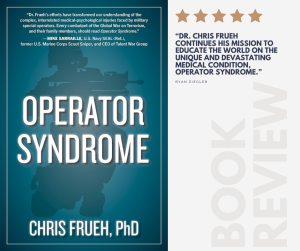
Hormone regulation is just one component of Operator Syndrome, first recognized by Dr. Christopher Frueh in 2020 after he studied the “high-performance, high-trauma” deployment cycles that special operations’ forces (SOF) experience. The syndrome is characterized by hormone imbalance, traumatic brain injury, post-traumatic stress disorder, social and psychological difficulties, and sleep problems.
By working to better understand how Operator Syndrome arises, we draw closer to combating its effects.
Current Solutions – the Good and the Bad
Frueh’s research on Operator Syndrome shows dramatically diminished testosterone levels in SOF personnel. He told Task & Purpose that he has found the amount of testosterone in 35-year-old operators equivalent to the quantity typically found in 80- to 90-year-old men.
In a panel at the Food and Drug Administration about testosterone replacement therapy, Maj. Theodore Crisostomo-Wynne MD explained that SOF personnel are becoming aware of the deficiency. With the demands for operators to remain at elite levels of physical fitness and deployability, seeking medical care for a suspected testosterone issue would possibly force military personnel to lose specialized duty status or become undeployable, Crisostomo-Wynne explained. Ongoing concerns about low testosterone for operators in high-stress environments has led some personnel to seek out over-the-counter testosterone supplements that “have limited or no evidence of efficacy.”
Some SOF veterans have found help through other means.
After a special operations career that involved working as an Air Force Tactical Air Control Party Specialist and an Army Green Beret, SOAA’s Director of Strategic Partnerships Dr. Ryan Ziegler told Task & Purpose he battled fatigue, confusion, and a sense of disconnection. Three months of hormone treatments brought about “a complete transformation,” Ziegler told Task & Purpose.
The treatment Ziegler underwent was created by Dr. Mark Gordon. With funding from SOAA, Gordon designed a blood panel that examines 28 biomarkers and suggests results-based-treatments that may prove helpful.
Gordon told Task & Purpose that when low testosterone levels appear in his testing, he does not simply reintroduce testosterone, but addresses the underlying issues. Among the treatments Gordon utilizes is Clomid, which can stimulate the pituitary gland so that the brain and endocrine system “fix…the cause of the deficiency.”
Help from the Hill
In early 2025, SOAA members met with Congressional leaders to advocate on behalf of SOF service members and veterans experiencing Operator Syndrome.
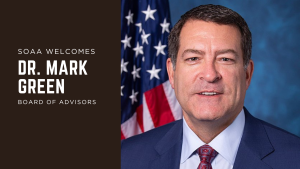
Lawmakers responded to SOAA’s concerns. Rep. Richard McCormick (R-GA) sponsored language in the NDAA to support the continued study of Operator Syndrome with co-sponsorship of SOAA board member Rep. Morgan Luttrell (R-TX).
The language within the NDAA directs an assessment of the general testosterone levels of Special Forces candidates upon entry to the Special Forces Qualification Course, how Special Forces training and deployments impact testosterone, and what percentage of the hormone is lost during a service member’s military career. The study will also assess whether decreasing testosterone impacts readiness and long-term health for Special Forces members.
The NDAA also suggests recommendations for further possible changes, including a pilot program for testosterone replacement therapy for Special Forces personnel, and research into natural remedies that could counteract decreasing testosterone.
Looking forward
By mandating studies into testosterone loss, lawmakers are beginning to not only examine how Special Forces’ high-impact training and deployment cycles shape their health and recovery, but to find ways to offset those effects.
With the inclusion of Operator Syndrome research in the NDAA, SOAA believes we are closer to understanding the factors that impact special operations personnel’s physical and mental health. Learning more about unique challenges will allow us to offset them in the future, helping operators maintain peak physical condition so that they can answer the call to duty whenever it may come. These solutions will also undoubtedly help operators remain in better health when they transition out of the service and forge a new identity outside the SOF community. Healthier operators make for a healthier and safer America. And that’s something we all want.