
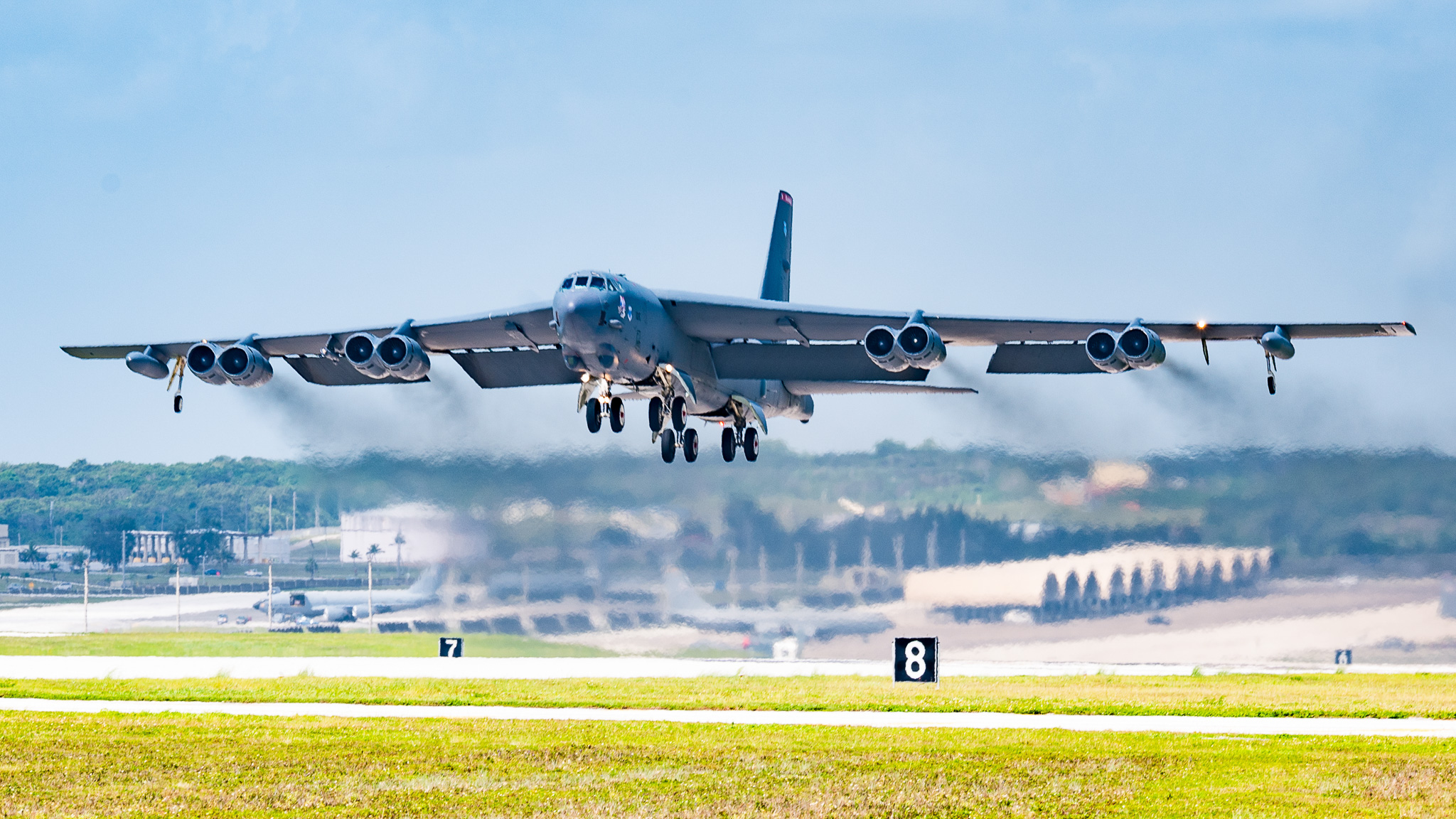
On Jan. 5, the Daily Caller reported that Chinese-American Eugene Ji, a former member of the Chinese Communist Party, owns two golf courses within two miles of the U.S. Air Force Global Strike Command (AFGSC), on Barksdale Air Force Base. Located several miles outside Shreveport, Louisiana, the AFGSC hosts ballistic missiles and nuclear bombers.
Ji’s golf courses border the base to the north and south. The Daily Caller cited customers’ feedback calling one of the courses “abandoned” and the other “a dump.”
Among Ji’s ties to the Chinese government, the Daily Caller reported that Ji has “met with [Chinese government organizations] inside the People’s Republic of China on multiple occasions,” agreeing “to support China’s economy in various ways, such as by serving as an ‘ambassador’ to recruit talent” for a development zone “mandated to advance China’s Military-Civil Fusion policy” and “focused on researching artificial intelligence, supercomputers, and robotics.”
Ji also received payment from the PRC while conducting a Chinese delegation through Louisiana. Following this event, Ji reportedly “continued to serve as a liaison between China and the Deep South.” In 2013, Ji told the World Trade Centers Association that China was eager to invest in Louisiana “to create companies that will highlight the industrial use of natural gas, fertilizer, antifreeze, plastics, pharmaceuticals, [and] fabrics.”
In his own memoir, the Daily Caller reported that Ji said he wanted “to do all that [he] possibly can to make a real difference for China’s core interests.”
Retired U.S. Army Col. Edward Croot, a Special Operations Association of America (SOAA) member, is an expert on the policy of Unrestricted Warfare, the PRC’s whole-of-government effort to weaken the U.S. in preparation for conventional battle. Croot says that the U.S. government “should absolutely be concerned about Ji’s actions,” calling them “textbook examples of the PRC Unrestricted Warfare playbook.”
In this case, Croot explains that Ji’s objective is likely to collect information on the AFGSC by purchasing land under the pretenses of investment, “thus providing access and placement for collection.” Croot says it is likely that Ji’s collection will “lead to development of disruption options for the future.”
Mitigating impact of foreign investments
As a U.S. citizen, Ji was able to gain access and placement near the AFGSC through legal land acquisition.
The U.S. does restrict real estate purchases near sensitive military sites through reviews by the Committee on Foreign Investments in the United States (CFIUS). However, there are limits on which purchases CFIUS can review. Associate Professor of International Studies at Indiana University Bloomington, Sarah Bauerle Danzman, told SOAA that “if the entity that is buying land or leasing land is foreign, then it would be reviewable. But if the entity that is buying or leasing land is an American citizen, then CFIUS wouldn’t have coverage.”
CFIUS is also limited to reviewing foreign investment in brownfield businesses, U.S. businesses that already existed, rather than in new businesses, known as greenfield investments.
Proposals put forward in June 2024 called for adding a list of 50 sensitive sites to the CFIUS’s reviewing purview and restricting foreign entities from purchasing land within a one-mile radius of “listed government sites, and within a 100-mile radius of “sensitive” sites. The Biden administration accepted proposals for CFIUS expansion to include oversight of around 227 military installations.
Efforts to further clamp down on foreign acquisitions are also underway. In April, Rep. Jodey Arrington (R-TX) proposed the Protecting Military Installations and Ranges Act, which would allow CFIUS to review all investments from purchasers associated with Iran, China, Russia, or North Korea within a 100-mile radius of a military installation or a 50-mile radius of a “military training route, special use airspace, controlled firing area, or military operations area.”
The U.S. is increasingly recognizing that threats exist beyond sensitive military sites. With Chinese nationals owning 277,000 acres of American farmland, in August 2025, multiple federal agencies launched the National Farm Security Action Plan, which blocks foreign adversaries from purchasing American farmland. The initiative also expands CFIUS review authorities and creates a public database of land owned by foreigners.
A wider problem
Clamping down on land purchases is not enough to cease brazen attempts to collect intelligence. The Wall Street Journal reported in 2023 that Chinese nationals accessed sensitive or military locations “as many as 100 times in recent years.”
In one instance, five Chinese nationals were charged with espionage in October 2024 after trespassing on northern Michigan’s Camp Grayling and taking photographs while the Michigan Army National Guard trained the Taiwanese military.
Following the incident, Michigan Rep. John Moolenaar asked Michigan Governor Gretchen Whitmer to rescind state funding for Chinese company Gotion, which planned to develop a battery factory in Mecosta county, just over 100 miles from Camp Grayling. Moolenaar argued that the facility would provide further opportunities for CCP spying. The project was terminated over a year later.
Croot says that Chinese behavior “clearly” demonstrates that the PRC is “conducting Unrestricted Warfare within the U.S.” Given the advantages that could be gleaned from Chinese surveillance on U.S. facilities, Croot called for an “immediate review of current policy and authority.” Croot said that CFIUS authorities and permissions must expand in distance, to include protecting all land within 10 miles of government sites. Croot also called for expanding brownfield authorities and creating “a catch-all” that would allow CFIUS to address a past or near-term purchase if it “hits a defined number of tripwires.”
The Ji case shows just how easily foreign interests, or U.S. citizens acting on their behalf, can skirt protections and get close to sensitive sites. Without quick reforms to expand CFIUS oversight and secure critical installations, we’re basically leaving the door open for foreign intelligence operations on American soil.