
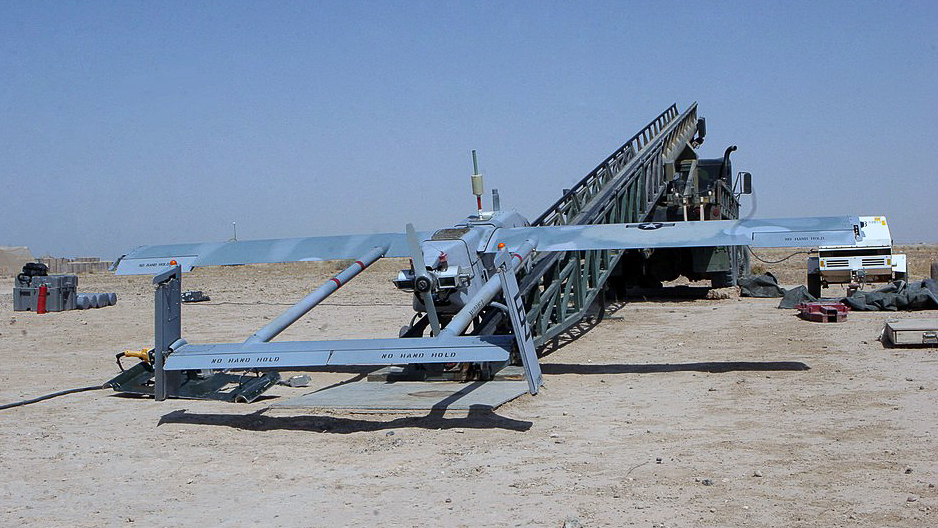
Since 2020, the Defense Innovation Unit has approved a growing list of drones under its Blue UAS program to enable faster acquisition by the Department of Defense. The program’s requirement is simple: any “smart” components capable of transmitting data cannot be sourced from adversarial nations like Russia, Iran, North Korea, or China. Yet a Nov. 20 DefenseScoop investigation revealed that “the majority” of drones on the trusted list still contain parts manufactured in China.
These components, motors, batteries, and electronic speed controllers, were initially deemed low risk because they were considered “dumb” parts with no data-storage function. But as members of the special operations community point out, that logic no longer holds.
Jack Barry, a member of the Special Operations Association of America’s Board of Advisors and a former 160th Special Operations Aviation Regiment pilot, called the assumption “appallingly misguided.” Believing it is safe to source such components from China, he argued, reflects “Global War on Terror thinking in a post-GWOT world.”
Daniel Elkins, SOAA’s Founder and President, echoed the concern. “In a high-end conflict, supply chain resilience is a critical component of combat power,” he said. “It doesn’t matter if the component doesn’t store data. What matters is that those same components would become chokepoints controlled by a potential adversary who would undoubtedly cut off exports and ground entire U.S. drone fleets.”
Barry added, “I’d rather have fewer drones built on U.S. or allied supply chains than to build a force on components that will undoubtedly vanish the moment we need them most.”
Incentivizing U.S. Production
China’s parts are not cheaper because of superior innovation, Barry noted, but because of Beijing’s industrial strategy. “The Chinese government subsidizes inputs, controls labor markets, and directs capital at a national scale,” he said. While he stressed that America should not mirror that system, he called for a form of “military-civil fusion” that is incentivized, not commanded.
To shift production, he argued, companies must receive predictable, long-term demand signals and multi-year procurement commitments. Incentives should include production tax credits, accelerated depreciation, advance purchase agreements, and federal support that de-risks factory investments.
Elkins added that reducing regulatory burdens and improving workforce pipelines is equally critical. Without it, U.S. firms attempting to build domestic supply chains will continue to face scaling bottlenecks that slow production and weaken national security.
Drone Acquisitions Taking Off
The Pentagon has begun addressing shortcomings in drone capability more broadly. On June 10, Secretary of War Pete Hegseth issued a memorandum stating that “units are not outfitted with the lethal small drones the modern battlefield requires,” and directed the Department to accelerate acquisition of U.S.-made systems and expand drone training for troops.
Special operations units are already responding. On Nov. 17, Task & Purpose reported that Naval Special Warfare Command is seeking contractors to deliver a 10-day course teaching Navy SEALs how to build, repair, and deploy first-person-view drones, complete with live-fire iterations and a final exercise.
Meanwhile, Air & Space Forces Magazine reported that Air Force Special Operations Command signed a $50 billion contract with Anduril Industries to support the Adaptive Airborne Enterprise (A2E) initiative. Through A2E, AFSOC intends to use long-range drones to deliver smaller drones deeper into the battlespace. During a 2023 demonstration, an MQ-9A Reaper successfully launched an Altius 600 system.
According to Anduril, the Altius-600 can conduct ISR, SIGINT, or electronic warfare missions at ranges up to 375 kilometers, while the Altius 600-M carries a 9-pound payload out to 160 kilometers.
Yet even while U.S. drone capability is expanding, the underlying supply chain remains deeply tied to China. And that vulnerability is already being tested.
Real-World Pressure on the Supply Chain
In 2024, Beijing sanctioned several U.S. defense firms, including Anduril—for selling drones to Taiwan. The move triggered a scramble among American manufacturers for alternative battery suppliers, according to a senior defense official quoted by DefenseScoop. Despite the sanctions, Anduril delivered the first Altius 600-Ms to Taiwan’s Army in August, capable of striking targets within mainland China.
These disruptions preview how quickly a major conflict could sever American access to Chinese-made components. If the United States fails to rebuild its industrial base, current procurement pipelines could become operational liabilities at the exact moment when drone demand surges.
Financing the Fix: Capital as a Countermeasure
One part of the solution is already emerging from the private sector. Firms such as Leonid Capital Partners are channeling targeted financing into U.S. defense companies that manufacture both systems and critical components inside the United States, directly reinforcing domestic defense supply chains at the production and supplier level.
A clear example is Skyways, a U.S.-based autonomous aircraft manufacturer specializing in long-range, heavy-payload unmanned systems for defense and government missions. With design, integration, testing, and production centered domestically, Skyways is making deliberate efforts to transition motors, batteries, airframes, and other subcomponents to trusted U.S. and allied suppliers as it scales.
Leonid’s model, providing private credit explicitly aimed at domestic production, helps early-stage and mid-sized defense companies move from development to full-scale production. By directing capital toward U.S. manufacturing of the components most often sourced from China, investors are helping close the industrial gap that leaves the Pentagon vulnerable to adversary-controlled chokepoints.
This approach complements, rather than replaces, federal procurement reform. Public policy signals demand; private capital accelerates capability.
Conclusion: Closing America’s Drone Vulnerability
The United States cannot afford a drone ecosystem built on components that may disappear the moment a crisis begins. The Pentagon, industry leaders, and private financiers are making progress toward a more resilient industrial base, but the gap remains urgent. China’s dominance in critical subcomponents is not theoretical; it is a present and growing liability. Building a secure future for American drone warfare means doing more than buying U.S.-assembled drones; it means ensuring that the parts inside them come from a supply chain that will survive the next conflict.