
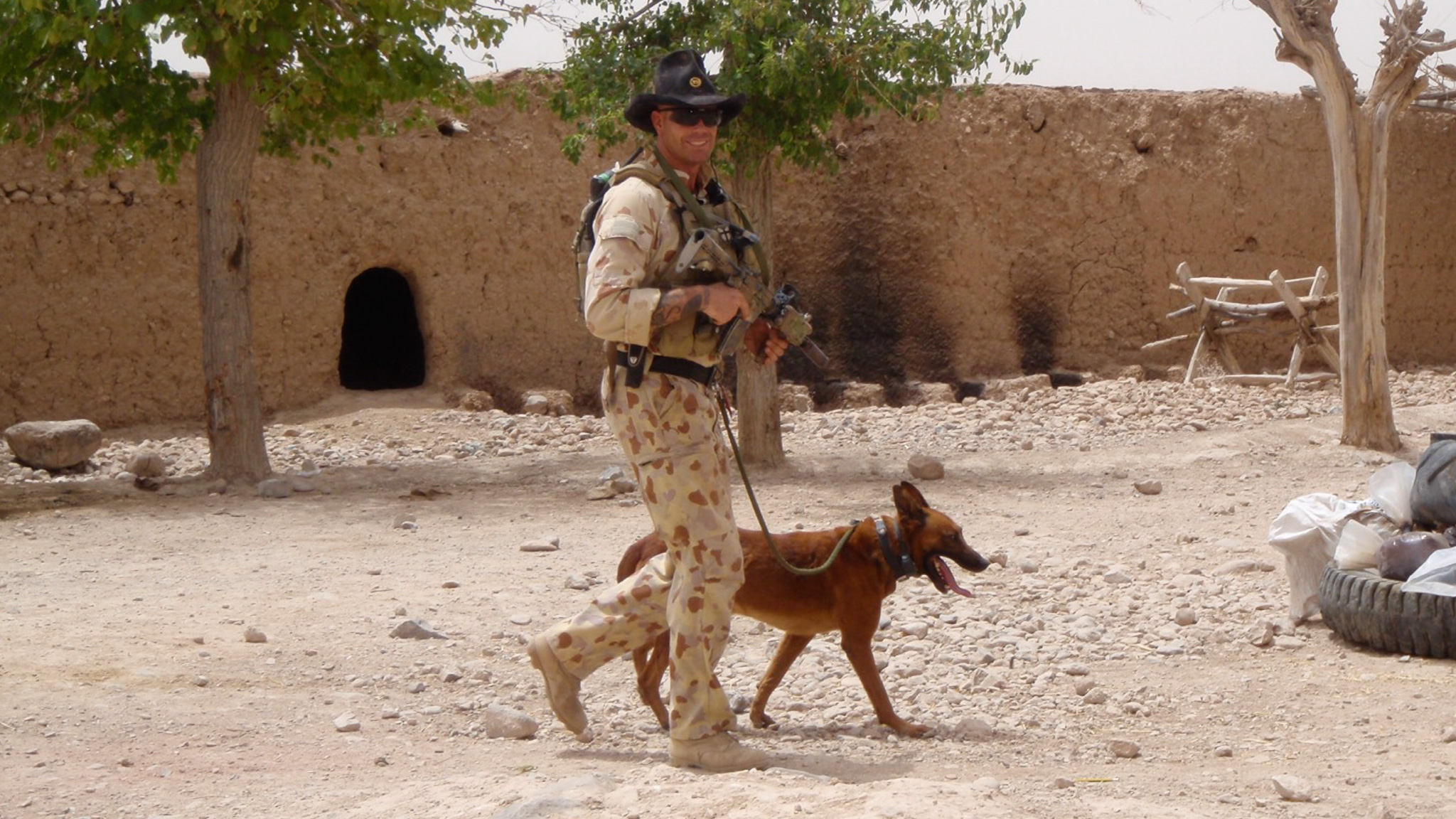
When he left the Australian Special Air Service Regiment (SASR), Andrew ‘Horse’ Hudson struggled with isolation and mood changes likely linked to traumatic brain injury. After turning to drug use, Horse has found that ibogaine helped him return to life without the burdens of substances and traumatic brain injury.
Horse told SOAA about how he is using his hard-won clarity and composure to help advocate for his fellow veterans, whose rights and reputations have been under attack from Australian leadership.
 Impact from Decades of Service
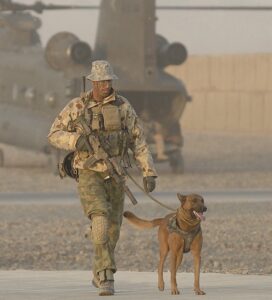
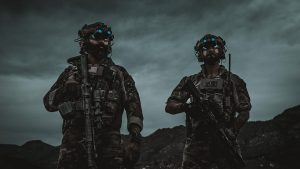
Horse joined the military in 1993. He departed in 2015 after 22 years of service, including 13 years with SASR. During his time in SASR, Horse went on six tours in Afghanistan and two in East Timor.
In response to politicians who now lament the frequency of SASR deployments, Horse says that “that’s kind of what you join up to do.” He added that “When we’re downrange, actually it was almost a rest because when you’re home in the teams, you’ve got counter-terrorist duty, you’re on training, or you’re training other people and it’s quite intensive. Even when you’re home, you’re not home.”
After leaving the service, Horse took on work in the UAE. Unsatisfied by the isolation he felt as a foreigner there, he then moved to Sweden to be with his daughter. Again, Horse’s tendency to isolate himself “became a bit of a problem” and eventually turned into a “slippery slope downhill” when tried smoking methamphetamine six years ago and found himself in a prison cell in Stockholm.
A steady upswing over the last year came after utilizing psychedelics and seeking treatment for traumatic brain injury (TBI). “It’s taken me a while to get back, and I’m still regaining my capacity and composure,” Horse explained.
Part of the progress has come from TBI support. “I think anybody that’s been through the [special operations] pipeline just about anywhere in the world is automatically in the risk category for TBI,” Horse said. He took part in an Australian TBI program loosely based off of an American TBI protocol that takes a multi-modal approach to countering the impacts of overpressure and explosion exposure. “You get your MRI, and you sit down with your neurologist,” he explained, in addition to going through a sleep study, and seeing a psychiatrist, occupational therapist, physiotherapist, speech pathologist, and pain specialist. After overlaying all their findings, the experts come up with commonalities to address.
Horse paired that advice with support from psychedelics. At first, he tried using ayahuasca several times. He likened the experience to “a slap to the face.” Horse then went through two separate assisted trials with ibogaine, which he says was more like “a baseball bat to the head.”
Unfortunately, Horse’s first ibogaine experience did not involve enough integration to make a lasting impact. Horse said that the organization he went through to administer the psychedelic was like “a production line,” a “get you in, get out, and don’t let the door hit you on your ass on the way out kind of experience.”
During his most recent use of ibogaine, practitioners did testing to see how Horse metabolized an initial dose of the medicine before administering a larger dose. Horse was intended to receive a final booster dose at the end of his treatment, but after coming down with pneumonia, he had to leave the treatment program early. He says that the medicine he did receive was enough “to do a job.”
“I’m clear in my head. I can put words together,” he explained. “It’s not a magic bullet,” Horse says of ibogaine, “but it is certainly an accelerator. Twenty to thirty years of psychotherapy and SSRIs would definitely not have achieved this, and you’re still buggered and just treading water.” In fact, Horse believes that had he not received ibogaine, he was likely to have “died from some sort of misadventure, due to my poor lifestyle choices,” like drinking and engaging in risk-taking behaviors.
Thanks to ibogaine, Horse says that he has the capacity to reconnect with the people in his life who he had isolated himself from during his post-service struggles.
Part of that reconnection involved advocating for causes that impacted his fellow veterans, especially the ongoing fallout of a war crimes investigation, and a recent governmental attempt to curtail veteran medical benefits.. “I couldn’t have done this advocacy…I wouldn’t be sitting here having this conversation without the ibogaine,” Horse emphasized.
 Bravery and Betrayal
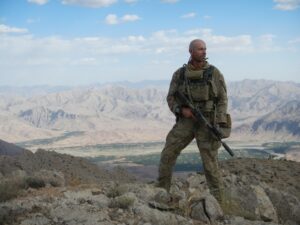
In 2016, the Inspector-General of the Australian Defence Force undertook an investigation into supposed war crimes committed by SASR personnel inside Afghanistan between 2005 and 2016. The results of the findings were released in the Brereton Report in 2020 and included findings that Australian Special Forces personnel committed a “disgraceful and a profound betrayal of the Australian Defence Force’s professional standards and expectations.” 25 current or former members of the Australian Defence Forces were identified as possibly executing 39 civilians or prisoners in Afghanistan.
An Office of the Special Investigator was established in November 2020 to investigate the incidents found in the Brereton Report. As of 2025, the Australian government had allotted $318 million for the investigation. By April 2026, two soldiers had been charged with war crimes, including the most highly-decorated Australian veteran, recipient of the Victoria Cross Ben Roberts-Smith, was charged with five counts of murder for his actions as a former corporal in the SASR. Charges relating to 39 of 53 cases involving alleged war crimes have been dismissed.
Horse said that the impacts of the Brereton Report have been serious for SASR veterans and active duty military personnel. “The circumstances around their charges are quite spurious,” Horse says. “I don’t expect that there will be any convictions. It’s just that lives are being torn apart and impacted in the meantime.”
To tell a different story about the heroism of Australian operators, Horse and other SASR veterans banded together to film documentary Bravery and Betrayal, which tells of the SASR’s service in the Global War on Terror and how families of fallen SASR members have been impacted by their deaths.
Among issues addressed by the Brereton Report was a small SASR bar called the Fat Lady’s Arms, where Horse said that SASR operators “go out, have a beer or two,” and “discuss the trials and tribulations from their work week, unwind, and have a safe place” for conversations.
The investigation decried the existence of the Fat Lady’s Arms. “We’re owning the Fat Lady’s Arms and saying it’s actually a good thing,” Horse explained. “We don’t have sex scandals or anything like that coming up…we’re owning everything that occurred there.”
While senior leaders have denied knowledge of the bar, Bravery and Betrayal demonstrates that it was known to numerous senior-level personnel, including a former prime minister who “admitted on film…to having a drink at the Fat Lady’s Arms.”.
Another major contention that SASR personnel have with the results of the Brereton Report is that senior leaders have been relieved of any blame of war crimes allegedly committed by personnel in their chain of command. “That’s called abrogation of command,” Horse said, “Where you divest yourself of all responsibility, even though you’re in charge.”
Ongoing investigations following the Brereton Report have also impacted morale among service members, Horse reports. “I’ve spoken to a lot of guys that are still in and they’re like ‘What the hell, man, if they can [do this to] Ben Roberts-Smith…what are they going to do to the rest of the folks?’”
Horse said that it is the “unique nature of service” that operators go downrange and “put their life on the line, trusting that the hierarchy and the government have got their back, and no matter what happens downrange…you and your family will be looked after in extremis.” Now, he explained that “in the back of their head,” service members wonder “if I pull this trigger, what am I going to get?” He says that “that hesitation will potentially cost their lives,” causing people to leave the defense force.
 Veteran Healthcare Advocacy
In May, the Australian government created a budget proposal that would have saved about $750 million over three years by placing a cap on allied healthcare services compensation for military veterans. Going forward, veterans would have received just $5,000 in compensation for certain medical costs they incurred. Horse says this would have included costs from visits to chiropractors, physiotherapists, psychologists, or occupational therapists.
Horse was among the veterans leading the charge for change. “You’ve got some pretty damaged people who will burn through that [$5,000] in two to three months,” Horse said. He was motivated to stand up for his fellow veterans by the words of the great philosopher Plato, who wrote in his infamous The Republic that “The price good men pay for indifference to public affairs is to be ruled by evil men.”
He reported that when he headed to Parliament to talk to members, the opposition parties were happy to take up the cause of angry veterans, which is “a bipartisan issue.”
Horse is grateful that the $5,000 cap has recently been put on hold due to the impact of lobbying.
He also reports that he found “an interesting dynamic” while visiting members of Parliament. “You walk into the office, you see all this ‘Save the Whales,’ or ‘Ban Nuclear,’ and think, ‘I’ll be in the Greens’ office now.’” The relationship makes sense to Horse, however. “They’re all about fighting injustice, and so we connect on that level that they want to stop injustice.”
At one anti-war representative’s office, Horse says he “actually did grab an anti-war sticker, because as a veteran and somebody who’s been to war, I’m now not keen on war. I call it the dichotomy of a veteran, of the warrior. As a young fellow, you want to go to war, and I’m totally grateful that I got the opportunity to go and do that and serve my nation and scratch the itch. But now I’m against war.”