
U.S. Army Command Sgt. Maj. David Zeek never set out to climb to the highest echelons of the institution when he joined the U.S. Army Reserve in 2004. He was simply looking for a smart way to pay for college. But by taking every opportunity that presented itself to him, consistently pursuing excellence, and never turning down a challenge, he found himself equipped and in the right place to take on incredible tasks: joining the Rangers on tactical raids as an enabler, driving motorcade vehicles with the White House Transportation Agency, and earning a spot in the prestigious Army Congressional Fellowship Program.
Zeek tells SOAA about the journey that brought him here.
Joining the Army Reserve
When a 17-year-old Zeek began looking at his future, he knew that there would be no family money or scholarship funding to help put him through college. He also knew from a friend who had previously entered the U.S. Army Reserve that the Army would pay for his higher education in exchange for several years of service to his country.
During the summer between his junior and senior year of high school, Zeek went to his local Army Reserve Center and told the recruiter there that he would like to be part of the military police (MP). The recruiter advised against it, telling Zeek that the closest MP station was in Georgia, about six hours from his home in DeLeon Springs, Florida. Instead, he suggested that Zeek become a transportation management coordinator, a military occupational specialty (MOS) 88N, whose Reserve Center was a short drive from his home. Thinking that the ability to coordinate the movement of people and equipment by land, air, or sea would serve him well in civilian life, Zeek happily took the offer and began preparing for his Army future.
After graduating early from high school in January 2004, Zeek attended boot camp with his mother’s permission at age 17. He celebrated his 18th birthday at Fort Knox, and returned home in time to wear his dress uniform to prom, which he says was his “first real moment of feeling proud to serve.”
Zeek soon mobilized to Fort Benning to prepare for his first deployment to the Middle East in support of Operation Iraqi Freedom. As a new private, he caught his first glimpse of two Army Rangers wearing immaculately starched, pressed uniforms and spit-shined shoes. Though he felt that they emulated everything soldiers were supposed to be, Zeek sensed that their level of prowess was “completely out of reach.”
In the fall of 2004, Zeek deployed to Qatar, where he facilitated transportation movements. Towards the end of his deployment, Zeek pushed forward to the border between Iraq and Kuwait and got his first experience with “the excitement of combat.” While Zeek pulled 12-hour guard shifts in the blazing sun, a nearby guard tower received incoming fire. Later, an improvised explosive device detonated within earshot.
Soon after returning home, Zeek competed for sergeant. Though he was just 19 years old, he received the promotion because his Physical Fitness Test (PFT) score helped him edge out the lead over the remaining three candidates.
While continuing his Reserve career, Zeek’s full-time attendance at community college and construction job were put on pause during a deployment to Kuwait in 2007, where he spent a busy year helping to load and unload ships as new Mine-Resistant Ambush Protected (MRAP) vehicles surged into the battlespace.
The deployment changed something in Zeek. He came home wanting more than just another rotation. He wanted real leadership experience, and to be surrounded by people who were “squared away.”
Shortly after being promoted to staff sergeant at just 22, Zeek was placed in charge of a section. Because he was so young, he felt the need to establish himself in the role, and had a lot of assistance from a female platoon sergeant who showed him how powerful empathy can be when leading soldiers.
As Zeek gained more experience and rank, he realized that his deployment cycles were interrupting his schooling. He decided to put in a packet to switch to active duty and focus on his military career.
 Finding Special Operations Forces (SOF)
Zeek’s first active duty station was in South Korea, where he was an instructor for the Basic Leader Course at Camp Jackson.
While stationed overseas, Zeek and a friend attended a special operations career fair. At the Rangers’ table, Zeek’s infantryman friend was told that the Rangers were “fully stocked” for the 11B MOS. When they learned that Zeek was an 88N, however, the Rangers told Zeek, “We need logisticians.”
Zeek said he eagerly “took the door that was open” and applied.
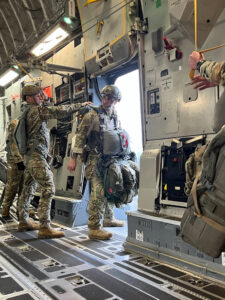
In 2010, Zeek left for Fort Benning, where he completed Airborne School in July and went through the Ranger Assessment and Selection Program (RASP) in August in the “brutal” Georgia heat.
The Rangers have a unique system that forces leaders to go back through RASP before taking command of a larger unit. While he went through the course, Zeek’s classmates were platoon sergeants and first sergeants with Silver Stars and “mustard stains,” the bronze star devices that signify the wearer has parachuted into a combat zone. “It was the first time that I was actually around barrel-chested freedom fighters,” Zeek said. “It felt very vulnerable…being a little transportation guy.”
Once he finished the course, Zeek reported to 2nd Battalion, 75th Ranger Regiment (2/75), where he would be in charge of the entire battalion’s logistics, moving weapons, ammo, and cargo for training exercises and deployments.
Because every member of the Ranger Regiment is a Ranger first and their MOS second, Zeek’s new first sergeant told him in no uncertain terms that he “didn’t care that I passed RASP. If I didn’t get my Ranger Tab, I was out. That set the tone immediately,” Zeek said. “Nothing here was permanent until you earned it.”
After finishing the Advanced Leadership Course, Zeek headed to Ranger School. He was recycled during the first phase of the program, but graduated in spring 2011.
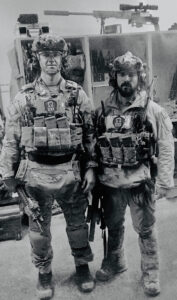 Deploying with the Rangers
Zeek’s next deployment arrived soon after Ranger School. The Rangers’ loadout process was “strikingly streamlined” compared with the conventional standard, with minimal in-processing for the gear that was loaded onto a C-17 and shipped off to Afghanistan’s southern Helmand province in 2011.
On the ground, Zeek was the assistant camp commandant for Forward Operating Base (FOB) Bastion, which essentially made him “FOB Mayor.” Though charged with supply upkeep, food needs, and keeping up with busted air conditioning systems, he ended up with a “dual role,” and found himself on a high-value target direct action raid, embedded with a Ranger infantry platoon.
Between 2011 and 2019, Zeek went on eight Afghanistan deployments with the Rangers: five with the 2/75, one with Regimental Headquarters, and two with 3/75. Having such diverse experiences throughout the community helped Zeek “build deep relationships” and gave him leadership lessons that he continues to use today.
The path was not always smooth, however.
When he was promoted to E-7, Zeek had to attend U.S. Army Jumpmaster School. When he failed on his first attempt, Zeek was concerned that he might be kicked out of the Ranger Regiment. Ultimately, he was able to pass the course.
Zeek returned to RASP a second time in 2016 as he prepared to take over as first sergeant for Echo Company, 3/75, in 2017. His final deployment came in 2019. Still serving as Echo Company first sergeant, he would be based out of Bagram Airfield as the task force J4 sergeant major. In that role, he supported every Ranger element operating around Afghanistan, along with other SOF units, ensuring their logistical needs were met so that operators had everything they needed to conduct night raids on the enemy.
From there, he made a single trip out to FOB Chapman as the “fund guy,” paying for construction work alongside a small Ranger team at the FOB. During his one-week stay, which was extended due to bad weather, Zeek went out with the Rangers on two “unorthodox” raids.
For one mission, Zeek was transported by a Russian Mi-17 helicopter with Afghan partner forces to a location from which they moved into a village under nightfall. For hours, as Afghan forces moved through the village, Zeek could hear women and children crying out from inside the walls. He says the moment “stayed with him,” reminding him even after years of deployments of “the human cost that comes with every mission, regardless of which side of the wire you’re standing on.”
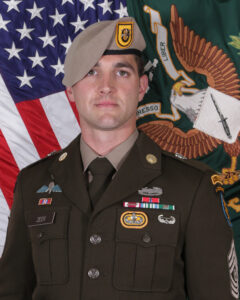 Rising through the Ranks
After his return to the States, Zeek had to decide whether to compete for sergeant major. His regimental sergeant major urged that he wait to compete until an opening for his MOS appeared in the Ranger Regiment.
Zeek went against the advice and competed for the Sergeants Major Academy outside the regiment. He had not expected to be successful, so it was a surprise when a friend called to notify Zeek that his name was on the selection list.
In summer 2019, Zeek departed the Ranger Regiment to attend Sergeants Major Academy.
The experience was shocking for Zeek, who said that it was “genuinely hard to relate to people at the Academy after Ranger Regiment culture.” Though he “got exactly what I was chasing,” Zeek says that in hindsight “it just cost more than I expected.”
Zeek’s follow-on role forced him to make a permanent change of station (PCS) to Kuwait, where he spent ten months “in the rear with the gear” with a transportation command battalion. Though it was a struggle to be overseas with his wife pregnant in the States, “it all kind of came together” when Human Resources Command reached out to see whether Zeek would like to compete for a role at the White House Transportation Agency (WHTA).
When Zeek interviewed and was accepted for the position, he became part of the only U.S. Army unit with responsibility for directly supporting the president and the First Family. Zeek wore a suit every day during his 13-month assignment, which required that he be specially cleared to be within arm’s reach of the president.
As a WHTA member, Zeek had full access to the White House, with the exception of the residence, as well as a constant string of “no-fail” missions that required punctuality and perfection. Wherever the president traveled and lodged, WHTA staff did, too. The agency had responsibility for managing presidential and staff luggage on Air Force One, for vetting motorcade drivers, and for driving top White House staff, excluding the president, around Washington, D.C.
Zeek’s WHTA tour was stopped short, however, when he was command-selected as command sergeant major (CSM) of the Group Support Battalion for First Special Forces Group. In 2022, he left for Fort Lewis to take on the role and wound up traveling across the U.S. Pacific Command (PACOM) area of operations to support the needs of a battalion with 60-70 different specialties.
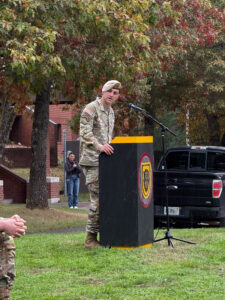
Zeek took leadership seriously, continuously accompanying his soldiers on PT and training events. “I never wanted to be a CSM who led from behind a desk. I wanted the soldiers to see me sweating next to them,” he explained.
He also followed in the footsteps of his mentor from the 3/75 when creating his own “NCO University,” which consisted of a week of staff rides, history lessons, seminars on leadership, and counseling classes.
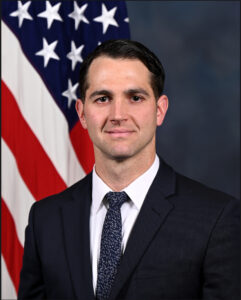 Army Congressional Fellowship Program
During his CSM tour, Zeek applied for the Army Congressional Fellowship Program. His first application was denied, but on his second attempt, Zeek was accepted into the prestigious program.
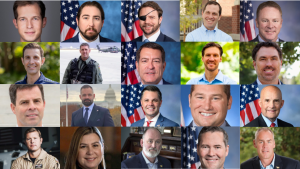
Zeek spent his first year of fellowship going to graduate school at George Washington University for legislative affairs. Now in his second year, he is working for Rep. Cory Mills (R-FL), who holds roles on the House Armed Services Committee and House Foreign Affairs Committee. Zeek reports that he and Mills “definitely get along” because of their shared experiences as NCOs, with Mills having served in the U.S. Army’s 82nd Airborne Division.
Zeek acknowledges that in some ways, Congressional work is akin to enabler support to the special operations community. While Zeek says that “the guys kicking the doors…should get all the credit,” he also says that there is “a whole large formation out there that goes unseen. And they’re professional, and they get all the beans and bullets and take care of the operator without any of the light being on them most of the time.” In the same way, Zeek says he makes sure to give credit and thanks to the individuals behind the scenes on the Hill who write legislative bills and do the groundwork on behalf of members of Congress.
Zeek expects he will spend the next few years of his fellowship working on legislative issues for the Army, and plans to transition out of the military by the end of 2028.
He explained that from the beginning of his career, he never “set out to become a Ranger or a command sergeant major,” but that he spent 22 years “saying ‘yes’ every time a harder door opened.”
He attributes his success in reaching these high-level leadership positions to the leaders in the special operations community who he says are “second-to-none,” teaching Zeek about how to cultivate emotional intelligence and humility while maintaining a no-nonsense, type-A mindset. “Definitely they molded the person who I am,” he explained. “Not only the soldier but the father and husband.”