
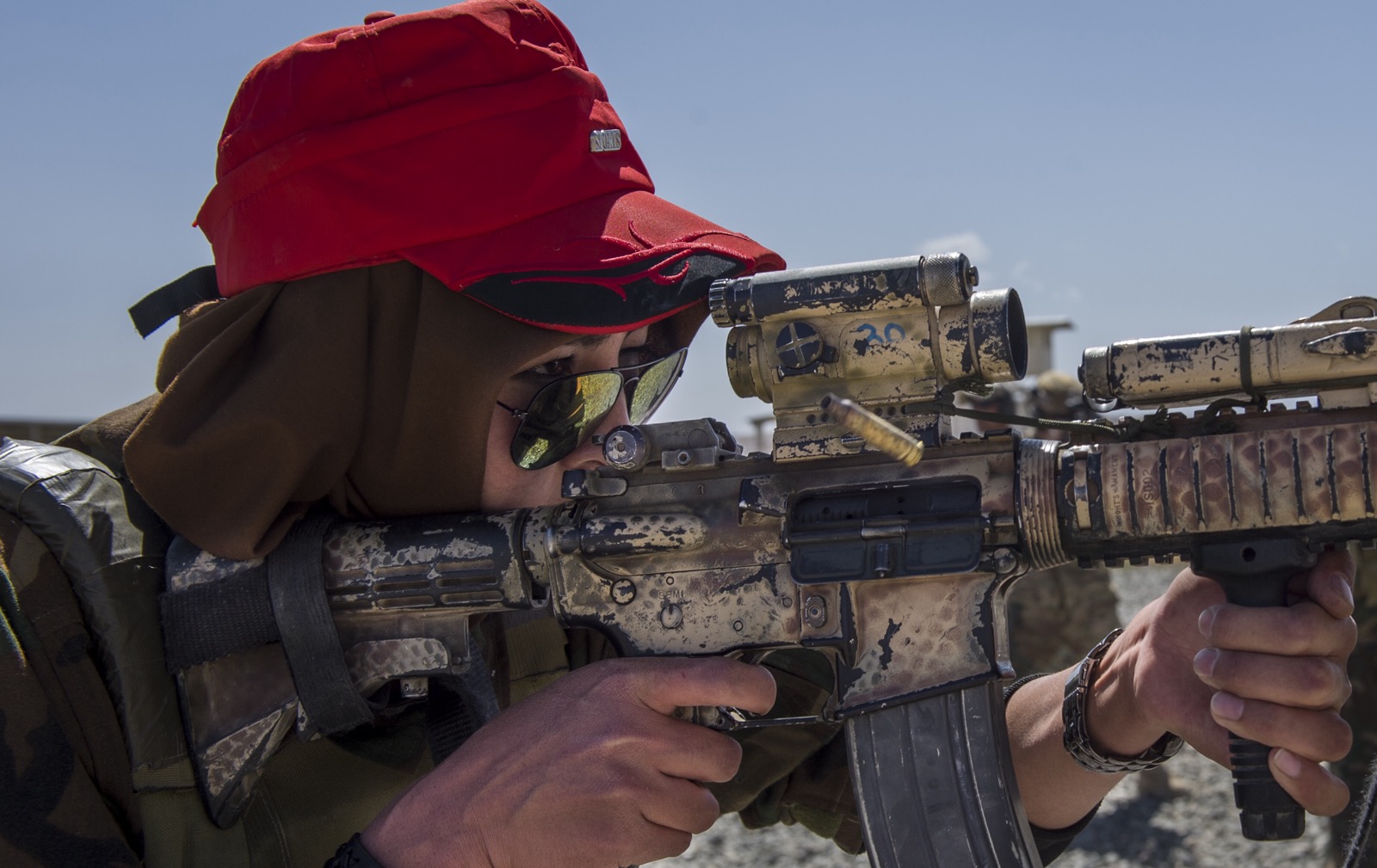
After serving in her country’s most elite female special operations unit, Afghan Farida Mohammadi wants to continue serving the country that gave her refuge when Afghanistan’s government collapsed five years ago. But half a decade after departing her homeland to avoid murder at the hands of the Taliban, Mohammadi lacks the green card that would allow her to raise her right hand in a promise to support and defend America.
Farida and several special operations forces (SOF) veterans are continuing to fight for our closest allies to achieve lawful permanent residence inside the U.S. They spoke to SOAA about why America must keep its promises to her allies, particularly Afghan female SOF personnel.
Creating the Female Tactical Platoon
For a decade, SOF personnel seeking out high-value targets inside Afghanistan were stymied by easily exploitable cultural barriers that kept them from interacting with more than half the local populace.
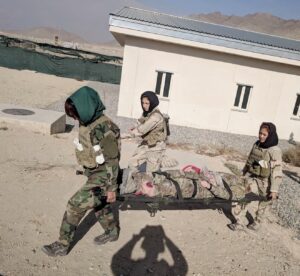
The formal answer to the conundrum was not created until 2011, when the U.S. military began formally training women for Cultural Support Teams (CSTs) designed to augment SOF units on direct action missions and in village stability operations. Following the CST’s success, an additional task was created for some CSTs: training a new cadre of Afghan women to join the Afghan Ktah-Khas special operations forces as part of the Female Tactical Platoon (FTP) starting in 2012.
Farida Mohammadi Answers the Call
Mohammadi grew up in a remote village of Afghanistan where she says she “witnessed a lot of violence against women.” While the women in her village were not allowed to make their own choices for their future, or pursue an education, Mohammadi said that “there was always something in my mind that I want to become a woman who can do something for the society, for the people.”
When Mohammadi was in high school, her sister joined the Afghan National Police. “She always talked to me about her job, about the environment where she worked, and she told me about the uniform, that male and female they wear the same uniform and they do the same job.”
Mohammadi was motivated to follow in her sister’s footsteps and “prove for people that women are strong, too, and they are also smart.”
Getting her parents’ blessing was her first hurdle to joining the military. “Afghanistan is a very traditional society,” she explained, where people “do not let women work outside, especially in military.” Though her parents allowed her to break those norms, Mohammadi said that her relatives tried to talk her parents out of their decision. Her relatives were unsuccessful, and Mohammadi went off to basic training.
During training, Mohammadi said that visitors from the Afghan special operations community came to tell Afghan women recruits about a new unit, the Female Tactical Platoon. Mohammadi decided to join the unit, which was largely populated by Afghan women from the Hazara minority.
Gaining her parents’ acceptance to join the FTP was more difficult than gaining their acceptance to join the military. “It was not good for a woman to be away from home for that period of time,” Mohammadi explained. Though her parents signed papers that allowed her to join the FTP, Mohammadi “had to hide [her participation] from my relatives [and] neighbors.”
Further challenges awaited when Mohammadi arrived at the FTP. Her male counterparts were “jealous” of the FTP members, because “some of them were stronger” than their male colleagues. Some of the men “were surprised that women can do night raids, that they can do all these difficult trainings,” she reported.
CST Support for the FTP
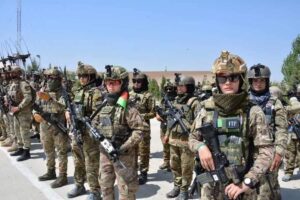
While Mohammadi and her fellow FTP members worked hard in training, Edmondson witnessed the integration struggles – and eventual acceptance – of the FTP members. “It took several years for their male colleagues to not only accept their presence directly on the battlefield, but to also respect and appreciate all that they brought to the fight,” Edmondson said. She explained that it was a profound “dynamic shift” when the male operators “would say, ‘Well, we can’t go out there if there’s not an FTP to go with us. Who will talk to the women and kids? Who will get the intelligence that we need?”
At the same time, Edmondson saw tremendous shortcomings in the system the FTP found themselves inside. “They did not have the same types of policies in place that [the U.S. military does] to protect our service members,” Edmondson explained, particularly citing procedures for resolving issues of sexual assault and harassment. “There was no recourse. There was nothing that could be done if someone was receiving some type of abusive language or physical abuse.”
After four deployments to help grow the FTP, during her last CST deployment in 2016 Edmondson said she “could just see in the long run things weren’t going the way that we all aspired for them to.” During that deployment, she “decided that the ways I wanted to contribute more meaningfully to the lives of these women was to get out of the military, find a workaround, whether that was distance education or working with other global partners to try and find resources and things beyond just training them to shoot or repel out of a 75-foot tower.”
A Nation Falls
Being in the FTP made members “a very important target for the Taliban,” Mohammadi said.
When the Taliban came to power on Aug. 15, 2021, Edmondson and others helped Mohammadi and many members of the FTP evacuate to the U.S. The change was jarring, Mohammadi said. “Suddenly, everything changed and we were not in the military anymore,” she explained. “We got here with just a pair of clothes and a pair of shoes and that was it. We had to rebuild everything here.”
For the FTP members and their families left in Afghanistan, Mohammadi says that the unique paper trail created for FTP members’ fathers and brothers to authorize FTP service ultimately put them in danger. “The Taliban, they already knew about us, but when they took over the government, now they have all this information,” Mohammadi explained. She says that FTP families had to flee to Pakistan and Iran, or change locations inside Afghanistan “because it was very dangerous for them.”
Knowing the dangers her family and countrymen faced while trying to build a new life was difficult for Mohammadi. Every night, she said she dreamed that her family had been arrested by the Taliban. She had taken on work as a roofer, and one day, as she was working atop a roof, she said that her “brain was in Afghanistan,” lost in a memory of a mission she had undertaken in 2020.
While she is grateful to be safe, Mohammadi also explained that she faces difficulties moving forward in her life because she lacks the green card that would give her status in the U.S. Processing of green cards for citizens of 75 travel ban countries, including Afghanistan, was paused in January 2026, putting Mohammadi’s status in further peril.
While she studies business management in Pennsylvania, Mohammadi reports that she and her fellow FTPs “would love to join the U.S. military” to “use our experience that we have learned in Afghanistan.” Without a green card, this is impossible.
Moved to Advocacy
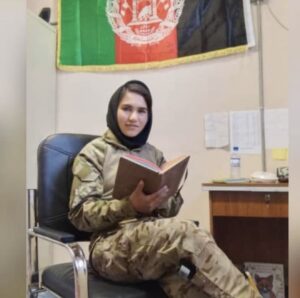
By the time the August withdrawal was underway in August 2021, Edmondson was stateside, feeling helpless and powerless as she watched the devastation unfold. “I had crippling anxiety and all these things wash over me,” she reported. But the work of supporting the evacuation of the FTP required her to “regain and reclaim a semblance of control, and certainly not lose hope.”
Now, Edmondson continues to advocate for FTP members in the U.S. and in Afghanistan through nonprofit NXT Mission. “I would argue there’s no closer bond that can be forged than with people you go to war with. Sharing that bond with individuals like Farida, it makes it impossible for me to detach from the fight and from needing to see…justice taking place.”
The biggest hurdle now is getting green cards for about 40 FTP members who lack status in the U.S. “Not having a green card prevents them from so many things,” she explained, including work authorizations and processing travel documents.
One huge asset in that fight is advocate Michael Scadden, a combat veteran who deployed to Afghanistan in the early 2000s as part of a Special Operations Team Alpha (SOT-A).
Scadden said that there were only “occasionally” women assigned to the special operations teams. “I cannot emphasize enough how valuable [the CST and FTP] would have been from the start,” Scadden said. “That might have had a better impact on a societal level to mitigate the kinds of influence that the Taliban had,” or helped to conceptualize more impactful ways to serve Afghans. “Maybe it would have gone a little differently.”
Scadden says that the chaos of the Afghanistan withdrawal “caught me by surprise.” He found himself thinking about his deployment with the SOT-A, and the time he had taken away from going on mission “to liaise with co-located Civil Affairs unit and start English classes for the local children.” As the withdrawal continued, he was thinking about “what happened to these little girls who would now be college-age.”
In the latter half of August 2021, Scadden holed up in his room for two dark weeks and told his contract that he couldn’t come in for work. Like many other veterans of the Afghanistan war, he said he was “very depressed for a very long time,” until “eventually, I turned that into energy to do something.”
Scadden’s latest effort has been pushing for Congress to support a non-binding resolution to recognize “the extraordinary contributions” the FTP have made. The resolution “simply grants them an upgrade to their immigration status,” which will in turn advance their permanent residency status. “We’re not asking to bypass any kind of vetting,” Scadden said. “We’re just asking for them to become unstuck from a stuck system.”
Scadden emphasized that this is a bipartisan issue that “everyone can get behind. These women are badass. They have fought side-by-side with our special operations forces.” Now, they want to pursue other important paths, including military service, attending college, or becoming doctors and business leaders. Scadden added that “these are future American citizens. These are the American citizens we want.”
Five years after the withdrawal, Scadden, Edmondson, and several FTP members are taking time to speak to Congressional staff about the importance of securing status for the FTP.
Scadden wants readers to know that “every veteran can get involved. Every person who cares about Afghanistan, as citizens and constituents.” Each person who takes the time to reach out to their Congressional representative and Senators to request that they support the resolution to expedite FTP members’ status, makes a difference for the advocates working behind the scenes, Scadden says.
Beth Bailey is a SOAA Staff Writer, podcast host, and longtime advocate for the safe evacuation and resettlement of Afghan allies. She has written extensively on Afghanistan, the U.S. withdrawal, and the ongoing efforts to protect Afghans who supported the United States.