
The chief strength of the SOAA transition initiative, Project Valkyrie, is the passionate team of experts at its helm. Nowhere is this more evident than in the Phoenix Program, which provides transitioning special operations forces (SOF) members with corrective exercise training to help redress service-related wear and tear, and functional medicine support to uncover and treat the complex health implications SOF veterans face.
For the practitioners supporting this initiative, Joshua Pelzl and Jeffrey Topo, PA-C, Project Valkyrie is another aspect of a calling they have long felt to help others through wellness.
Joshua Pelzl – The Grid Training
At his mother’s request, Pelzl declined to pursue his preferred service branch and military occupational specialty, the U.S. Marine Corps infantry, and instead joined the U.S. Navy. Pelzl was a strong swimmer, but when his skills proved inadequate for Naval special operations training, he explained that the Navy “threw me straight onto a ship as an undesignated seaman.” Not challenged by the doldrums of life on the boat, Pelzl leapt at the chance to join a team training up for counternarcotics missions that would involve boarding boats and seizing drugs.
Taking part in counternarcotics missions was “the only time that I was really happy,” Pelzl said, which amplified the misery he felt when having to return to the ship to sweep, paint, and stand watch.
During one of his periods of busy work, Pelzl’s counternarcotics team leader put him through his first CrossFit workout: the notoriously difficult Fran. The series of 21, 15, and 9 repetitions of thrusters and pull-ups, to be completed as quickly as possible, wrecked Pelzl. “I almost threw up and passed out,” Pelzl said. “And I fell in love with it.”
As he accumulated more knowledge about physical training, Pelzl became his team’s fitness liaison. Eventually, he took on a fitness client: his ship’s cook, who said that he wanted to surprise his wife by losing weight. After about three months of training, Pelzl helped the cook drop 30 pounds. When their boat pulled into shore, Pelzl watched the cook walk off the ship. “I see his wife see him, and then make eye contact, and she just started crying.”
“It was the most rewarding thing I’ve ever felt,” Pelzl said. “I’ve been pursuing helping people ever since, in any way, shape, or form that I can.”
Since starting coaching in 2006, Pelzl acquired more formal training in fitness. He has earned an Associate degree in Physical Education, a CrossFit Level One certification, USA Weightlifting Level Two certification, and his Bachelor’s degree in exercise science with an emphasis in strength and conditioning, in addition to accumulating extensive knowledge in corrective exercise. Ever interested in continuing to progress, Pelzl also recently became accredited through the National Strength and Conditioning Association (NSCA) as a Tactical Strength and Conditioning Facilitator (TSAC-F).
When he left the service, Pelzl found that his body was “kind of jacked up.” He also found that his fitness expertise also “helped me rehabilitate myself.”
The impacts of his own hard-charging service have helped Pelzl support operators who come to him through Project Valkyrie. Intensive training and deployment cycles can wreak havoc. With about 60-70 percent of injuries sustained during training, Pelzl says that accumulating injuries often come from “poor programming, poor load management, overuse, and improper recovery.”
Leaving the service is not a remedy for these issues, Pelzl finds. He explained that after veterans get their disability rating and a “see you later,” from the Department of Veterans Affairs (VA), “we have nowhere [to go], and there are multiple injuries that we’re dealing with, multiple pain areas that we’re dealing with.”
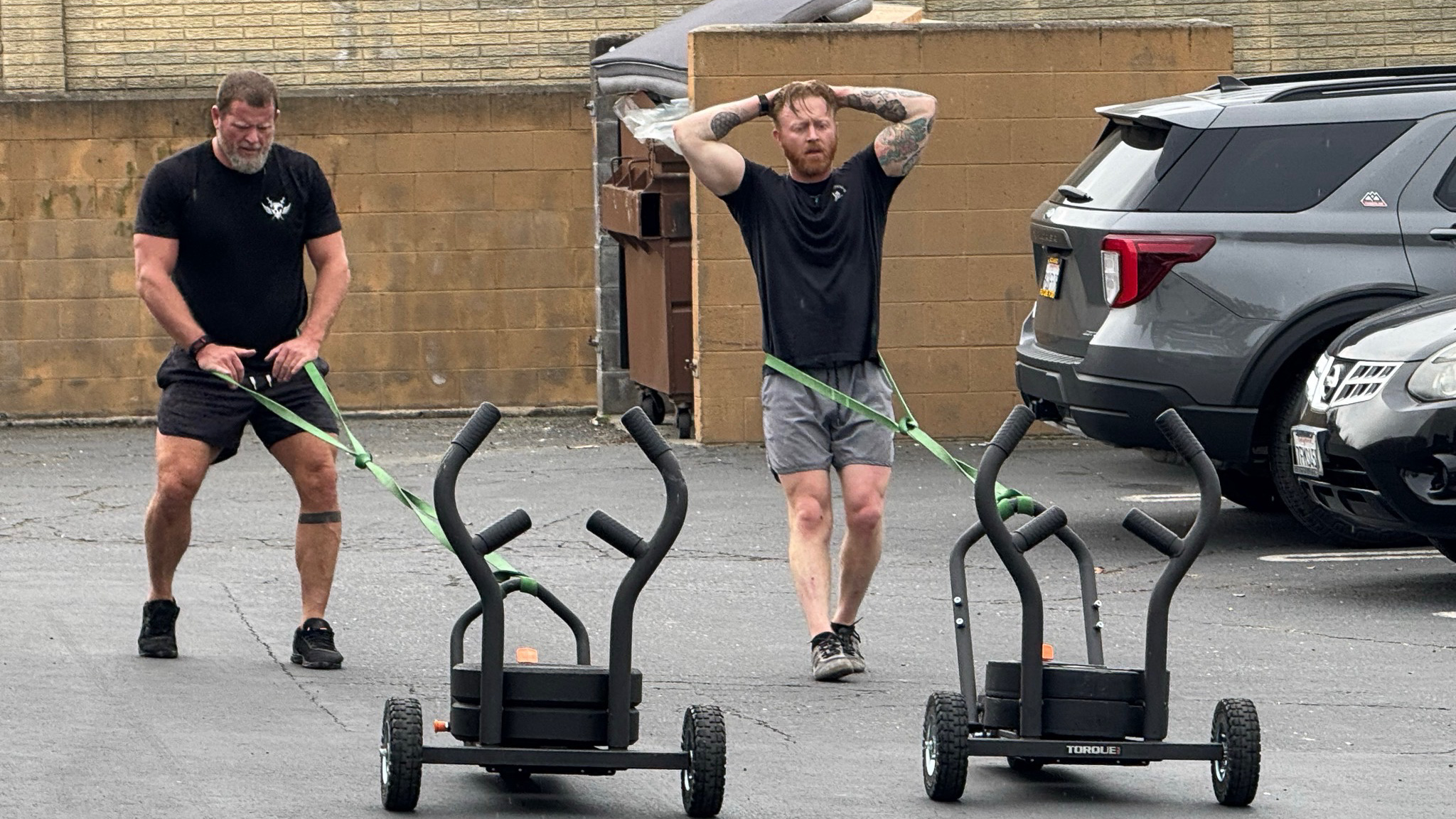
Correctional exercise can help with many of these physical difficulties. In particular, Pelzl says that small tweaks in body position, or dealing with ankle, knee, or lower back instability, can all be rectified by retraining on “slow, controlled movements” that can “improve their actual body function.”
To help Project Valkyrie candidates, and all his clients, find the physical areas where they need improvement, Pelzl is creating a 15-minute assessment protocol to search for the asymmetries in the body that lead to injury. Thus far, this includes testing joints, looking for things like ankle dorsiflexion, and checking muscular endurance. At the end of the assessment, Pelzl intends to give clients a protocol to help them address areas that need improvement. “My goal is to be able to work with them even when they’re not with me,” Pelzl explained, with visual check-ins through FaceTime.
When most veterans, particularly from the SOF environment, come to him, Pelzl says “you don’t really have to worry about getting them stronger. They know how to do all that stuff. You need to worry about getting them stable and re-establishing range of motion to keep them either operational or to keep them functioning with their families when they’re at home and for the rest of their lives.”
Jeffrey Topo, PA-C – Functional Medicine Collective
Topo began working in functional medicine around 15 years ago, and believes that his field is “definitively the future of medicine” if it can cut through “the red tape of what’s limiting this from being a little more mainstream.”
Like many of Project Valkyrie’s members, Topo has deep ties to the group through one of its founders, whose Green Beret father taught Topo the basics of functional medicine. Topo also brings an unmatched passion for the scientific work of treating the underlying ailments that plague his patients. To treat individuals through functional medicine is an iterative process that demands dialed-in metrics and intentional, unhurried time spent understanding a patient’s history and exposures. During a first visit, Topo said that patients should expect to be “spending an hour” going through their history and health needs. “There’s always going to be a constellation of things you’re going to have to go through with an individual in a given position,” he explained.
His work in functional medicine has taught Topo that physical trauma, mental trauma, and environmental exposures can “create unnecessary inflammation in the body.” His job as the practitioner then becomes “creating homeostasis again.”
Prior to working with Project Valkyrie, Topo worked with an operator in the SOAA ecosystem to help him recuperate after intensive deployments to remote locations. He explained that every time his patient returned home, they would work together on repairing any issues that needed addressing so that he could redeploy in top condition.
Project Valkyrie was a logical offshoot of that effort. “I’ve been talking about something like this for years,” Topo said of the Phoenix Program. “We could make a really huge difference with the military and the operators who are high-level individuals.”
Topo said that working with the first cadre of Valkyrie candidates “has been pretty spectacular, because everybody’s got a pretty unique individual story.”
When working with members of Project Valkyrie, Topo says that, as with most patients, he begins his health journey with a detoxification process. “The majority of us are getting exposed to things day to day in our environment that are quite toxic,” Topo said. For military personnel subject to a host of volatile organic compounds, toxins are an especially serious concern.
Inside the body, toxins can impact mitochondria, which generate energy in the body. Eliminating those toxins can be a first step to helping reduce things like fatigue, brain fog, and aches and pains. Using blood and urine tests, Topo can identify accumulating toxins and start a detox protocol tailored to the individual’s needs. Over time and continued testing, those toxins can be eliminated and the destruction they wreak curtailed.
Other body systems are part of complex loops that can easily fall out of line and create complications that radiate. In one example, Topo explained that about 80 percent of neurotransmitters are manufactured in the gut, and most of these are created during sleep. If sleep is interrupted by a disturbed nervous system, then vital neurotransmitters will not be produced. Among the interventions Topo named that could rehabilitate a nervous system in distress and jump start flagging systems were ketamine therapy, breathing techniques, or hyperbaric oxygen therapy. Few of those methods are “really taught in medical schools,” Topo lamented.
Relatedly, when it comes to a diagnosis like post-traumatic stress disorder, Topo says “there are going to be medicines we can use, but how about repairing and rewiring the brain, getting what’s the root cause to come to the surface?” He explained that “what it comes down to is repairing and regenerating. [Patients] don’t just want some sort of Band Aid approach. They want to actually fix it.”
Phoenix Program Evolves
When it comes to Project Valkyrie, Topo and Pelzl are part of a unit. “It all goes in conjunction,” Pelzl said, “having someone like Topo who can tackle the physiology and then having Doctor Tony who can handle the mental aspect of things, and then for me to be able to handle the exercise aspect, from corrective to mobility to recovery.”
Currently, a portfolio company within the Valkyrie Program is working to create an Electronic Health Record system that will allow candidates’ various medical practitioners to connect and work together in support of Project Valkyrie candidates.
That system, in turn, can be acquired by other practitioners working on collaborative efforts to support the whole-body health of clients.
The Phoenix Program aims not simply to help veterans recover from the wear and tear of service, but to equip them to remain healthy, capable, and engaged long after they leave the military.