
As a key component of the Oct. 9 ceasefire between the Israel Defense Forces (IDF) and Hamas, President Donald Trump announced he would create a Board of Peace to oversee Gaza’s reconstruction and an International Stabilization Force (ISF) to train a Gazan police force, secure the Gazan border, and allow for the passage of aid into the Gaza Strip. Upon announcement of the initiative, Trump made a firm commitment that there would be no U.S. boots on the ground in Gaza.
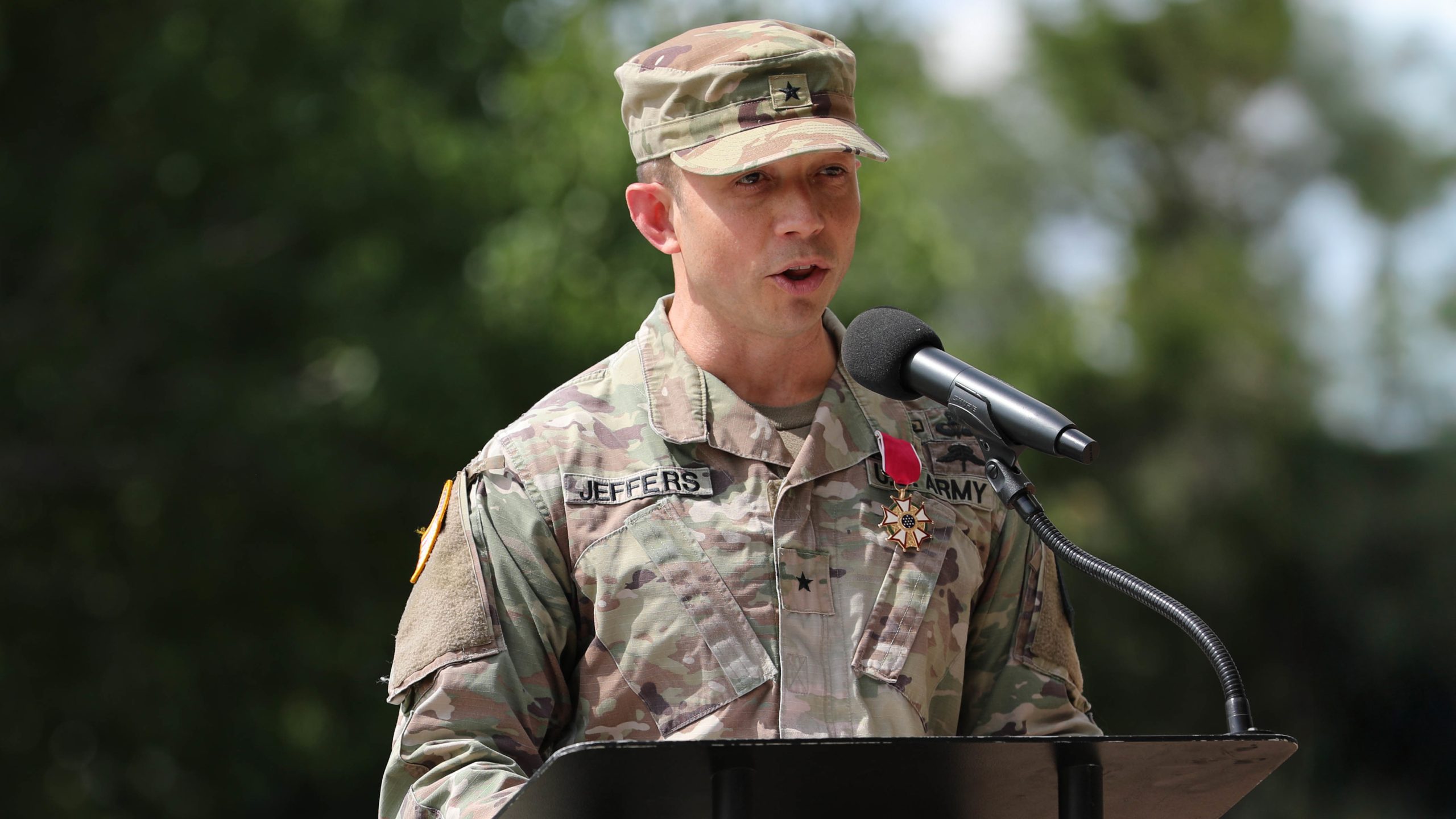
The United Nations Security Council endorsed the creation of the ISF and Board of Peace on Nov. 17. Little headway on either was made until Jan. 16, when Trump began appointing leaders to roles in the organizations. Maj. Gen. Jasper Jeffers, the commander of U.S. Special Operations Command Central (SOCCENT), was appointed to lead the ISF.
In response to the Special Operations Association of America’s questions about what Jeffers’ and special operations forces’ role in the ISF might be, a senior administration official reiterated that “no American boots will be on the ground in Gaza.”
The official said that the Trump administration is continuing to engage with partner nations about joining the ISF and the Board of Peace, as “the path for prosperity for Gaza requires security first.” According to the official, U.S. Central Command (CENTCOM) is developing “plans for the ISF, including their rules for engagement, contributing countries, and the areas of operation.”
The official reported that plans for vetting a Palestinian police force that will work under the Board of Peace and ISF “remain underway”.
Notably, the official noted that the ISF will consist of “two distinct parts:” a police and a military component. They also counted among the ISF’s tasks “supporting the demilitarization of Gaza, dismantling terrorist infrastructure, decommissioning weapons used by terrorists, and maintaining the safety of Palestinian civilians.”
Alex Plitsas, a CNN National Security analyst, former Pentagon official, and the Special Operations Association of America’s Board Director, commended the administration’s choice of appointment, given that Jeffers “was very successful at being in charge of monitoring and overseeing the implementation of the ceasefire agreement between Israel and Hezbollah and southern Lebanon.”
While also praising Jeffers as a “very capable” Major General who is steeped in special operations expertise, Middle East Institute senior fellow Jason Campbell told SOAA he is skeptical about “the whole notion that you appoint a two-star general who, by all accounts, still will not be able to enter the area of operations to lead a mission that is undefined.”
Who Will Participate in the ISF?
Campbell also noted that Jeffers is “commanding an operation that otherwise doesn’t have any firm force commitment.” Campbell suggested that “if you don’t have U.S. forces committed, other countries are going to be reluctant to say ‘well, we’ll take on this operation’.”
To date, there has been little consensus about which countries will send forces for the ISF, despite the U.S. asking 70 countries for participation.
Italy and Indonesia have stated that they would consider sending troops, but only if they had no direct interaction with Hamas. Other countries said they would withhold participation until Hamas was disarmed.
Qatar and Turkey have expressed willingness to participate in the ISF and Board of Peace, with Turkish president Tayyip Erdogan insisting that “it would be difficult for any mechanism without Turkey to gain the trust of the Palestinian people.” Trump has implied that he welcomed Turkish forces in the ISF.
The Foundation for Defense of Democracies expressed concerns about Turkey’s and Qatar’s neutrality, explaining that both countries “have expressed animus towards Israel, funding Hamas and providing refuge for its leadership.” The FDD recommends that the Trump administration should demand both countries expel Hamas officials from their borders as a precondition of their membership in Gazan peace structures, and that Qatar’s participation should require that it formally recognizes Israel’s “right to a sovereign existence as a Jewish state.”
Currently, Turkey and Qatar have representatives named to the Gaza Executive Board, a component of the Board of Peace. This drew immediate criticism from Israeli Prime Minister Benjamin Netanyahu.
On Jan. 19, Netanyahu told the Israeli Parliament that he would not allow Qatari or Turkish troops to enter Gaza.
Hamas Disarmament
Hamas may create complications as the ISF moves forward. The terror group did not return the remains of the final Israeli hostage, Master Sgt. Ran Gvili, as the first phase of the ceasefire outlined in Trump’s 20-point plan required.
The IDF located Gvili’s remains in a cemetery in northern Gaza on Jan. 26. In response to the recovery, Netanyahu announced that Israel was “now at the threshold of the next stage: dismantling Hamas’ military capabilities and demilitarizing the Gaza Strip.”
Hamas, however, says it was not consulted about the creation of the ISF, and never agreed to disarmament.
Hamas is still active in the ‘red zone,’ where 90% of Gazans live on 48% of the Gaza Strip. IDF units occupy the ‘green zone,’ along the Israeli border, with the IDF holding territory up to the ‘yellow line’ that separates the zones.
What Will Special Operations Participation in the ISF Resemble?
The size of the ISF will determine its future capabilities. Though no troops are currently dedicated to the force, estimates of its eventual size range between 6,000 and 20,000. Campbell has reported that a force on the low end of the range “would be completely inadequate to conduct a mission that could skew toward a counterinsurgency.” On the upper end, he still suggested that forces “would not be sufficient to deal with any prolonged resistance.”
Uncertainty about the future effort stymies progress. “[CENTCOM] can put plans together, but the political parameters surrounding what they want to accomplish, and what can be accomplished, haven’t been spelled out,” Campbell explained. As an example, he cited the unlikely outcome of Hamas voluntarily disarming. “What force is going to go in and try to forcibly disarm Hamas, and in so doing, take on the risk of getting its forces killed or injured and also risk killing Palestinian civilians?”
Because so many countries are reticent to join the ISF, Campbell suggested that one incentive for shoring up participation might be to “send a small SOF contingent…that could go largely under the radar, that would be based outside of Gaza, that would provide some sort of training or support to forces that would go into Gaza.” He added that U.S. intelligence, surveillance, and reconnaissance (ISR) support or medevac capabilities might also prove helpful. Campbell warned of the possibility that as assets come online, mission creep may make the U.S. effort “more expansive.”
For now, there are more questions than answers. “At some point, this has to elevate from bumper sticker talking points,” Campbell said.
Plitsas emphasized that the U.S. has already “been providing support in Israel without boots on the ground inside Gaza since shortly after October 7th through intelligence and operational planning support.” He said that a “U.S. command and control element that’s providing potential logistic and operational and intelligence support outside of Gaza can certainly do that without putting U.S. boots on the ground.”
In the end, Plitsas said that “the administration should be commended for the efforts to achieve peace in Gaza after the events of October 7th, but what comes next is dependent upon Hamas and their willingness to be disarmed.“