
The National Defense Authorization Act for fiscal year 2026 includes a directive for the Secretary of Defense to conduct a study into the mental health impacts that operators of remote piloted aircraft (RPA) face due to the unique nature of their work. The study must assess to what extent drone and sensor operators and intelligence support professionals face post-traumatic stress disorder, moral injury, depression, burnout, anxiety, or other mental health conditions while targeting the enemy from afar.
Previous studies have concluded that remote operators face greater mental health stressors than aircrews in conventional combat operations. The Defense Department study would be unique because it will force the department to assess whether it is adequately supporting a community whose contributions during the Global War on Terror have been poorly understood.
Tanner Yackley, a former MQ-9 Reaper sensor operator, told the Special Operations Association of America (SOAA) that the NDAA study is “extremely important right now” because the drone community is approaching the 20-year mark for operations, which means that personnel have spent entire careers engaging in remote operations without formal recognition of the impact of their service.
Looking at the Literature
A 2023 article in the Journal of Mental Health & Clinical Psychology on the “intimate consequences” of remote warfare highlights the “numerous psychological risks” to RPA personnel. Taking into account “two anonymized vignettes” and “48 peer-reviewed articles, 15 published books, and 8 publicly available government/military reports,” the article finds that RPA crew experience “psychological whiplash” from vacillating between surveillance and target engagement. They also face trauma due to “witnessing attacks and resulting injury and death, as well as the loss of attachment to people they have been tracking, grief following the loss of ‘friendly’ forces and allies, and negative emotions tied to the loss of life and property following executed missions.”
Yackley’s personal experiences highlight and provide depth to many of the concerns borne out by the research, including issues with diagnosis of mental health struggles, and pinpointing the elements of RPA work that render it so psychologically taxing.
Nature of Shift Work
Like most RPA operators, Yackley was trained in a multitude of mission sets, including search and rescue, air interdiction, close air support, air-to-surface weapons employments and intelligence, surveillance, and reconnaissance (ISR). “I’ve been over ten years removed and I can still spout off every single doctrine for every single one of those,” Yackley explained, down to the chapter and “the line number.”
Yackley explained that over a decade of operations, he only learned about his next day’s mission “16 hours before” it took place. That forewarning often granted little clarity, Yackley said, describing that he never knew “if [he was] walking into a hot seat” with “a strike on the table,” or if he’d be sitting on a target “literally finger on the trigger” for eight hours.“
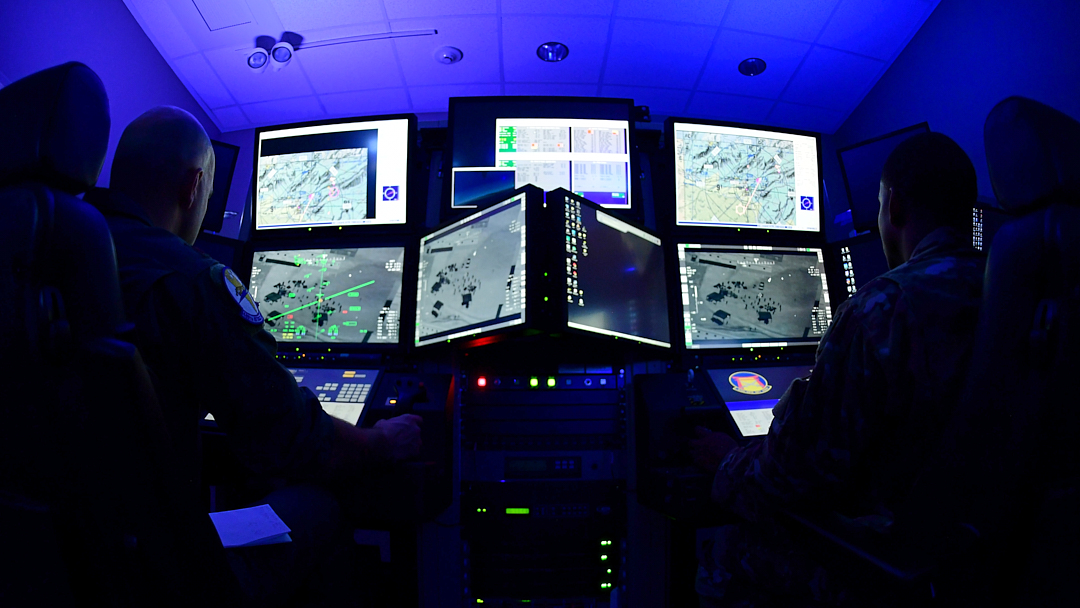
During his shifts, Yackley says he analyzed “eight different screens at once [and] 60-plus heads-down menus,” in addition to “navigating radio calls and navigating multiple mics, multiple keyboards” while controlling the Reaper’s complex camera and ensuring that the aircraft engine and generator were all functioning properly. “You want to talk about cognitive overload, you can’t get more overloaded than this career field,” Yackley explained.
That cognitive overload comes with another complication. Most drone and sensor operators are stationed far from the areas of operations where their uncrewed systems are deployed. “I’m sitting there paying bills and dealing with HOAs,” Yackley explained, “and all of [a] sudden, I’ve got to go in, flip that switch, and now go ahead and execute a mission where my brain is halfway around the world.”
Yackley also explained that there is a lack of oversight on typical rules for pilots, like mandatory crew rest, that would denote how much time an operator could spend running missions. A friend in “one of the most high-tempo units” would “do 12-hour days a lot,” Yackley reported. If there were an important mission on the schedule that required an experienced operator, people would be put on a “seat lock,” which Yackley described as “sitting there until you’re told otherwise…on top of the previous shift of eight to 12 hours” an operator just finished.
Humans Watching Humans
While RPA operators are physically distanced from their targets, the Journal of Mental Health & Clinical Psychology notes that “real-time, high-definition video feeds” increase a sense of connection to the target.
As Yackley explained, operators would “see people’s lives play out. I’d watch a person go and play with their kids, I’d watch a person go hug their wife…[and] feed their goats, and then turn around and the guy walks two compounds over, builds a bomb and then goes and delivers it.” Yackley explained that “we’re not built to do stuff like this, so when you keep doing it over and over and over again, eventually you start changing the patterns in the brain. Especially when you’re seeing somebody be human,” and then “because of this just insane spiderweb intelligence network,” you are told to conduct an airstrike.
Witnessing the aftermath of a missile strike would be difficult, but not as traumatizing as seeing “what the people were doing to each other,” Yackley reported. “That’s the stuff that sticks with you the most.”
The grab-bag nature of shift work in the Reaper meant that Yackley rarely knew which elements he was supporting from overhead. “You’d always kind of figure out” when the troops below were special operations forces (SOF), he explained. “The tactics got real clean, real quick. The people you’re talking to on the ground, they’re moving with a purpose. They’re flanking in certain ways, things like that. Your brain recognizes patterns.”
On one occasion, Yackley described watching over SOF elements as they brought a high-value target to a safe house in the bed of a pickup truck. As the operators in the driver’s seat walked away from the truck, the target made his way into the driver’s seat and “took off, and I’m frantically trying to zoom out and track him,” Yackley said. As the target jumped sand dunes, he eventually got the truck lodged “like a lawn dart” into a dune, just as “the paparazzi” came up “behind him, flying in” to bring the target back to their safe house.
Naming the Impacts
The Journal of Mental Health & Clinical Psychology notes that around “46-48% of RPA operators experienced psychological consequences” that impacted their personal or work life.
Diagnosing these symptoms is difficult, the article explains, because they “span more than one DSM-5 category.” Additionally, the evolving requirements for the particular diagnosis of post-traumatic stress disorder have shifted between the publishing of the DSM-4 and DSM-5. The former required that individuals directly experience a trauma for it to result in a PTSD diagnosis. The DSM-5 now recognizes that incidents can contribute to PTSD if they occur through “indirect exposure to aversive details of the trauma, usually in the course of professional duty.”
Assessing moral injury (MI) is another aspect of drone operator experience that is difficult to categorize. A separate diagnosis from PTSD, MI arises when a veteran or service member engages in or witnesses actions that go against their moral beliefs and ethical values. MI can often co-occur with PTSD, and enhances many of its symptoms, placing a veteran at greater risk of death by suicide and negative interpersonal impacts that can be debilitating, according to the Moral Compass Federation.
In September, the DSM-5 included MI as a Z-code diagnostic category. Z-coded categories, which include illiteracy and homelessness, cannot be classified as mental health diagnoses, but “may be the focus of clinical attention.”
Seeking Treatment
Yackley says that the constant inputs RPA operators manage affect people in different ways. For Yackley, his ten-year career as an operator and trainer has left him with a difficulty with executive decision making. Yackley finds it “hard to prioritize things and keep things online and keep tasks going.” He explained that he knows he “should be doing a task,” but on some days his brain “is not willing,” because “it only wants to maintain critical tasks.”
Receiving help has been difficult. Yackley says that some doctors still believe that operators cannot have trauma because they never deployed. “You spend 25 minutes of the 30-minute conversation explaining what a drone is…how am I supposed to cram that into a 25-minute conversation? Get somebody to understand…that I may have sat with my feet on U.S. soil, but my brain was completely around the world and my brain was deployed?”
Receiving help also harmed Yackley’s ability to maintain the Federal Aviation Administration (FAA) 2nd Class Medical certificate that allowed him to operate the Reaper. Use of selective serotonin reuptake inhibitors (SSRIs) “puts you on to what’s called a non-flying status,” Yackley explained. He said that “most any type of depression, anxiety, PTSD or cognitive overload is treated with some type of SSRI.”
Putting It All Together
Yackley now is working on assembling and disseminating information for remote operators and clinicians on applicable case studies, literature, and resources on the impacts of remote warfare.
While the mandated NDAA study is a good start, Yackley says that “we need a national center,” with “dedicated teams and dedicated support and dedicated pathways” for RPA operators.
As the Department of War formally pursues drone dominance and expands its use of smaller, first-person drones across conventional and SOF military units, it is a vital time to understand how drone employment has impacted operators and prepare to support personnel involved in remote warfare as it becomes more common practice.