
Since its work began in 2009, the Special Inspector General for Afghanistan (SIGAR) has blown the whistle on 1,327 instances of abuse, fraud, and waste and identified $26 billion in wasted taxpayer dollars from the more than $144.7 billion spent on Afghanistan reconstruction. In its final forensic audit, SIGAR collated its oversight findings and shared overarching lessons learned during our war effort with caution against future nation-building efforts undertaken without a full comprehension of a host government’s capacity for success.
While many of SIGAR’s findings will serve as case studies for future conflict response, they also demonstrate how the former Afghan government’s collapse has had ongoing reverberations in the U.S., particularly for warfighters and Afghanistan veterans.
Lost Expenditures
According to SIGAR, the U.S. left behind $38 billion in military equipment and civilian and military infrastructure, with “U.S. taxpayer-funded equipment, weapons, and facilities…form[ing] the core of the Taliban security apparatus.”
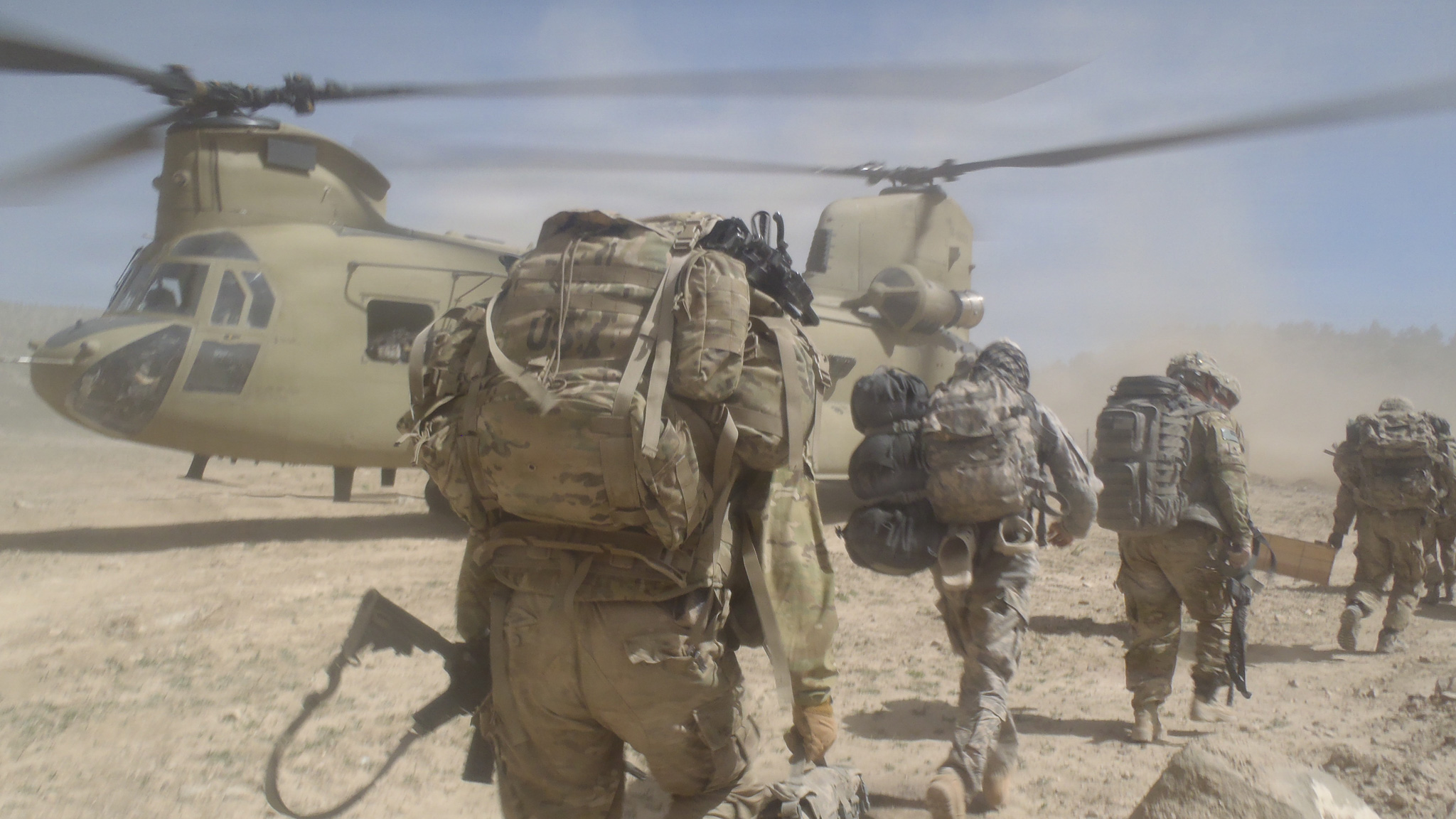
The U.S. spent $19.7 billion on equipment and transportation for the Afghan National Defense and Security Forces (ANDSF), which included buying “96,000 ground vehicles, 51,180 general purpose or light tactical vehicles, 23,825 High Mobility Multipurpose Wheeled Vehicles, nearly 900 armored combat vehicles, 427,300 weapons, 17,400 helmet-worn night vision goggles, at least 162 aircraft, and other items.”
SIGAR estimated that $7.1 billion in ANDSF equipment was left in Afghanistan following the U.S. withdrawal in August 2021.
The Taliban have admitted to the United Nations that half of the equipment left behind is now unaccounted for. U.N. reporting has indicated that local Taliban fighters were allowed to keep about 20% of captured weapons, leading to a “thriving” black market. In the months following the withdrawal, the New York Times described how American pistols, rifles, night vision goggles, and grenades were being sold in markets around southern Kandahar province.
American military equipment has reportedly found its way to unfriendly actors inside and outside of Afghanistan. An Israel Defense Forces officer told Newsweek in June 2023 that some American equipment from Afghanistan was being wielded by Palestinian groups in Gaza. In February 2025, the U.N. reported that al Qaeda-affiliated terror groups had acquired abandoned weapons. A source with access to Taliban leaders told the Special Operations Association of America that some left-behind materiel has been sold to Iran.
With both state and non-state enemies in possession of U.S. equipment, conventional and special operations forces may find themselves facing off against their own systems, or advanced systems achieved by reverse engineering U.S. equipment, on future battlefields.
Infrastructure and Funds in Taliban Possession
SIGAR also noted that the U.S. spent $11.5 billion on construction infrastructure, which included “headquarters, training facilities, and bases or outposts around the country.” The watchdog agency said that about 61 of 90 U.S.-constructed buildings they surveyed appeared to have been maintained since the U.S. withdrawal.
In addition to continuing to provide humanitarian support to Afghanistan following the Taliban’s takeover, SIGAR explained that the U.S. was not able to recover $57.6 million that resided in Afghan government coffers in August 2021. SIGAR said that “it is likely that the Taliban were able to access at least a portion of the money.”
U.S. investment in Afghanistan has benefitted the Taliban. Far from a new-and-improved organization focused on self-governance or equitable human rights, the de facto government of Afghanistan uses that wealth to pursue policies that threaten America, like murdering her allies in reprisal killings, providing safe haven for terror organizations including al Qaeda, and imprisoning U.S. citizens.
A Caution Against Future Afghanistans
SIGAR’s analysis concluded with observations from senior-level U.S. personnel who identified the touchpoints where U.S. intervention in Afghanistan had gone wrong over the course of two decades. Their report noted that “while interviewees varied on when the U.S. mission in Afghanistan became futile, a common conclusion emerged: The seeds of failure had been sown long before the final withdrawal. More critically, success–when measured against the ambitious goals set by the United States–may never have been achievable, regardless of the strategies adopted or the resources committed.”
American defined goals, or lack-there-of, were an enduring shortcoming in our Afghanistan venture. Initially, post-9/11 objectives in Afghanistan involved dismantling al Qaeda and ensuring Afghanistan did not become a terror safe haven. It was when the U.S. shifted into a broader nation building mission in a country in the midst of a civil war, humanitarian crisis, and societal struggle that SIGAR said “the eventual outcome was complete U.S. failure.”
For Afghanistan veterans who fought successful tactical-level battles in support of an untenable national strategy, the impact of our failure has not been fully understood. Many face moral injury and a deep sense of betrayal over the war’s conclusion as they strive to make meaning of their service in a land that fell to their enemy. A land where their enemy now uses U.S. quality equipment and infrastructure: all left behind by U.S. forces.
Moving Forward
SIGAR’s documentation of the wasted funds and governmental malfeasance during our Afghanistan presence and beyond have been unparalleled and should be studied in future conflicts if a long-term U.S. presence is required.
Washington’s reckoning with wartime failure cannot stop at audits of wasted funds or catalogues of corruption. It must include an honest acknowledgment of the service members who bled for objectives that were never clearly defined and perhaps never achievable. To avoid repeating these mistakes, the U.S. must adopt a unified whole-of-government strategy before entering future conflicts–because without one, America risks repeating the cycle of wasted treasure and needless sacrifice.